

As the calendar pages flutter relentlessly toward the close of 2025, humanity finds itself standing unsteadily at a global crossroads where the weight of old conflicts and new technologies converge in ways that both exhilarate and terrify. To understand this delicate hour, one must look beyond the daily figures that flash across trading screens and burrow into the structural sinews that hold the world economy together—some stretched thin by war and rivalry, others fortified by the emergence of machine intelligence poised to reorder the laws of production and productivity.
The International Monetary Fund’s forecast of 3.3% global GDP growth for 2025 may seem, at first glance, reassuring—a steady pulse in an otherwise febrile age. But within that average lies a map of contrasts so profound that no single region can be examined in isolation. The United States, still the juggernaut of consumer spending and innovation, grapples with contradictions as deep as the Mississippi: robust labor markets and resilient corporate profits alongside a fiscal overhang so vast that annual interest payments on national debt now outstrip its legendary defense budget. The uncomfortable truth is that American prosperity increasingly rests on borrowed money—while its technological edge, embodied now in the ascendancy of OpenAI and its rivals, is asked to compensate for decades of structural imbalances.
Europe’s dilemma is no less sobering. Having weathered the pandemic’s fiscal blowout and the energy shockwaves of Russia’s war in Ukraine, the continent seemed poised for a decade of cautious rebuilding under the green banner of net-zero pledges and industrial policy. But the sudden rekindling of the Israel–Iran conflict in mid‑2025 has shaken this fragile equilibrium. With the threat—however intermittent—of a closure of the Strait of Hormuz, European policymakers face the grim reality that their gas diversification remains partial, their renewables rollouts dogged by supply-chain bottlenecks, and their heavy industries still dangerously exposed to a spike in oil and LNG prices.
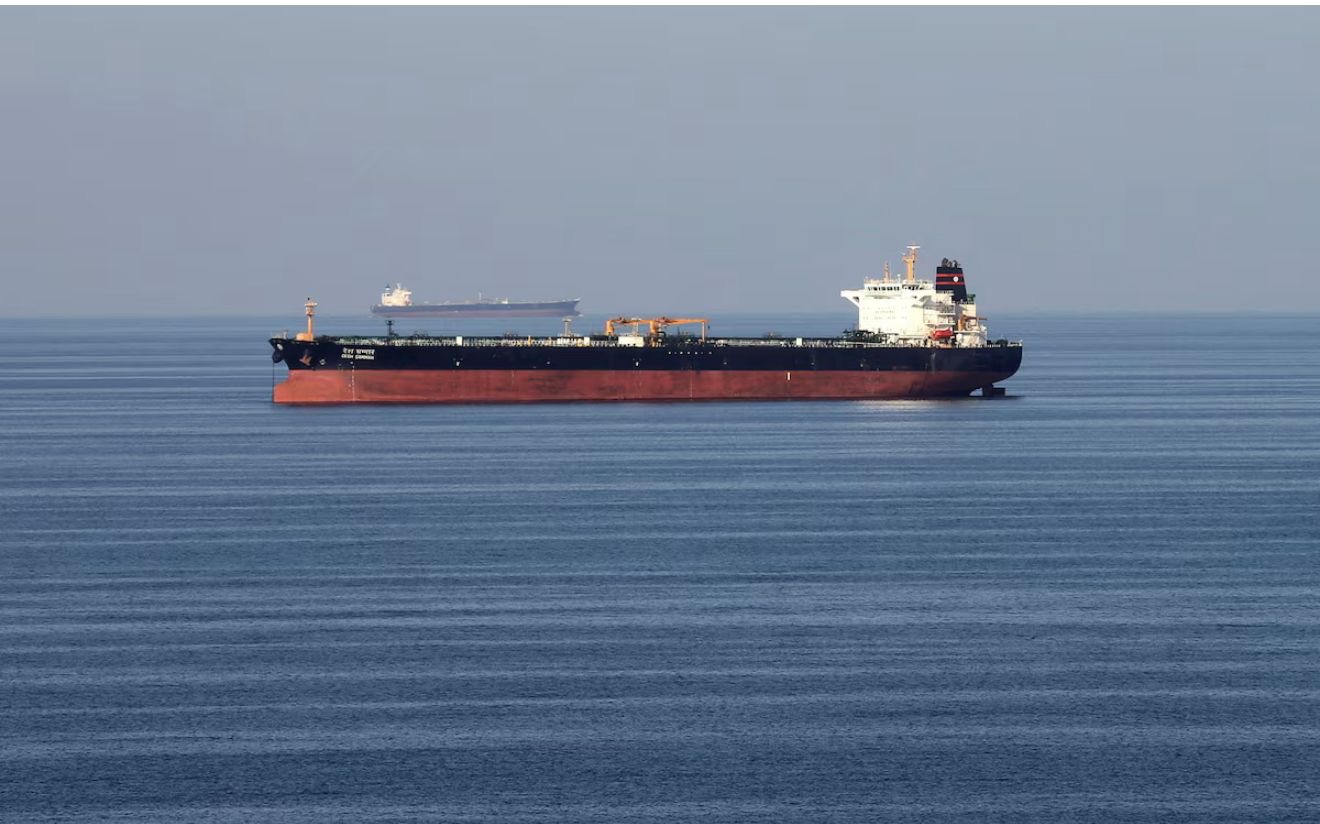
The Strait of Hormuz—through which nearly 20% of the world’s oil passes—once again looms as a knife pressed to the throat of global energy flows. Even rumors of Iranian blockades or Israeli counterstrikes have propelled Brent crude toward $75–80 per barrel, well above the IMF’s planning baselines. Tanker insurance rates have climbed, rerouting has become costlier, and these maritime tremors ripple through every corner of global commerce: from Asian semiconductors waiting for petrochemical feedstocks to African farmers forced to pay more for fertilizer and diesel for their tractors. JPMorgan’s extreme scenarios still whisper of Brent spiking to $130 if the worst unfolds, echoing the Arab oil embargo of the 1970s but transposed to an age of instant capital flight and fragile supply chains.
In the Middle East itself, the scorecard is uneven. Israel’s GDP is forecast to contract from earlier growth hopes of 3.3% to 1.7%, the war draining billions in emergency security spending and lost investor confidence. Iran’s economy, already shackled by decades of sanctions and internal dysfunction, now teeters under fresh embargoes, a weakened currency, and the enormous price of war mobilization at home. Yet paradoxically, the wider Gulf’s oil states—Saudi Arabia, the UAE, and Qatar—find their budgets bolstered by elevated oil receipts, even as they quietly dread that too much turmoil might choke the very sea lanes they depend upon for export lifelines.
 Meanwhile, across the vast expanse of Asia, the world’s workshop shows a quiet, methodical resilience. China’s economy no longer sprints at double digits, but its 4–5% growth remains the ballast of global demand. Beijing’s planners have pivoted heavily to secure energy diversification: Russian pipelines, African hydrocarbons, and domestic renewables expansion. India, too, holds its ground, with robust domestic consumption and a digital economy thriving amid the AI revolution sweeping Bangalore’s tech corridors. For both, the threat of Middle East oil shocks is real—but partially cushioned by diversified import channels and aggressive domestic transitions toward solar, wind, and nuclear.
Africa—this continent of youthful promise and enduring paradox—rides these waves with a mix of caution and latent optimism. Nigeria, South Africa, Kenya, and Ghana find themselves simultaneously exposed to imported fuel price spikes and buoyed by the promise that AI-led productivity may leapfrog traditional industrial hurdles. Yet the cost of capital remains stubbornly high. Many African central banks still nurse interest rates in the double digits to fend off currency depreciation and imported inflation, tightening fiscal space when the continent desperately needs to invest in human capital, digital infrastructure, and domestic manufacturing.
Hovering over all these local complexities is the defining macro shock—and perhaps salvation—of this age: the generative AI revolution. Since 2023, OpenAI and its constellation of competitors have driven an explosion of applied machine intelligence, automating tasks from legal drafting to drug discovery. By mid‑2025, AI accounts for an estimated 1.5% of global GDP, not as a discrete sector but as an invisible scaffold propping up productivity in every vertical it touches.
Recent studies suggest that nations investing heavily in AI R&D—roughly 10% more than the OECD average—are already reaping a 0.7–1.0 percentage point annual lift in output. The paradox, however, is that the bounty is not evenly spread. Advanced economies with mature digital backbones, deep capital markets, and skilled workforces sprint ahead, while lower-income regions risk becoming passive consumers of foreign-made AI products, their data harvested, their comparative advantages in cheap labor slowly eroded.
The labor question is the sharpest edge of this AI dawn. While global unemployment remains at historically low levels—hovering near 5% across the G7—the specter of job displacement haunts the white-collar middle class. Accountants, customer service agents, paralegals, and even coders are beginning to see entire workflows replaced by learning algorithms that never sleep, never bargain, never strike. Policymakers speak loftily of “upskilling” and “AI alignment,” but the speed of technological diffusion threatens to outpace the political courage needed to cushion the dislocation.
One might reasonably ask: in a world so riddled with contradiction—where energy fragility meets technological abundance, where some regions burn from conflict while others hum with innovation—what path remains open for wise stewardship toward 2026 and beyond?
First, energy resilience can no longer be a slogan confined to climate summits. Europe and East Asia must double down on grid diversification, new LNG terminals, and domestic renewables—while forging the kinds of regional stockpiles and crisis protocols that could blunt the sharp edges of another Hormuz standoff.
Second, the global trade system must heal from the wounds of tariff wars and pandemic-era hoarding. The WTO, bruised but not dead, should reassert its convening power to roll back the rise of protectionist barriers that now strangle growth in low-income states most dependent on export markets.
Third, the AI revolution demands a renaissance of education and training. Nations that fail to invest now in human adaptability—technical literacy, lifelong learning, ethical governance—risk deepening inequality and fueling the political resentments that can topple democracies and breed new extremisms.
Fourth, fiscal prudence must find its way back onto the stage. The next wave of debt crises—whether in the U.S., the EU periphery, or emerging markets—will not be solved by free money and infinite stimulus. Smart, targeted fiscal discipline, married to bold public investment in infrastructure and AI R&D, can restore solvency while keeping economies competitive.
Finally, no economic model can ignore the hard truth that all markets sit within a fragile architecture of peace—or its absence. The Israel–Iran conflict must be de-escalated through robust diplomacy and regional dialogue, lest the sparks fly further afield and engulf a region that remains the world’s energy jugular.
When the world trembles, it must also think. There is no singular rescue lever to be pulled by central bankers or corporate titans. Instead, a mosaic of realism and courage, science and statesmanship, must be pieced together in capitals from Washington to Abuja to Beijing.
If the story of 2025 is the story of fragility on the cusp of transformation, then the next chapter can yet be written as a testament to human adaptability—provided we do not surrender either our reason to fear or our moral compass to despair.
Written by Jide Adesina for 1st Afrika | July 2025
