

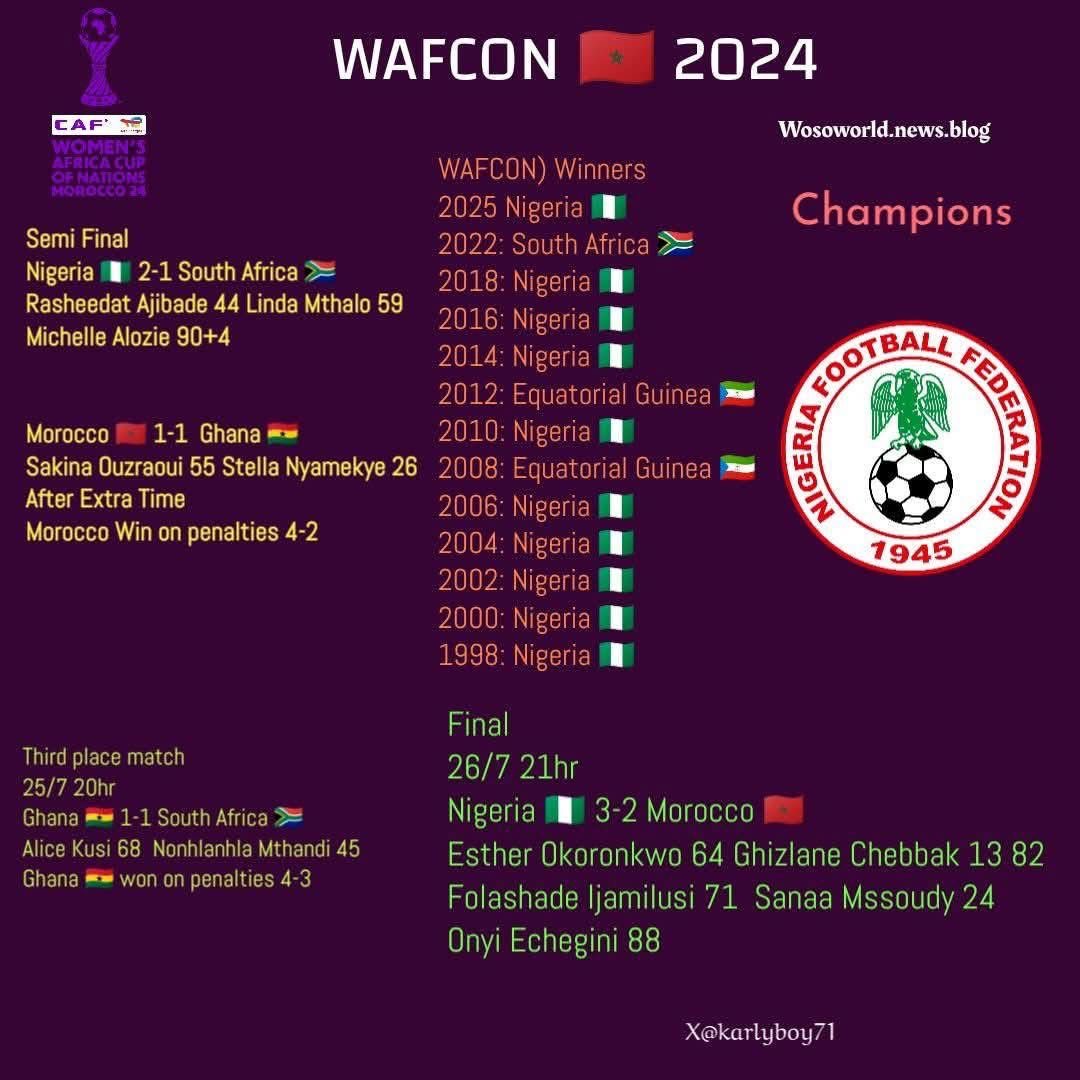
From the sound of the first whistle to the final blast that crowned a continent, the air in the stadium was thick with tension, the pitch beneath soaked in the sweat and soul of ambition, and on the touchlines, history paced nervously, watching closely as the story of African women’s football prepared for one of its greatest chapters. In the sun-drenched terrain of North Africa, the 2025 Women’s Africa Cup of Nations final became a stage not just for football, but for resilience, redemption, and regal glory. It was here that the Super Falcons of Nigeria, from two goals down, rose from the pit of despair to inscribe their name once more — in bold and gold — on the trophy of triumph.
 The first half was nothing short of a nightmare. The opponent, charged with an electrifying home crowd and buoyed by early tactical discipline, pressed hard, broke lines quickly, and punished Nigeria with surgical precision. By the 15th minute, the scoreboard read 1-0, and by the 34th, it blinked 2-0. Nigeria looked stunned, as if trapped in a dream where everything moved too fast, and every decision was punished. The midfield looked disjointed, the backline wobbled, and the confidence that had defined their journey to the final began to flicker like a flame in a storm. Social media buzzed with concern, some fans looked away, others muttered prayers — not because they lacked faith, but because the Super Falcons had always been expected to soar, not stagger.
 But then something happened in that dressing room during halftime — something invisible to the camera but evident in every blade of grass trodden upon in the second half. There were no cameras, no reporters to witness it, but one can only imagine the silence that fell as the coach stepped forward, not to blame, but to remind these women of who they were. Maybe someone whispered a proverb: “Until the lioness learns to write, the hunter will always be the hero.” Perhaps a captain’s voice broke through the silence, shaking every heart with the raw power of belief. Or maybe it was just the memory of the badge they wore — the green of Naija, the legacy of generations, the cry of warriors past — that stirred something ancient and fierce.
When the second half began, it was as though a different team had walked out. The Super Falcons returned not as hopefuls but as heroines, not as victims of the moment but as makers of destiny. Every touch was sharper, every run more purposeful. The crowd began to feel the shift. The once-dominant opposition now faced a wall of green fury. And in the 52nd minute, it came — the moment that sparked the fire. A beautifully threaded pass split the defense, and Nigeria’s forward did not hesitate. A swift touch, a turn, a thunderous shot — the net rippled, and the comeback was on. 2-1. The stadium paused. Something was changing.
Momentum, that fickle mistress of sport, had found a new home. The midfield, once scattered, began to string passes with elegance and purpose. The wings exploded with energy. The fullbacks overlapped like echoes of wind. Nigeria was now the conductor of the symphony. The equalizer followed not too long after — a breathtaking team move that reminded everyone why the Super Falcons are nine-time champions. From the left flank came a cross dipped in precision, and with a header that could silence drums, the ball crashed into the net. 2-2. The bench erupted. Fans at home leapt into the air. Nigeria was no longer chasing shadows — they were making them.
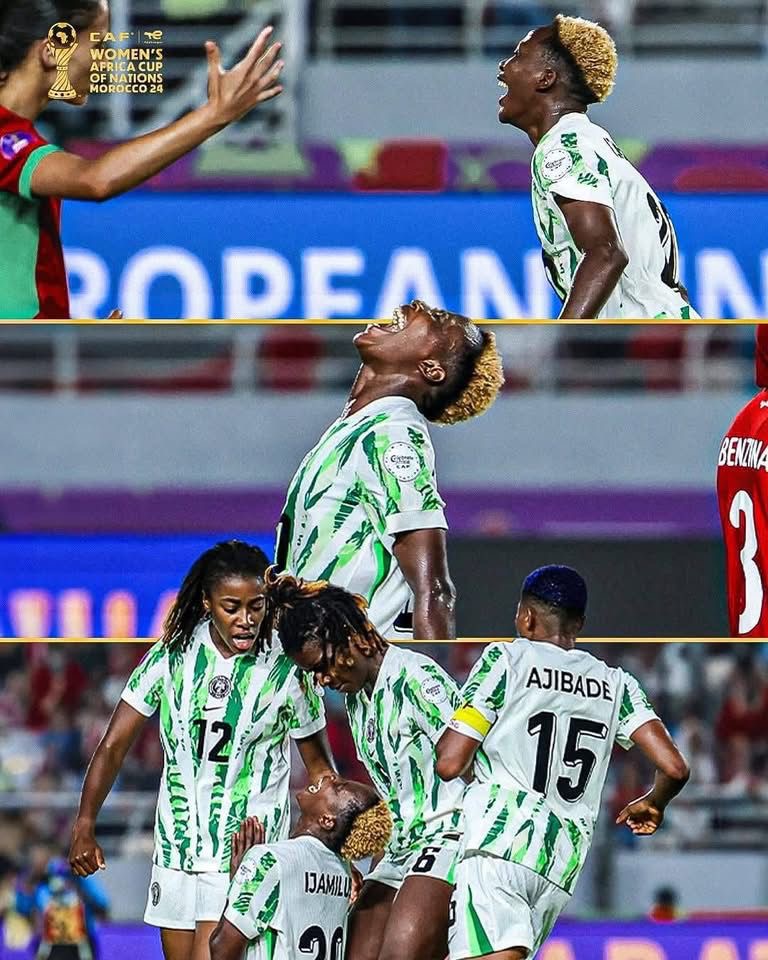
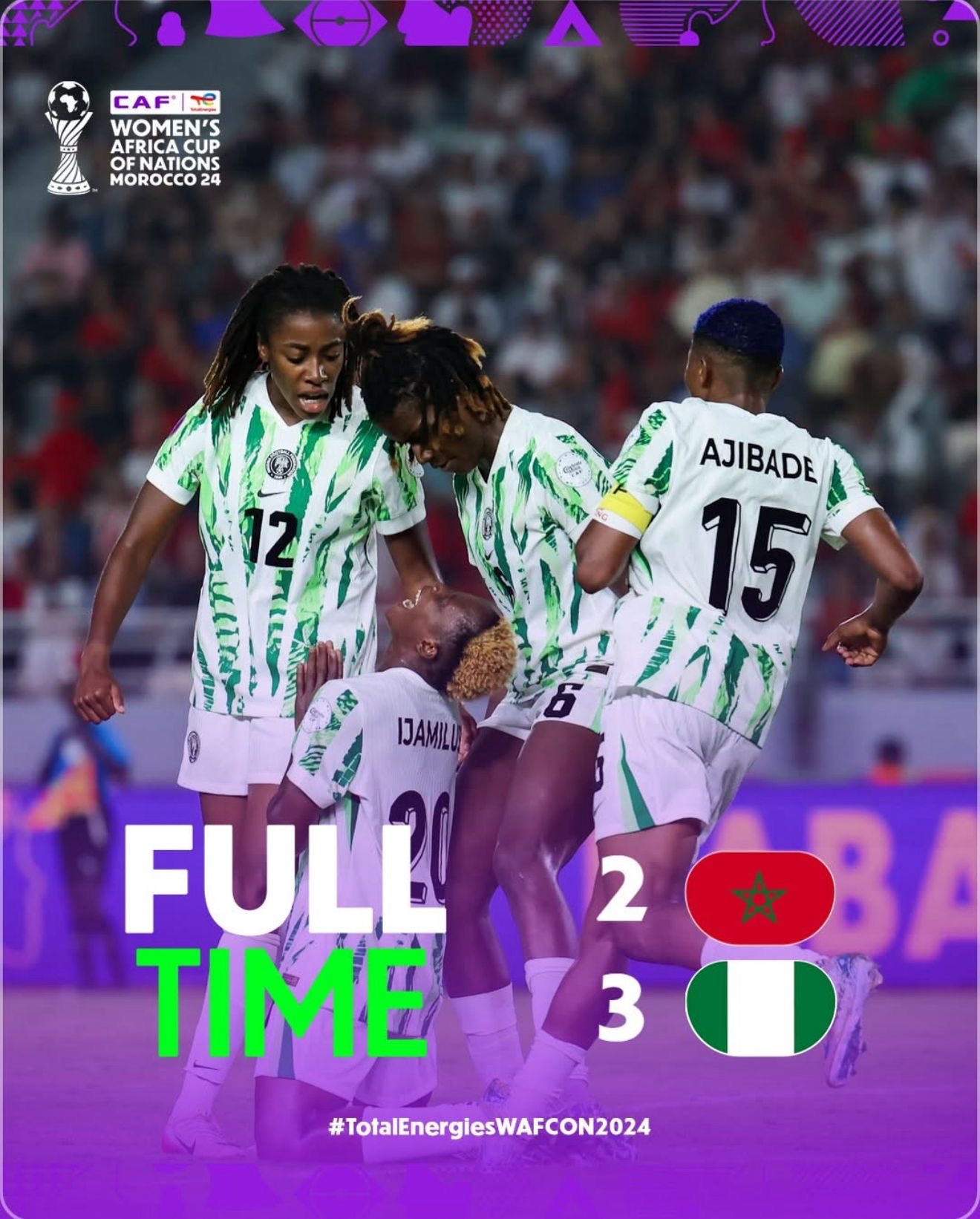 But this was not to be a draw. Not for a team of this spirit. The Falcons smelled blood and pressed on. Time ticked. The clock became a heart beating louder and louder. Then, with ten minutes to go, came the moment that will be replayed in bars, in homes, on phones and televisions, forever. A defensive lapse, perhaps brought on by pressure, gifted Nigeria a chance — and she seized it. A curling shot from the edge of the box, kissed by destiny, soared and dipped into the top corner. 3-2. From two goals down to leading the final. This was no longer a match. This was a miracle in motion.
What followed was a masterclass in game management. The Nigerian defenders became giants, blocking, heading, tackling with a passion that screamed: “Not today. Not ever.” The goalkeeper made a save in the dying minutes that felt like a sacred vow. And when the final whistle blew, players collapsed — not from exhaustion alone, but from the emotional weight of what they had achieved. Some wept. Others fell to their knees. Many just stared at the sky, whispering gratitude to ancestors and heavens. This was not just a win; it was a resurrection, a declaration, a triumph soaked in heart and heritage.
 With that final whistle, Nigeria lifted her 10th WAFCON title — a staggering feat in African football, a testimony to a legacy that refuses to fade. But more than that, this victory will be remembered for what it represents: belief in the face of adversity, unity in the face of pressure, and fire that refuses to be extinguished.
This comeback will be sung about in locker rooms and training grounds for decades. It will live in the dreams of young girls across Africa, from the streets of Lagos to the fields of Abidjan, whispering, “Yes, you can.” The Super Falcons, in those 90 minutes, reminded the continent that greatness isn’t just about winning — it’s about how you rise when you’re down, how you speak when you’re silent, and how you conquer even when the odds laugh in your face.
Congratulations to the Super Falcons. You didn’t just win a cup. You etched your names into immortality.
Congratulations to Nigeria. This is your story. This is your pride. This is your glory.
#WAFCON2025 #SuperFalcons #NaijaNoDeyCarryLast #Champions #ProudlyNigerian 🏆🇳🇬
By :Jide Adesina
1stafrika.com
