
Rabat – Bilateral ties between Morocco and Kenya continue to flourish, especially following Nairobi’s backing of the Moroccan Autonomy Plan as the only sustainable approach to end the dispute over Western Sahara.
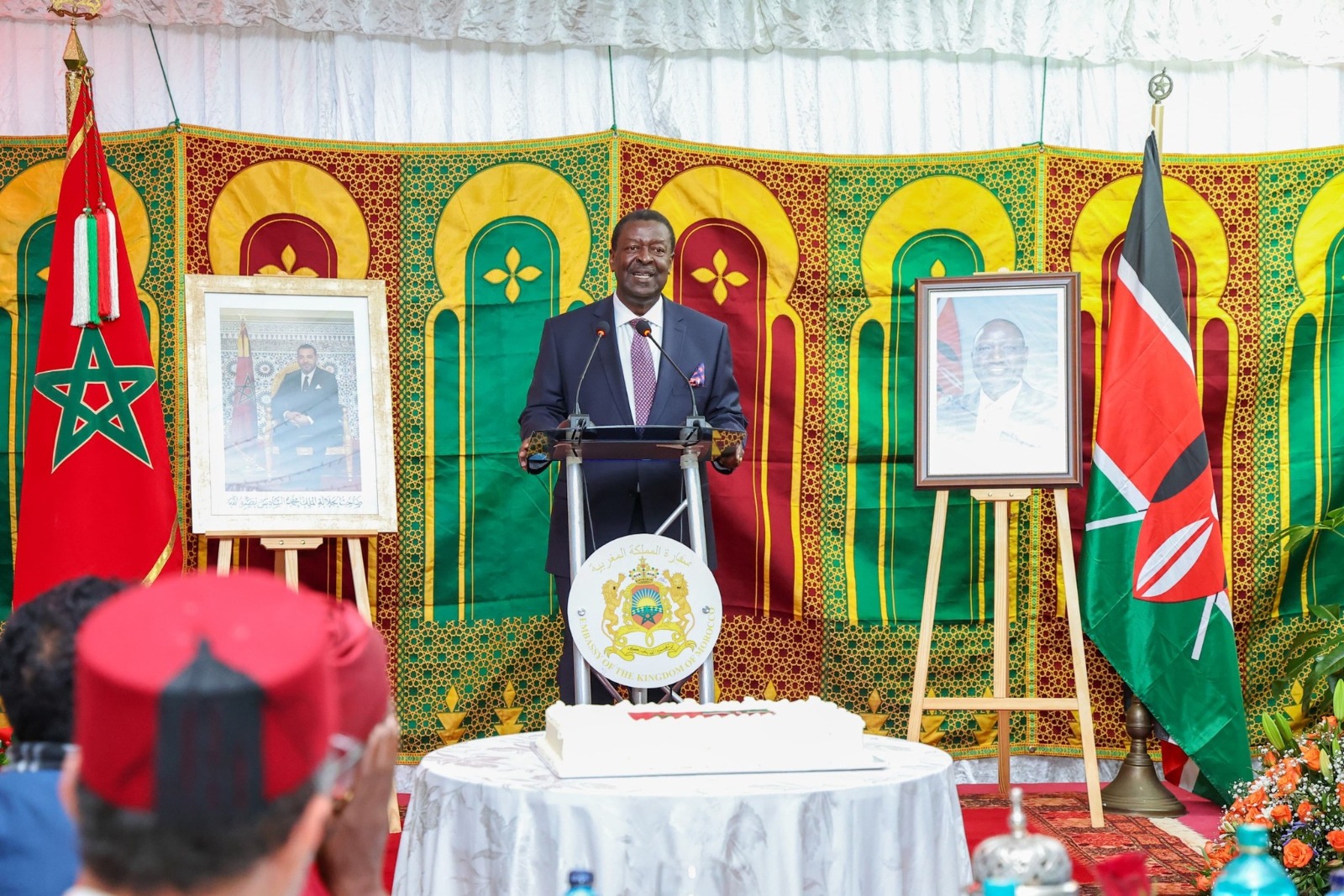
On Wednesday, Morocco’s embassy in Nairobi hosted a ceremony commemorating the 26th anniversary of the Throne Day. Musalia Mudavadi, Prime Cabinet Secretary of Kenya, attended the ceremony, reflecting the importance of bilateral ties between the two countries.
During the ceremony, he commended Morocco’s remarkable progress under King Mohammed VI’s reign in different sectors, including infrastructure and socio-economic development. He cited the 2018 launch of Morocco’s high-speed rail as well as the development of the Tanger-Med port.
Mudavadi also recalled the opening of Morocco’s embassy in Nairobi in 1981, describing it as a key milestone in bilateral ties, and Kenya’s establishment of its embassy in Rabat in December 2023.
“Our partnership covers areas such as trade, education, technology, and renewable energy,” he said.
The remarks reflect the new heights of bilateral ties between the two countries, especially after Kenya decided to endorse Morocco’s autonomy initiative in May this year.
In May this year, Mudavadi visited Morocco, where he met with Morocco’s Foreign Affairs Minister Nasser Bourita in Rabat.
In a joint statement following the meeting, Kenya announced its new position on the Sahara, saying that it considers the autonomy initiative as the only “sustainable approach for resolving the Sahara issue.”
It added that it intends to “cooperate with like-minded states to promote its implementation,” welcoming the growing consensus and the momentum led by King Mohammed VI in favor of the autonomy initiative.
The move is historic as Kenya abandoned its long-standing support for the Polisario Front, a stance heavily shaped by Algeria’s regime lobbying.
Algeria’s regime challenges Morocco’s territorial integrity by lobbying in favor of Polisario’s separatism and independence claims in Western Sahara.
It has been hosting the separatist group for decades, sheltering it, arming it, and financing its separatist agenda.
Morocco’s return to the AU in 2017 after a 30-year absence contributed to the country’s Saharamomentum.
Now, Nairobi has joined a growing international chorus that sees the autonomy plan as the only proposal to end the dispute.
The position signals the end of a traditional dynamism that long favored the separatist narrative on the continent, demonstrating Morocco’s consistent diplomatic engagement through win-win cooperation agreements and exchange of high-level meetings.
Morocco’s autonomy initiative is welcomed by an international community exceeding 115 countries, including powerhouses like the US, UK, France, and Spain.