

Washington, D.C. is again the stage on which America argues about security, dignity, and democracy—this time through the lens of homelessness policy and an unprecedented federal intervention in local policing. In the last 48 hours, President Donald Trump declared a “crime emergency,” invoked Section 740 of the District’s Home Rule Act to seize operational control of the Metropolitan Police Department (MPD) for federal purposes, and ordered 800 D.C. National Guard troops into the city. Supporters frame the move as decisive; critics see an ominous overreach that mistakes visible poverty for crime and risks destabilizing fragile local systems of care. Either way, it forces a harder look at what actually works to keep the capital clean, safe, and just—and at whether D.C.’s unique constitutional status is sustainable.  
The immediate picture is messy. The White House order directs the Mayor to provide MPD services “for the maximum period permitted under section 740,” delegating operational control to the Attorney General. Legal analysts broadly agree the President’s authority in D.C. is unusual: under the Home Rule framework, he can commandeer MPD for federal purposes during an emergency for up to 30 days without new legislation. He also commands the D.C. National Guard—a critical difference from the states, where governors are in charge. Outside the District, his power to take over city policing is sharply limited by federalism and the Posse Comitatus Act absent statutory exceptions like the Insurrection Act. Inside the District, however, the mix of the District Clause of the Constitution, the Home Rule Act, and Title 32 status for the D.C. Guard gives the President tools no governor or mayor can countermand. That uniqueness is precisely why statehood advocates say the moment proves their case.   
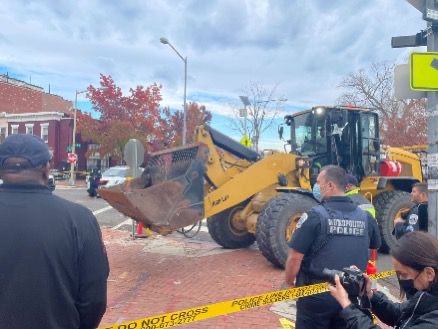
The crackdown comes amid renewed controversy over encampment “cleanups.” Advocates warn that sudden clearances push people into the shadows, sever ties to outreach workers and clinics, and rarely connect anyone to permanent housing. D.C. has spent years refining encampment protocols to temper harm, but critics note loopholes that permit immediate sweeps without notice when sites are labeled “security” or “health” risks. Civil liberties groups argue that designating “no camping” zones or compressing notice periods makes people less safe and less reachable, while doing little to reduce homelessness itself. The administration’s promise to offer shelter or treatment as encampments are cleared is welcome in theory; in practice, capacity and uptake are the bottlenecks. The city needs doors to open when outreach workers make the ask, not just citations or trash bags.  
 What do the numbers say? D.C.’s January 29, 2025 Point‑in‑Time (PIT) count showed a 9% overall decrease from 2024, including an 18% drop among families and a smaller decline among unaccompanied adults. Regionally, the Council of Governments’ 2025 analysis shows fluctuations across the metro area, with chronic homelessness and high rents keeping pressure on the system. A single PIT night isn’t destiny, but it is a snapshot suggesting D.C.’s investments in prevention, shelter exits, and new units still matter—especially for families—despite post‑pandemic volatility. Sustaining that trajectory requires stabilizing and scaling what works, not episodic surges of enforcement.  
What works best to reduce street homelessness is not a mystery. A large body of research—across the VA, HUD, academic reviews, and national housing organizations—shows that Housing First paired with permanent supportive housing (PSH) sharply improves housing stability, reduces unsheltered homelessness, and lowers costly use of ERs, jails, and detox when wraparound services are available. That doesn’t mean “housing only.” It means housing immediately, without preconditions, plus clinical care, addiction treatment, and income supports tailored to the person. The evidence base is stronger for PSH with assertive community treatment than for punitive approaches predicated on displacement. If the goal is fewer people outside and fewer tents, delivering leases and services beats clearing camps and hoping the problem moves along.    
D.C. has partially leaned into this model. The Housing Production Trust Fund (HPTF) remains the city’s primary engine for building and preserving affordable units, with over $1.4 billion invested during Mayor Muriel Bowser’s tenure and another $100 million proposed for FY 2026. The District’s Housing Equity strategy set place‑based production targets to distribute affordability across all planning areas—an attempt to fight both scarcity and segregation. Yet production pipelines are slower than the need, construction costs are up, and PSH service capacity has not kept pace with unit creation. The lesson is clear: capital dollars without sustainable operating and service funding won’t achieve the promised outcomes.   
So what should Washington actually do—today, next quarter, and over the next five years—to be both cleaner and more humane, safer and more free?
First, treat encampment management as a housing operations problem, not a law‑enforcement problem. The only cleanups that “stick” are the ones that coincide with real housing offers and rapid transitions. D.C. should expand its encampment‑to‑keys pipeline pilots: park permanent housing navigators at large encampments daily; pre‑match people to units and vouchers; line up move‑in funding; and schedule cleanups only after the majority of residents have accepted and moved. Where individuals decline, maintain ongoing outreach and storage of belongings; where hazards are immediate, mitigate narrowly and document necessity. Federal partners can help by underwriting motel‑to‑PSH bridge placements at scale for 6–12 months so outreach can offer a real door, tonight, with services tomorrow morning. The city’s existing encampment pilot framework already points this way; it needs more resources and fewer workarounds. 
Second, buy down time. The capital needs sanctioned, service‑rich interim sites—not on sidewalks or underpasses—so that disorderly, unsafe camping is neither necessary nor tolerated. A small number of well‑run, 24/7 “transitional villages” with individual rooms or small cabins, onsite bathrooms, storage, medication management, and firm curfews can replace sprawling unsanctioned sites if, and only if, they are tied to a dated exit plan into permanent housing. The research isn’t about “villages” per se; it’s about stabilization as a bridge to PSH or vouchers. Moving people from chaotic public spaces into structured, dignified settings reduces trash, fire risk, and trauma in the short run while the housing pipeline catches up. The test is not how fast tents vanish, but how many residents exit to leases within 90 days. Evidence from Housing First tells us the exit is the point.  
Third, scale the back end. D.C. should lock in multi‑year operating subsidies and service contracts for at least 3,000 additional PSH slots over three years, synchronized with HPTF‑funded units and master‑lease agreements in existing buildings. The federal government can accelerate this with incremental Housing Choice Vouchers, project‑based vouchers targeted to chronic homelessness, and Medicaid waivers that reimburse supportive services delivered in housing. None of this is glamorous, but it is the plumbing that converts capital projects into fewer people on the street. The PIT trendline tells us families respond fastest to this approach; doubling down there prevents the next cohort of encampments five years out. 
Fourth, fix the front end. Prevention keeps neighborhoods cleaner because it keeps households indoors. D.C. should widen shallow‑rent subsidies ($300–$600/month) for cost‑burdened renters, turbo‑charge right‑to‑counsel and eviction diversion in Landlord‑Tenant Court, and fund a “hospital‑to‑home” pathway so nobody is discharged to a sidewalk. Much of the “visible homelessness” that unsettles residents reflects failures upstream: a lost job, a relapse without a treatment bed, an eviction without legal aid, a hospital discharge without housing. The national evidence suggests these interventions are cost‑effective and reduce returns to homelessness; paired with Housing First, they compound gains. 
Fifth, treat public order as a public health function. Residents are right to demand clean, safe parks and sidewalks. That requires predictable sanitation routes, sharps disposal, 311‑to‑outreach dispatch, and enforced time, place, and manner rules that keep doorways and playgrounds clear—rules that are paired with real alternatives. Guard deployments and aggressive policing are poor substitutes for a city services strategy that shows up every week, rain or shine, to haul trash, swap out bins, and engage people by name. When the alternative is a room, a key, and a ride, compliance increases and conflict declines. The question is not whether there should be rules; it’s whether the rules lead to housing and stability rather than churn.
What about crime? The President’s order frames D.C. as exceptionally dangerous, citing vehicle thefts and fear of disorder. Yet independent reporting notes violent crime is at or near a 30‑year low in the District, even as specific categories like auto theft remain elevated. That kind of mixed picture calls for targeted policing—auto theft crews, retail fencing networks, gun trafficking—not a blanket federalization of local law enforcement. And the Constitution hesitates, for good reason, before normalizing domestic military roles in policing. The Posse Comitatus Act restricts federal military involvement; the Insurrection Act creates narrow exceptions. The D.C. National Guard sits in a statutory gray zone that makes it easier to use for law enforcement in the capital, but “easier” is not “wise,” and it is not transferable to cities inside states without governors’ cooperation or special statutes. That’s why legal experts caution that what happened this week in Washington cannot simply be exported to Baltimore or Chicago.  
Should D.C. pursue statehood? This week is the best argument in years for the people who live here to have the same self‑government as any other Americans. The House has again introduced the Washington, D.C. Admission Act to create the State of Washington, Douglass Commonwealth, shrinking the federal district to a small enclave and granting full congressional representation and state‑level control of public safety. Opponents call it a partisan power play and say the Constitution’s District Clause forecloses admission without amendment; proponents counter that Congress can admit the residential parts as a state and preserve a compact federal district. After the federal takeover of MPD, calls for statehood have intensified because residents feel the asymmetry in real life: their local police can be requisitioned by a President they may not have voted for, their Guard is not theirs to command, and Congress can still nullify their laws. Whether the bill has a path through a Republican‑led Senate is doubtful, but the constitutional debate is no longer abstract.  
Could federal troops “take over” a state or its police ahead of a governor’s or mayor’s orders? Generally no. Outside D.C., the President cannot commandeer state or city police at will. The Insurrection Act allows federal use of the armed forces in narrowly defined emergencies—insurrection, obstruction of federal law, or deprivation of civil rights when a state cannot or will not protect them. Even then, deployments are exceptional and litigable, and the norm is that governors control their National Guards unless federalized under Title 10. D.C. is different because it is not a state: the President controls the D.C. Guard already, and, under Section 740 of the Home Rule Act, can temporarily direct MPD for federal purposes during “special conditions of an emergency nature.” That is the lever used this week. It is not a general blueprint for federal takeovers of policing in the 50 states.   
There is also the question of legitimacy. Even if lawful, heavy federal involvement in day‑to‑day local order risks chilling speech, eroding trust, and confusing accountability when lines blur between federal protection of monuments and neighborhood policing. The 2020 Lafayette Square episode and the January 6, 2021 failures showed both the dangers of overreaction and of paralysis. This moment calls for humility: the federal government should support D.C.’s housing‑first and crime‑specific strategies, not supplant them. It should fund, coordinate, and—where necessary—help surge capacity for short windows. It should not become the city’s police chief. 
Where does that leave the “best option” for clean streets and fewer people living outside? The practical answer is a three‑track plan that respects rights, restores order, and actually reduces homelessness. Track one is surge housing: master‑lease existing buildings, open targeted bridge sites, and stand up 3,000 PSH slots with full services over three years. Track two is precision public safety: flood the hot spots for specific crimes with investigative resources, not troops, and pair every enforcement action downtown with parallel outreach and same‑day placement offers. Track three is relentless city services: weekly sanitation and outreach beats, complaint‑to‑case‑manager dispatch, and visible, predictable cleanup schedules that follow—not precede—realistic housing offers. The measures of success are fewer tents, fewer 911 calls about disorder, more lease signings, faster shelter exits, and cleaner blocks month after month. The research says this will work. The PIT numbers suggest D.C. can do it. The constitution says the President can intervene here, but wisdom suggests he shouldn’t have to—especially not in ways that make lasting solutions harder.  
Ultimately, the capital should be a model city: safe to walk at night, welcoming in its public spaces, and serious about solving—not hiding—poverty. That requires seeing encampments not as an aesthetic flaw to be power‑washed away but as the visible symptom of an undersupplied housing and care system. When Washington builds the exits and runs the services with discipline, tents come down and stay down. When it swaps operations for optics, the city looks cleaner for a day, and nothing changes. The path to becoming one of America’s best cities runs through keys, clinics, courtrooms, and consistent citywork—not a sledgehammer.
