

The United States has once again thrust itself into the center of a global storm on migration, reaching controversial deportation agreements with Honduras and Uganda as part of its relentless crackdown on illegal immigration. The moves signal the Trump administration’s expanding strategy of dispersing asylum seekers across continents, outsourcing what it describes as “shared responsibility” but what critics condemn as a dangerous abdication of humanitarian duty.
According to reports, Uganda has agreed to accept an undisclosed number of African and Asian migrants who initially sought asylum at the US-Mexico border. The condition, however, is that none of these deportees must have criminal histories. Yet, what remains ambiguous is the scale of Uganda’s willingness and capacity to absorb these deported individuals. Honduras, on the other hand, has pledged to receive deportees over a two-year period, including families with children, though government documents indicate that the Central American nation could eventually accept even more.
These agreements are not isolated. They are part of a broader and increasingly controversial push by Washington to negotiate deportation deals with multiple countries, many of which are themselves struggling with fragile governance, limited resources, or questionable human rights records. The State Department last week celebrated a “safe third country” agreement with Paraguay, framed as a measure to share the global burden of managing migration. But human rights observers quickly countered, warning that these deals amount to little more than exporting vulnerable people to countries with neither the infrastructure nor the guarantees of safety required under international law.
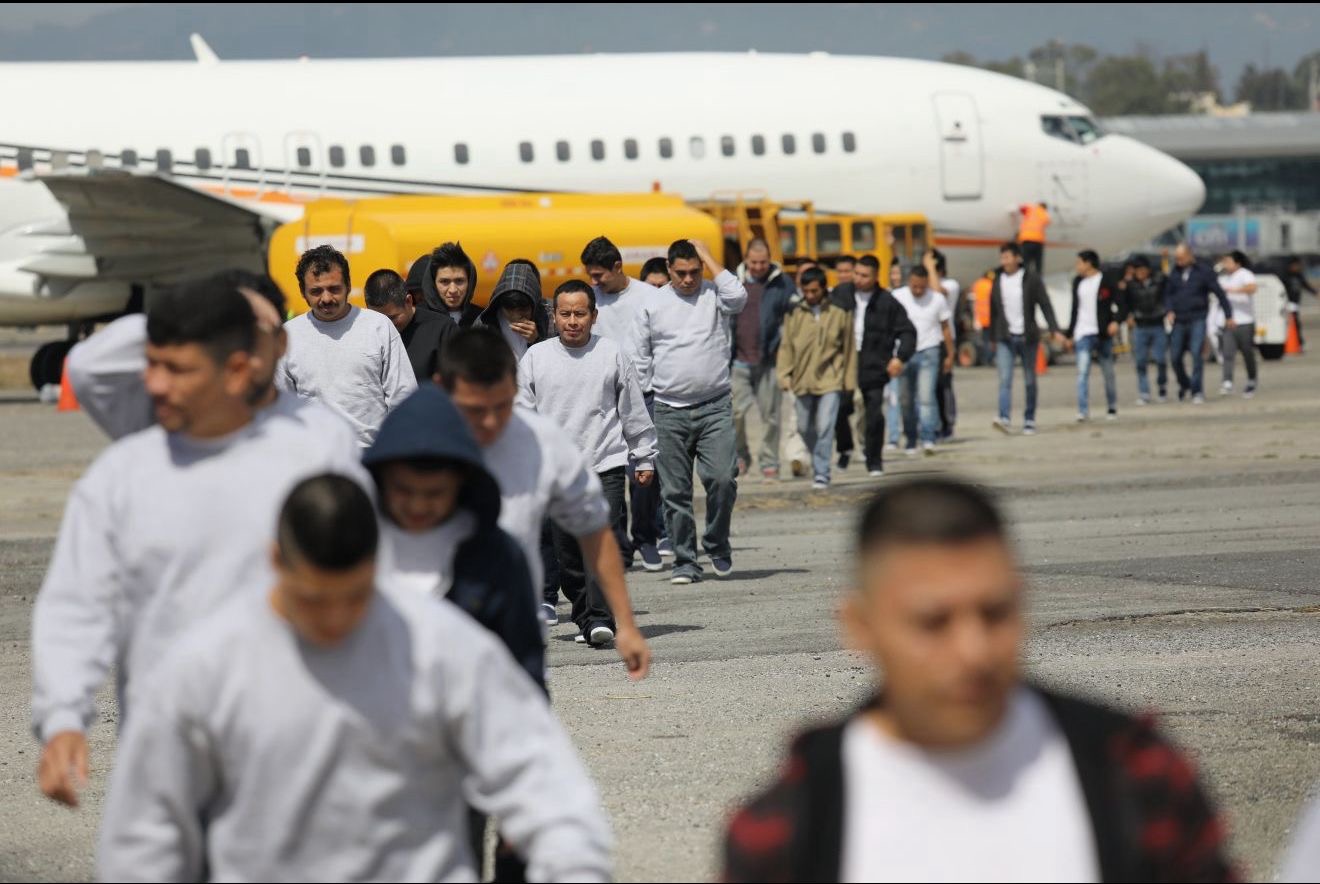 In Africa, the courtship of governments has intensified. Rwanda, long a preferred partner of the United States in regional security matters, has announced its willingness to accept up to 250 deported migrants from the US. Yet the agreement comes with a condition: Rwanda retains the right to approve or reject each case proposed for resettlement. This caveat highlights an underlying unease, as the East African nation has previously been scrutinized for its human rights record, including accusations of forcibly repatriating migrants to third countries where their lives may be in jeopardy. For many critics, this raises alarms that Washington’s policy risks pushing people into yet another cycle of displacement, uncertainty, and danger.
Nor are these agreements confined to Africa or Central America. Earlier in the year, Panama and Costa Rica entered into similar arrangements, accepting hundreds of African and Asian migrants deported from the United States. Documents obtained by CBS suggest that other nations, including Ecuador and Spain, have been approached to serve as destinations for America’s deported population. The global sweep of these negotiations illustrates a deliberate strategy: dispersing migrants to any willing state, regardless of whether such transfers respect international obligations to protect the vulnerable.
 The legal foundation of this aggressive campaign was laid in June when the US Supreme Court cleared the path for deportations to countries other than the migrants’ homelands. The ruling effectively eliminated the right of asylum seekers to raise concerns about the risks they may face in these third countries. The decision was sharply contested by Justices Sonia Sotomayor, Elena Kagan, and Ketanji Brown Jackson, who dissented powerfully, describing it as “a gross abuse” of legal and moral principle. Their dissent reflects growing unease not only in the United States but also among international observers, who warn that such policies stretch the limits of legality and morality.
United Nations rights experts have voiced their concern in stark terms, warning that deportations to countries with little connection to the migrants in question may amount to violations of international law. Human rights organizations echo these fears, pointing out that asylum protection is not meant to be a bargaining chip in the geopolitical chess game of immigration enforcement. Instead, they argue, it is a universal obligation rooted in the painful lessons of history.
Yet, for the Trump administration, this is more than policy—it is politics. From the very beginning of his presidency and into his second term, Donald Trump staked much of his political capital on the promise to remove undocumented migrants from American soil. His base rallied to the rhetoric of sovereignty, border control, and the fight against illegal immigration. Now, with the Supreme Court’s backing and a growing network of partner states, the White House is pushing forward with what amounts to the externalization of its migration challenges.
The consequences, however, will be borne by people stripped of choice. Families who crossed deserts, seas, and hostile terrains seeking safety may now find themselves in countries they have never set foot in, with no ties, no communities, and often no future. Uganda, Honduras, Rwanda, or Paraguay may be safe on paper, but the realities of poverty, limited resources, and fragile rights environments complicate the picture.
At the heart of this policy lies a troubling paradox. The United States, a nation historically defined by migration, is repositioning itself as a country that seeks to export not only its problems but also its responsibilities. By negotiating with states willing to trade geopolitical favors for aid or diplomatic support, Washington risks undermining the very asylum system it once helped to build after World War II.
The story of these deportation deals is not just about numbers, agreements, or court rulings. It is about people—mothers and children, students and workers, refugees fleeing conflict and persecution—whose futures are now subject to the calculus of foreign policy rather than the protections of law. As deportation flights prepare to depart American soil, they carry not only human beings but also profound questions about justice, morality, and the meaning of international solidarity in a fractured world.
