

In the fertile hills of eastern Democratic Republic of Congo, where the lush vegetation of Virunga National Park meets subsistence farms and scattered villages, the stench of death lingered throughout July 2025. What began as whispered reports from survivors eventually emerged as one of the worst documented atrocities in the region’s decades-long conflict. According to Human Rights Watch, Rwanda-backed M23 rebels systematically executed at least 140 civilians—primarily from the Hutu ethnic group—in a brutal campaign that witnesses describe with chilling detail: families hunted down in their homes, women and children rounded up and shot along riverbanks, and bodies dumped in mass graves or thrown into the Rutshuru River to conceal evidence .
The killings, which occurred between July 10 and 30 across at least 14 villages and farming areas near Virunga National Park, represent a staggering escalation of violence despite ongoing international peace efforts brokered by the United States and Qatar. The United Nations Office of the High Commissioner for Human Rights has corroborated these findings, documenting at least 319 civilian deaths in just four villages within Rutshuru territory between July 9 and 21, suggesting the actual death toll may far exceed initial estimates . These massacres stand as among the worst atrocities committed since the M23’s resurgence in late 2021, revealing a stark disconnect between diplomatic negotiations and realities on the ground.
The Cyclical Nature of Violence in Eastern Congo
To understand the recent violence, one must appreciate the complex historical tapestry of conflict in eastern Congo. The M23 (March 23 Movement) rebels emerged in 2012 when hundreds of soldiers—predominantly from the Tutsi ethnic group—defected from the Congolese army, claiming poor treatment and the government’s failure to honor previous peace agreements. Though initially subdued by a coalition of Congolese and UN forces in 2013, the group resurged in late 2021, better equipped and organized than before .
The regional ethnic dimensions trace back to the aftermath of the 1994 Rwandan genocide, when perpetrators fled into eastern Congo and formed the Democratic Forces for the Liberation of Rwanda (FDLR). Rwanda has consistently cited the continued existence of this Hutu armed group as a primary security threat, using this justification for repeated interventions in Congolese territory . The M23, composed largely of Congolese Tutsis, positions itself as protecting Tutsi communities from Hutu militias, though its methods have increasingly targeted civilian populations in what rights groups describe as collective punishment against perceived sympathizers of opposing groups.
The geostrategic importance of eastern Congo’s mineral wealth—including gold, coltan, and other resources critical to modern technology—has further fueled the conflict, creating a violent economy where armed groups profit from resource extraction while perpetrating human rights abuses with impunity. This complex interplay of historical grievances, ethnic tensions, and economic interests has created a seemingly intractable conflict that has displaced millions and resulted in what the UN describes as one of the world’s worst humanitarian crises .
Piecing Together the Evidence
Human Rights Watch conducted a meticulous investigation into the July killings, employing rigorous methodology to verify claims in a region where access is severely restricted by violence and political barriers. Researchers remotely interviewed 36 people between February and May 2025, including eyewitnesses to killings, victims’ relatives, medical workers, local activists, military personnel, and UN staff . This multi-source approach allowed for cross-referencing of accounts to establish credible patterns of abuse.
The investigation incorporated digital verification techniques, with researchers geolocating and analyzing photographs and videos sent directly by sources or found on social media. One particularly telling video showed M23 fighters with red arm bands—believed to belong to their military police unit—rounding up men near a sports field commonly known as “terrain des scouts” on February 23. The video evidence corresponded with witness accounts describing how attempted escapes resulted in immediate executions . Forensic analysis of imagery showing blood patterns on walls and bullet casings at execution sites helped establish timelines and methods of killing, with the Independent Forensic Expert Group of the International Rehabilitation Council for Torture Victims estimating that photographed victims had been killed less than 24 hours earlier .
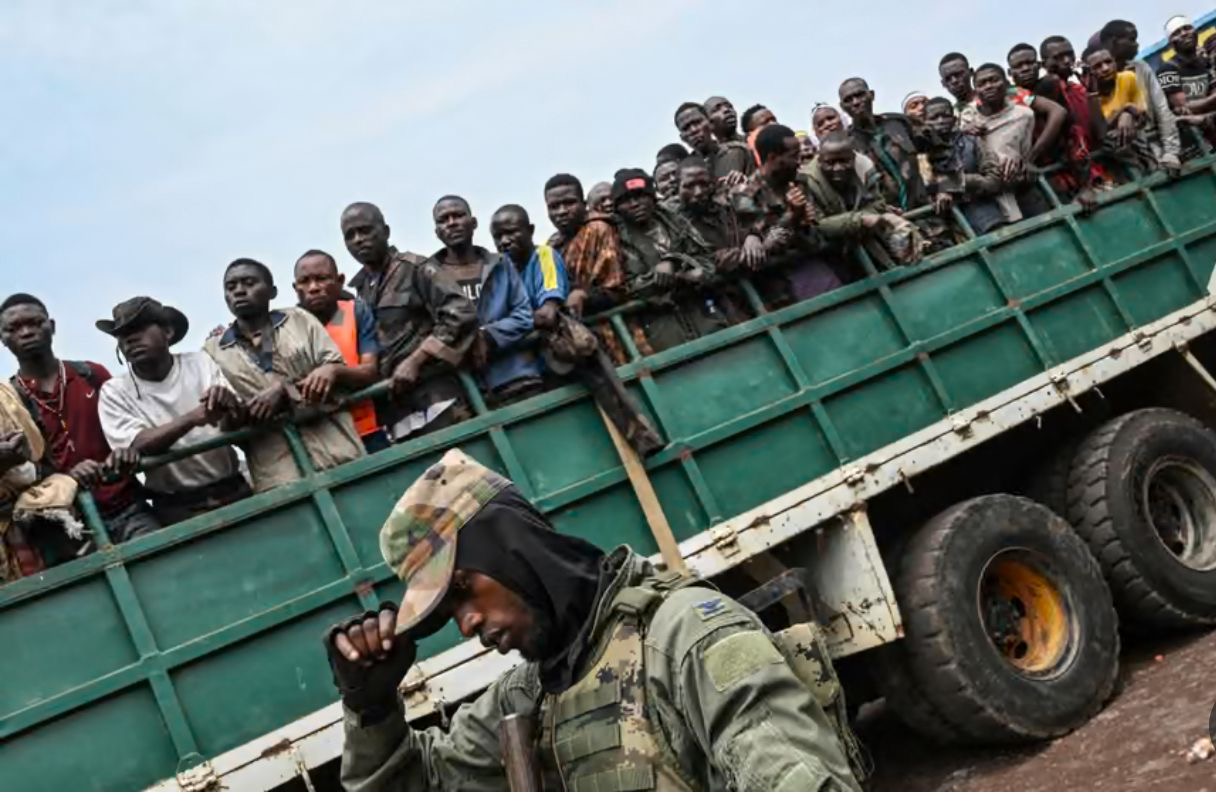 The February 2025 violence in Goma’s Kasika neighborhood served as a chilling precursor to the July massacres. According to Human Rights Watch documentation, M23 fighters arrived in at least three pickup trucks on the afternoon of February 22, executing seven people west of the Katindo military camp—a former Congolese army barracks. The bodies of 11 more people, including a 15-year-old boy, were discovered at a construction site less than 100 meters from the camp . Witnesses described fighters searching houses and local businesses for young men, with one resident recounting: “They started shooting and took around 25 people from the streets” before executing them in brutal fashion .
The psychological warfare extended beyond physical violence, with M23 fighters using corpses as tools of intimidation. One woman recalled: “[The M23] showed me the bodies of people on the ground and said: ‘This is what we’re going to do with you.’ I saw 18 bodies; others were on other streets” . The absence of active fighting during these events led researchers to conclude these were deliberate executions of people in custody—clear war crimes under international humanitarian law. Medical workers reported collecting over 50 bodies from the Kasika area on February 22-23 alone, though the full death toll remains unknown .
Rutshuru: Rural Annihilation
The July killings in Rutshuru territory displayed even more systematic brutality against predominantly Hutu communities. Witness accounts compiled by Human Rights Watch describe a coordinated campaign where M23 fighters surrounded and blocked all roads into targeted areas, preventing civilians from escaping before methodically moving through villages and farming communities . The rebels employed machetes and gunfire to attack people in their homes, fields, and near the Rutshuru River, with the stated objective of rooting out FDLR elements but resulting in widespread atrocities against civilians.
One survivor, a woman who witnessed M23 fighters kill her husband with a machete on July 11, described being marched all day with approximately 70 other women and children to a riverbank. “They told us to sit on the edge of the riverbank, and then they started shooting at us,” she recounted, explaining how she survived by falling into the river without being shot . In another heartbreaking account, a man described watching from a distance as rebels killed his wife and four children, whose ages ranged from nine months to 10 years, unable to intervene without meeting the same fate .
The methodical concealment of evidence emerged as a consistent pattern across multiple witness accounts. Locals reported that M23 fighters forced them to immediately bury bodies in fields or leave them unburied, preventing families from organizing proper funerals or documenting the deaths. In several instances, fighters threw bodies—including those of women and children—into the Rutshuru River, likely to eliminate physical evidence of the atrocities . This systematic approach to hiding victims explains why the full death toll remains uncertain and why documentation efforts have faced significant challenges.
The Rwandan Connection: Complicity in Conflict
Military Support and Command Responsibility
Multiple independent investigations have established Rwanda’s substantial role in supporting M23 operations. A 2023 United Nations Group of Experts report found conclusive evidence that Rwanda not only provides logistical support to the rebels but that Rwandan troops actively reinforce or fight alongside the armed group inside Congolese territory . The recent HRW report cites 25 witness accounts plus medical workers, military and UN personnel indicating that members of the Rwanda Defence Force (RDF) were directly involved in backing the M23 operations during the July killings .
The sophisticated weaponry deployed by M23 fighters further suggests external support. When the group captured Goma in January 2025, they seized an arsenal of light and heavy weaponry and military vehicles, including Soviet-era T-54/55 tanks, US-made BATT UMG armored personnel carriers, and possibly up to 20 Belarusian unmanned aerial vehicles—likely one-way attack drones . Pro-M23 sources even claimed on social media that the rebels had repaired and returned to service a Russian-made Sukhoi Su-25 fighter jet captured from Congolese forces—a feat that would require substantial technical expertise unlikely to exist within the rebel group alone .
Political Cover and Diplomatic Maneuvering
Rwanda’s government has employed a multifaceted strategy of denial and counteraccusation in response to mounting evidence of its involvement. Following the UN report on July killings, Kigali issued angry denials, characterizing the allegations as “gratuitous” and “sensational” claims that risked undermining the peace process . Rather than addressing the specific evidence presented, Rwandan officials have consistently redirected attention to the continued presence of FDLR elements in eastern Congo and accused the Congolese government of using Rwanda as a scapegoat for its own governance failures .
This strategic deflection appears designed to create plausible deniability while continuing to pursue Rwandan security interests through proxy forces. As noted by Human Rights Watch researcher Clémentine de Montjoye: “The Rwandan government, as the direct supporter of the M23, may be complicit in the armed group’s war crimes” . The principle of command responsibility under international law suggests that military commanders and civilian officials can be held criminally liable for crimes committed by their subordinates if they knew or should have known of crimes being committed and failed to prevent or punish them .
The Illusion of Peace: Diplomatic Efforts Amid Ongoing Violence
The Doha Process: A Framework Fragile
The timing of the July atrocities proved particularly alarming as they occurred amidst supposedly active peace negotiations. On June 27, 2025, the United States brokered a preliminary deal between Congo and Rwanda in Washington, followed by the July 19 signing of the Doha Declaration of Principles between the DRC government and M23 rebels—a agreement intended to pave the way for a comprehensive peace deal . These diplomatic initiatives created international optimism about potential de-escalation, making the subsequent violence especially devastating to affected communities.
The competing interpretations of the Doha Declaration immediately undermined its implementation. While the Congolese government insisted the agreement required M23 withdrawal from occupied territories, rebel leader Bertrand Bisimwa stated on social media that the declaration was “not a question of withdrawal but of mechanisms for empowering the state, enabling it to assume its prerogatives and obligations” . M23 spokesperson Lawrence Kanyuka went further, telling Associated Press: “We are in Goma with the population and we are not going to get out” . This fundamental disagreement over the most basic terms of the agreement revealed the profound lack of trust between the parties.
The Collapse of Implementation
The scheduled August 18, 2025 signing of a final peace accord never materialized as M23 representatives failed to appear in Doha, citing Kinshasa’s non-compliance with preliminary confidence-building measures, particularly regarding prisoner releases . The rebels accused the Congolese government of continuing to attack their positions, claiming that Nzimbira and Kanyola in South Kivu province were attacked with heavy artillery and drones over the weekend preceding the scheduled talks .
The cycle of violation accusations continued with both sides producing evidence of the other’s bad faith. Congolese army spokesperson Sylvain Ekenge stated that M23 had perpetrated “almost daily attacks” on military positions in North and South Kivu, while M23 spokesperson Lawrence Kanyuka countered that the FARDC had landed over 1,100 troops in Uvira town and repositioned significant military equipment to strategic locations on front lines . This escalating rhetoric coincided with renewed military offensives, including M23’s capture of several villages near Walungu town in South Kivu in early August—clear violations of the ceasefire provisions prohibiting attempts to conquer new territory .
Regional Dynamics and Humanitarian Catastrophe
The Proxy War Dimension
The conflict in eastern Congo has increasingly taken on characteristics of a proxy war between regional powers with competing economic and security interests. Rwanda’s support for M23 aligns with its stated security concerns about FDLR elements, but also serves to maintain influence in a resource-rich region where Kigali has been accused of benefiting from illicit mineral trafficking . Meanwhile, the Congolese government’s collaboration with various ethnic militias—including some with records of serious abuses—further complicates the landscape and contributes to cycles of violence .
The internationalization of the conflict has drawn in multiple external actors with varying motivations. The United States and Qatar have positioned themselves as primary mediators, while African regional bodies including the East African Community (EAC) and Southern African Development Community (SADC) have attempted to coordinate peace initiatives under African Union leadership . On August 13, 2025, leaders of these organizations endorsed a proposal to merge their peace initiatives, establishing a Panel of Facilitators that includes former Kenyan President Uhuru Kenyatta and former Nigerian leader Olusegun Obasanjo . This consolidation of diplomatic efforts represents recognition that fragmented mediation approaches have previously undermined peace prospects.
The Human Cost: Displacement and Suffering
Behind the geopolitical maneuvering lies a devastating humanitarian crisis that has received inadequate international attention. The UN estimates that more than 27.8 million people in the DRC face food insecurity, with over 7 million internally displaced—many of them multiple times . The capture of Goma and Bukavu by M23 rebels in January 2025 exacerbated an already dire situation, creating new displacement while limiting humanitarian access to vulnerable populations.
The public health consequences of displacement have created secondary crises that claim additional lives. Médecins Sans Frontières has warned of a potential health disaster as cholera spreads rapidly in camps for displaced people outside Goma . The combination of violence, disease, and food insecurity has created what many humanitarian organizations describe as one of the world’s most severe—and most neglected—complex emergencies, with women and children bearing the disproportionate burden of suffering.
Accountability and Justice: Pathways Forward
International Legal Mechanisms
The prospect of accountability for the recent atrocities remains uncertain despite clear mechanisms under international law. In October 2024, the International Criminal Court prosecutor announced that his office would renew investigative efforts in Congo with a focus on crimes in North Kivu since January 2022 . Human Rights Watch has called for these investigations to specifically include the executions of civilians in Goma by M23 fighters, potentially opening a path toward justice for victims .
The principle of command responsibility could prove particularly significant in establishing liability beyond direct perpetrators. As noted in the HRW report: “Commanders and combatants who directly ordered or carried out abuses should be held criminally accountable. Military commanders and civilian officials can also be held criminally liable for crimes committed by their subordinates if they knew or should have known of crimes being committed and failed to prevent or punish the crimes” . This framework could implicate not only M23 leadership but potentially Rwandan officials providing support to the rebel group.
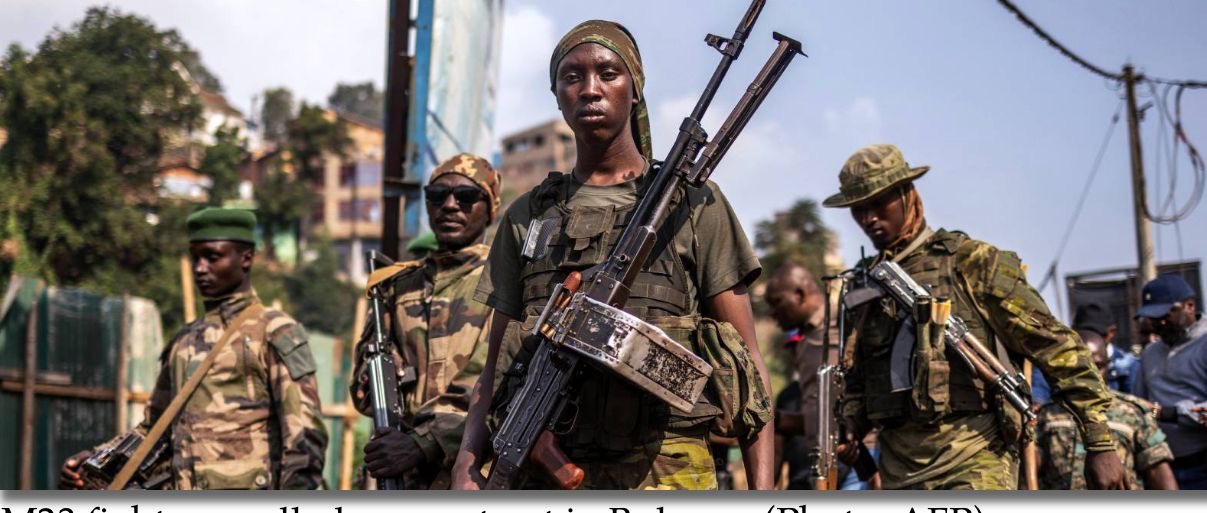 Human Rights Watch has urged the UN Security Council, the European Union, and national governments to condemn grave abuses in eastern DR Congo, impose further sanctions on those responsible, and press for the arrest and appropriate prosecution of commanders implicated in the conflict . The effectiveness of such measures has historically been mixed, with targeted sanctions often failing to change behavior while potentially hardening negotiating positions.
The diverging interests of international actors have complicated coordinated pressure. While the United States has publicly called on Rwanda to “use its influence with M23 to encourage” withdrawal and to “pull back” its own forces, it has stopped short of imposing significant consequences on its regional ally . Similarly, European countries have expressed concern while maintaining development and other partnerships with Rwanda. This lack of consensus among influential international actors has created space for continued impunity.
Between Diplomacy and Death
The atrocities in eastern Democratic Republic of Congo present the international community with a moral and practical challenge of the highest order. The systematic execution of civilians—including
Investigative journalism and editorial by Jide Adesina for 1stafrika.com @2025
