

 The idea of a single currency for Africa recurs in policy rooms, academic papers and summit communiqués with increasing urgency. It is part technocratic ambition and part symbolic act of continental self-determination: a single currency could knit together the African Continental Free Trade Area (AfCFTA) into a genuine single market, lower transaction costs, reduce dependence on third-party currencies and anchor deeper regional integration promised under Agenda 2063. Yet the dream is heavy with practical obstacles — uneven economies, divergent fiscal policies, shallow financial markets, and profound political questions about sovereignty and risk sharing. The debate today is therefore less about whether a common currency could deliver economic benefits and more about how, when, and under what institutional design it might realistically be implemented.
Economics of a common currency: what is to be gained and at what cost
A credible continental currency would deliver familiar textbook benefits: elimination of currency conversion costs for intra-African trade, greater price transparency, reduced exchange-rate uncertainty for businesses and investors, and the potential to deepen financial markets by creating a large, liquid currency zone. For exporters and regional value chains — the precise kinds of commercial structures AfCFTA seeks to build — lower transaction costs and predictable settlement mechanisms could significantly raise trade volumes and help shift Africa’s export mix up the value chain. Afreximbank and other analysts estimate that better intra-African payments and deeper financial integration are among the fastest levers to raise intra-continental trade and capture more value on the continent.
But these gains come with consequential tradeoffs. Monetary union removes exchange-rate flexibility — a critical adjustment tool for countries that face asymmetric shocks — and therefore increases the need for alternative adjustment mechanisms: labor mobility, wage and price flexibility, fiscal transfers, or a common stabilization fund. Without credible mechanisms to address asymmetric shocks and to provide fiscal backstops, member states risk entrenching divergence rather than convergence. The International Monetary Fund and other observers have repeatedly flagged this dilemma: monetary union can bring discipline and stability, but only if underpinned by realistic convergence on inflation, debt and fiscal deficits and by institutions that can respond to country-specific shocks.
Lessons from the euro: architecture, limits and cautionary tales
Europe’s euro project is the nearest large-scale historical analogue and therefore supplies both inspiration and warning. The euro required a sequence of legal and economic steps: deep market integration, the Maastricht convergence criteria (limits on inflation, budget deficits, debt ratios, exchange-rate stability and interest-rate convergence), and the creation of a supranational central bank to run a single monetary policy. Yet structural stresses — notably the sovereign-debt crisis of the early 2010s — revealed the costs of a monetary union without fully developed fiscal union or robust automatic stabilizers. Debates over the euro emphasize that a common currency is as much a political contract as an economic one: it requires credible institutions for macroeconomic surveillance, crisis management and fiscal solidarity. Any African attempt must therefore absorb the euro’s technical lessons while avoiding its political mistakes.
Where Africa stands today: regional projects, payments platforms and political will
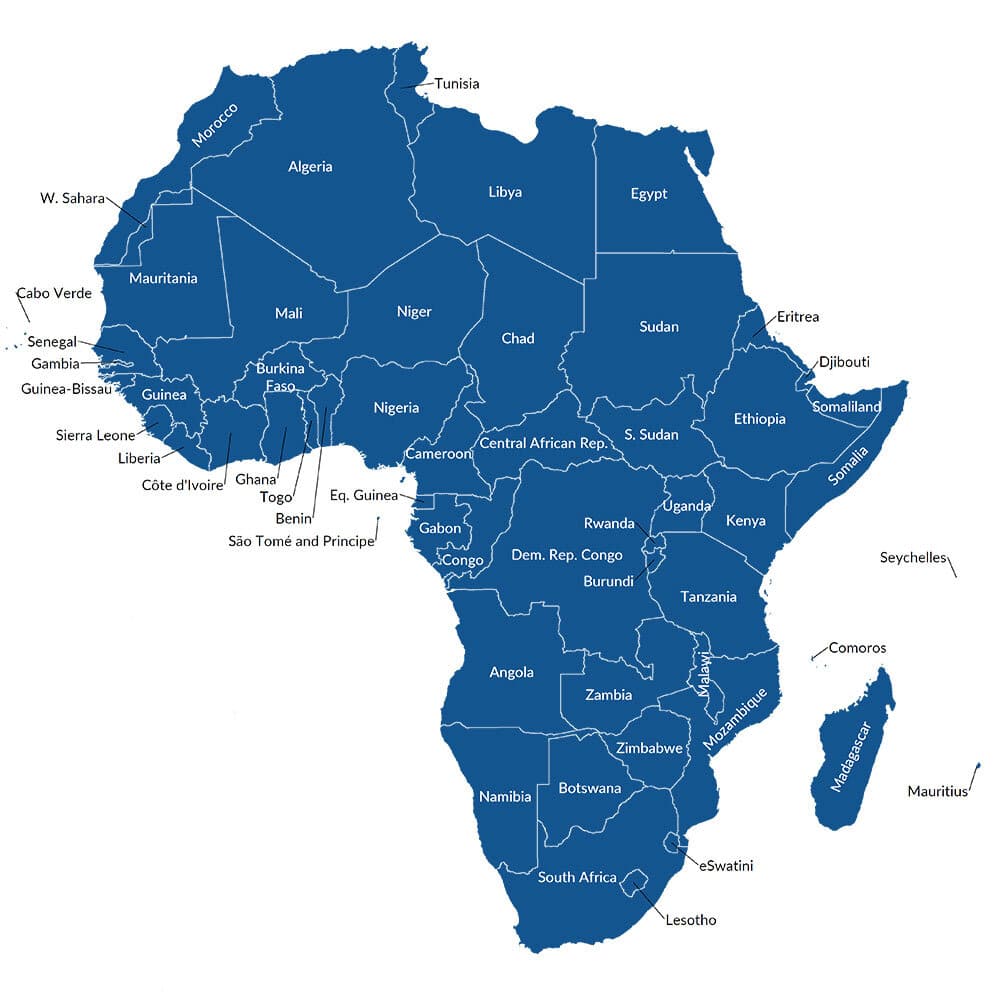
Africa’s path is likely to be regional first and continental later. Several regional monetary experiments and projects are active or under discussion: the long-running ECOWAS plan for a West African single currency (the Eco) has been delayed repeatedly but remains on political agendas, with new target timetables periodically proposed; the East African Community and other blocs have institutional roadmaps for monetary integration, though timetables have slipped; and the African Union has for years set the creation of an African Central Bank and eventual monetary union in the strategic framework of Agenda 2063. Meanwhile operational work is underway on technical enablers: a Pan-African Payments and Settlement System (PAPSS) and centralized payment rails are being expanded to reduce dependence on dollar and euro clearing and to facilitate cross-border payments in local currencies — a practical step that could precede any formal currency adoption. These developments show that political rhetoric has been matched increasingly by operational projects, even as implementation timelines remain ambitious.
Business, banks and markets: the private sector case for harmonization
Banks, multinational corporations and regional trade actors see immediate operational gains from a more integrated currency environment. For pan-African banks and capital markets, a larger common currency would expand market depth, increase opportunities for regional bond markets, and simplify cross-border banking regulation. Corporates would save on hedging costs and benefit from more predictable pricing for intraregional procurement. At the same time, domestic firms in weaker economies could face new competition as price signals become sharper across borders; policymakers should therefore expect significant sectoral winners and losers during the transition. Afreximbank’s recent reports stress that improved payments infrastructure and local-currency trade settlement are precursors to more ambitious integration and could unlock private investment in regional value chains.
Bilateral and geopolitical dimensions: de-dollarization, influence and leverage
A single African currency is not merely an economic instrument; it is geopolitical leverage. Reducing dependence on third-party currencies — chiefly the U.S. dollar and the euro — would give African states more autonomy in setting macroeconomic policy and in pricing trade among themselves. At the same time, shifts in settlement patterns would alter relationships with external partners: creditors, investors and trade partners would need new arrangements for investment, debt servicing and reserve management. Recent reporting suggests African institutions are accelerating internal mechanisms precisely because global trade tensions and external tariff changes have made self-reliance an explicit policy priority. However, the global financial architecture — from correspondent banking to reserve currencies and international capital markets — is shaped by incumbent powers; any African move to a common currency will therefore require careful diplomacy and transitional arrangements to avoid destabilizing capital flight or abrupt loss of access to foreign funding lines.
Design choices: gradualism, regional blocs and institutional sequencing
Practical implementation demands sequencing. The most politically and economically plausible path is phased regional monetary integration aligned with existing economic communities, accompanied by parallel technical projects. The first phase should emphasize payment integration (PAPSS scaling), strengthening central bank cooperation and financial regulatory harmonization, while encouraging local-currency settlement in intra-regional trade. The second phase would focus on convergence criteria similar in spirit to Maastricht but adapted to African realities — pragmatic, enforceable benchmarks for inflation, public debt, deficit levels and external reserves — coupled with a regional stabilization mechanism and a fiscal risk-sharing facility. Only after several successful regional unions, credible surveillance systems and market deepening would the continent consider a final step toward a continental currency and an African Central Bank. The AU’s Agenda 2063 and recent AU preparatory documents already suggest such sequencing, but success will depend on political buy-in and patience.
Fiscal discipline, transfers and the political economy of solidarity
A perennial challenge is that currency unions work best when member states are willing to accept transfers in bad times or, alternatively, when economies are highly synchronized. Africa’s countries are heterogenous: differing growth models, varying revenue bases, and disparate exposure to commodity price swings mean shocks will rarely be synchronized. Building credible rearrangements to share fiscal burdens — whether through a regional stabilization fund, a mutualized debt instrument, or automatic transfers financed by a regional budget — is politically fraught but indispensable. History shows that without credible transfer mechanisms, political support for a common currency can evaporate during crisis. Policymakers must therefore build robust, transparent fiscal governance, strengthen domestic revenue mobilization and construct enforceable surveillance to make monetary union sustainable.
Implementation challenges on the ground: data, institutions and capacity
Operationally, African central banks and statistical agencies must significantly upgrade data collection, macroeconomic forecasting and crisis simulation capabilities. Exchange-rate management, reserve pooling, cross-border liquidity provisioning and a common lender-of-last-resort architecture are technically complex and institutionally sensitive. Capacity building will require sustained investment, technical assistance and operational independence for supranational institutions. Experience with the Eco and with East African plans demonstrates how quickly political ambitions collide with technical bottlenecks: deadlines have been postponed repeatedly as countries struggle to meet convergence tests and to resolve institutional questions such as the location and governance of regional monetary institutes. These delays argue for realistic timetables and transparent milestones rather than headline targets.
A pragmatic policy prescription for African leaders and business
First, scale up PAPSS and incentivize local-currency trade settlement now; doing so reduces transaction costs without immediately removing national monetary tools. Second, deepen regional monetary cooperation with clear, evidence-based convergence criteria tailored to the economic diversity of each region. Third, build regional stabilization funds and contingency financing lines now — before crises strike — and pilot mutualized instruments in willing sub-regions. Fourth, harmonize banking supervision and payments regulation to lower cross-border fragmentation. Fifth, engage with external partners (multilateral lenders, sovereign creditors and private investors) to design transitional support that preserves access to foreign finance during the transition. Private sector actors should support market deepening: developing regional bond markets, hedging instruments and banking products that can operate across borders. Taken together, these steps create a credible, staged pathway that balances ambition with realism.
Conclusion: an attainable aspiration, not an immediate inevitability
A common African currency can be transformative — an instrument that complements AfCFTA and Agenda 2063 to build industrial capacity, anchor price stability and reclaim financial agency. Yet it is not a panacea and it is not imminent. The realistic route is incremental: fix practical bottlenecks first, deepen intra-African payments, complete credible regional monetary unions, and only then consider continental aggregation. If leaders combine technical rigor with political frankness — creating enforceable convergence, credible safety nets and transparent institutions — then the dream of a single African currency will move from rhetorical aspiration to practical policy. Until then, the focus that matters most is not on the currency’s name but on the nuts and bolts of integration: payments rails, fiscal credibility, regulatory convergence and the political courage to share risk when it matters most.
By Jide Adesina for 1stAfrika — Editorial Report

Selected sources consulted in drafting this report include African Union materials on Agenda 2063, Afreximbank’s African Trade Reports and analyses, IMF and academic work on the economics of currency unions, reporting on ECOWAS’s Eco and East African monetary plans, and analyses of Europe’s monetary union architecture and experience. For readers who wish to dig deeper, those documents contain the technical evidence and country case studies that underpin the arguments above.
