

Nigeria stands at one of the most defining moments in its post-independence history. The nation is widely celebrated as Africa’s most populous country, a cultural crossroads, and a democratic symbol of religious coexistence. Yet underneath its symbolic pride lies a mounting crisis that threatens national unity, civilian safety, and the ideological foundation of the state. The escalating violence in the Middle Belt and Northern regions has evolved beyond sporadic communal conflict. It now bears the recognizable patterns of a targeted demographic displacement — one that disproportionately affects Christian farming communities, clergy, and minority ethnic populations.

This crisis must no longer be minimized as isolated “farmer-herder clashes.” Such language is strategically convenient, but dangerously inaccurate. The systematic burning of villages, night raids on rural settlements, abduction of pastors, assassination of traditional leaders, erasure of ancestral lands, and displacement of families across Plateau, Kaduna, Benue, and parts of Nasarawa reflect a sustained campaign of terror. Survivors consistently describe the same operational patterns, the same tactics, and the same failure of timely state intervention. The question therefore is not whether violence exists — but whether elements of the state apparatus have been compromised or intentionally misdirected.
Reports and testimonies over the past decade indicate that extremist infiltrations have occurred not only at local militia levels but also within segments of the Nigerian Armed Forces. This has weakened battlefield response integrity, clouded intelligence sharing, and fractured command unity. Communities under attack repeatedly report that security forces either arrive after attacks have concluded, intervene selectively, or are restrained by chains of loyalty that do not align with national duty. This erosion of trust is not an internal Nigerian concern alone — it carries international implications for regional stability, counterterror cooperation, and democratic defense partnerships.
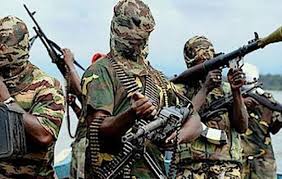
This is why it is both reasonable and necessary to urge the United States, United Kingdom, and NATO-aligned actors to re-examine and temporarily suspend certain military assistance and joint security operations with Nigeria, pending transparent restructuring. Such a pause does not undermine Nigerian sovereignty. Instead, it protects the integrity of global security cooperation by ensuring that international support is not inadvertently strengthening networks that oppose constitutional pluralism and civic neutrality.
The call for accountability is echoed by faith leaders who are respected across denominational and regional boundaries. When figures such as Bishop David Abioye speak, they do so not as political actors but as custodians of community experience. His statements are consistent, verified by field realities, and reflect testimonies documented by independent observers. Historically, global acknowledgment of atrocity has often followed the moral witness of clergy — from Rwanda to South Sudan to Eastern Europe. The Nigerian situation now calls for the same clarity.
Equally, Nigeria must confront the constitutional tension created by the application of Sharia law in some Northern states. The existence of religious legal frameworks parallel to secular democratic law has produced uneven justice, allowed ideological enforcement beyond shared civic norms, and at times resulted in extrajudicial punishments without due process. If Nigeria is to maintain unity as a single republic, law must be grounded in common citizenship, not sectarian jurisdiction. Anything less invites fragmentation.
President Bola Ahmed Tinubu now stands in a position where personal identity and national responsibility intersect. His life reflects Nigeria’s plural heritage, yet symbolic balance must evolve into decisive action. He must lead the restructuring of military recruitment protocols, enforce ideological neutrality within the ranks, re-establish judicial sovereignty, and restore public confidence in state protection. The future of the nation depends on the courage to act, not merely to acknowledge.
The international community — from the United Nations Human Rights Council, to the African Union, to global ecclesiastical networks — must adopt a proactive stance. The world has the capacity to support early intervention, apply diplomatic pressure, establish atrocity monitoring frameworks, and create protected humanitarian corridors. It is morally untenable to wait until mass displacement becomes irreversible before raising alarm.
What is at stake is not simply the survival of Christian communities in the Middle Belt. It is the survival of Nigeria’s identity as a democratic state committed to pluralism, co-existence, and the equality of all citizens under law.
The world is watching.
History will record what was done — and what was ignored.
The time to act is now.
Written by Jide Adesina
Jide Adesina is a cybersecurity consultant, counter-terrorism researcher, author, socio-political analyst, and public affairs commentator whose work focuses on governance reform, conflict dynamics in Sub-Saharan Africa, and interfaith civic stabilization. He writes on the intersection of faith, nation-building, and democratic accountability, advocating for institutional renewal, equitable coexistence, and protection of vulnerable communities across the Middle Belt and Northern Nigeria.
