

A Final Beyond Ninety Minutes
Every generation of football eventually reaches a defining moment — a moment when the past, present and future stand on the same field and the world pauses to witness the transfer of greatness.
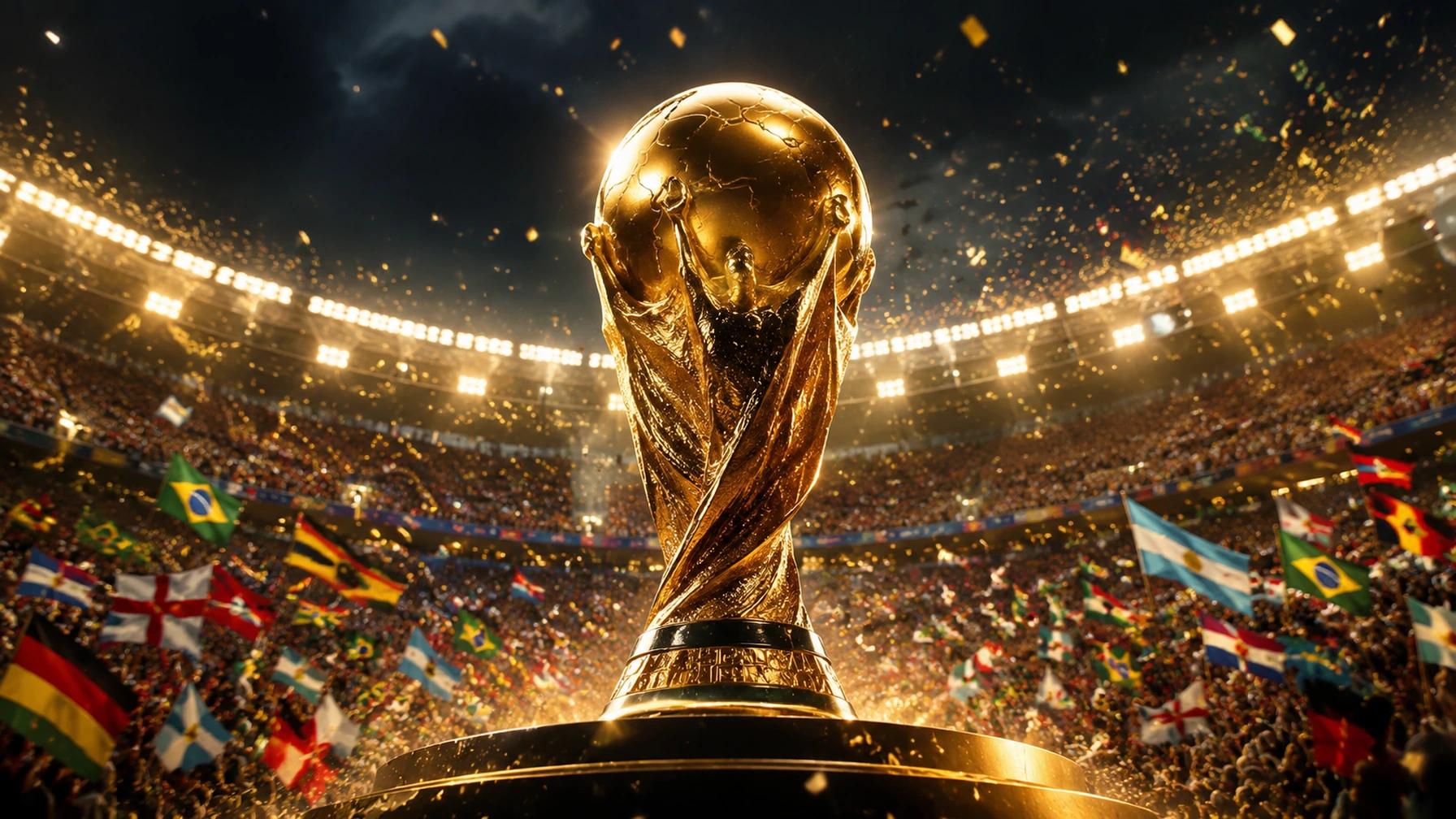
The FIFA World Cup 2026 Final between Argentina and Spain is more than a contest for football’s most prestigious trophy. It is a psychological battle between experience and emergence, between the emotional weight of history and the fearless confidence of youth.
It is a match where tactics, talent and physical ability matter, but where something deeper is also being played out: the human psychology of legacy.
At the center of this extraordinary story are two names separated by age but connected by destiny:
 Lionel Messi and Lamine Yamal.
One is the complete masterpiece of a generation.
The other is the unfinished masterpiece waiting to be written.
The world is not only watching who wins the World Cup.
The world is watching football’s eternal cycle — how greatness is created, remembered and eventually inherited.
Football’s Greatest Psychological Transition
Sport is often described through numbers: goals scored, assists recorded, trophies lifted and records broken.
But behind every statistic is a human story.
Great athletes are not created only by physical ability. They are shaped by mentality, resilience, identity and the psychological pressure of expectation.
Lionel Messi understands this better than most.
For more than fifteen years, he carried an extraordinary burden — not just the responsibility of representing Argentina, but the impossible expectation of being compared with Diego Maradona.
Every missed opportunity became a national conversation.
Every defeat became a question about his legacy.
The world demanded perfection from a man who was already performing at a level rarely seen in sporting history.
But greatness is not defined by avoiding failure.
Greatness is defined by the ability to survive it.
Messi’s journey became a psychological lesson in perseverance.
The heartbreaks of previous World Cups and Copa América finals did not destroy him. They refined him.
When he finally lifted the World Cup trophy in Qatar in 2022, it was not merely a sporting achievement. It was a moment of emotional liberation — the release of years of pressure, criticism and expectation.
Messi did not only defeat opponents.
He defeated doubt.
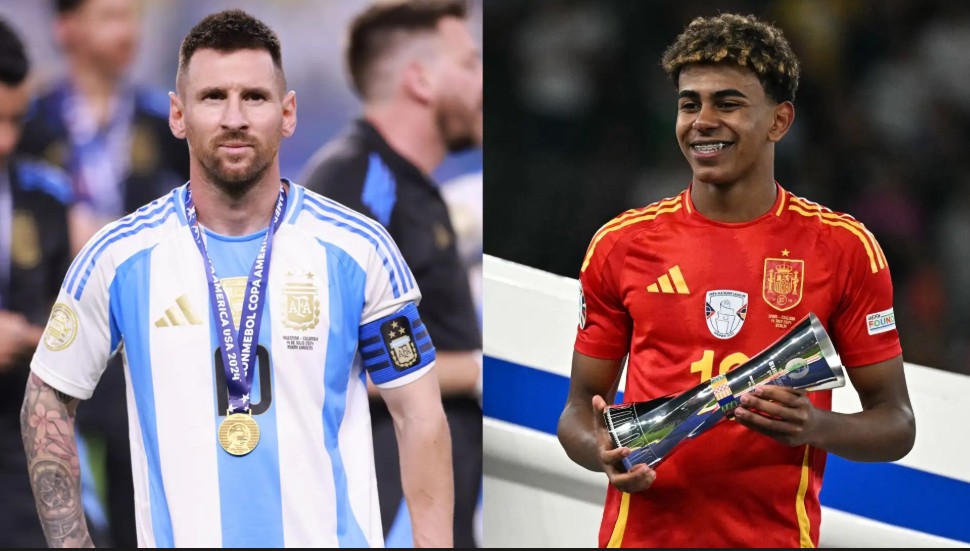
The Boy Who Entered Football History
And now comes Lamine Yamal.
Football has always been fascinated by young geniuses — players who appear before their time, carrying a confidence that seems impossible for their age.
Yamal belongs to that rare category.
His technical ability, creativity and decision-making have made him one of the most exciting young players in world football.
But what separates extraordinary young athletes from ordinary talented players is not just skill.
It is mentality.
The ability to perform while millions are watching.
The ability to remain calm when the pressure becomes overwhelming.
The ability to believe that the biggest stage belongs to you.
Yamal represents a new psychological generation of footballers — players who grew up watching legends like Messi, studying their movements, absorbing their mentality and dreaming of eventually standing alongside them.
The student has reached the classroom of the master.
Now the examination begins.
The Photograph That Captured Football’s Beautiful Mystery
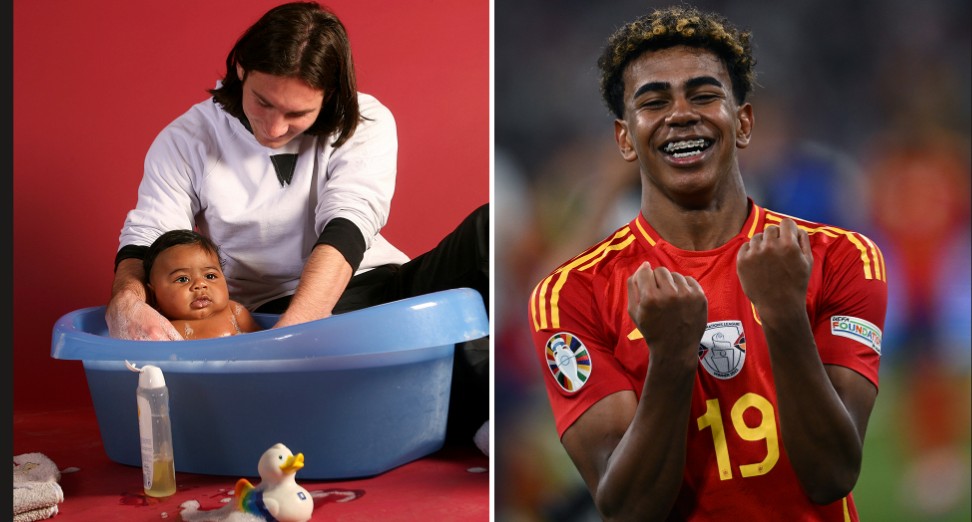
Few stories in football carry the emotional symbolism of the famous photograph involving Messi and a baby Lamine Yamal.
Nearly two decades ago, during a charity event in Barcelona, a young Lionel Messi participated in a UNICEF-related photoshoot where he interacted with a baby named Lamine Yamal.
At that moment, Messi was a young Barcelona talent beginning his extraordinary rise.
Yamal was simply a child.
No one could have predicted that years later, the two would share the biggest stage in football.
The photograph became a powerful reminder of football’s generational connection.
The young player once chasing his dreams became the legend inspiring another dream.
The child who once represented innocence became the footballer carrying the hopes of a nation.
History does not always announce itself.
Sometimes, it quietly appears in a photograph.
Argentina and Spain: Two Football Philosophies, One Global Stage
This final is also a meeting of football cultures.
Argentina represents emotional football — a nation where the sport is deeply connected to identity, pride and collective memory.
In Argentina, football is not simply entertainment.
It is family.
It is community.
It is national expression.
From Mario Kempes in 1978, to Diego Maradona in 1986, to Messi in 2022, Argentina has always produced players capable of carrying an entire nation’s emotions.
Spain represents football evolution.
The Spanish approach transformed modern football through intelligence, possession, technical discipline and collective movement.
The golden generation that won the 2010 World Cup demonstrated that football could be controlled through understanding as much as physical dominance.
Now, a new Spanish generation is emerging.
And Yamal stands as one of its brightest symbols.
The Master, The Apprentice and The Weight of Destiny
From a psychological perspective, moments like this are fascinating because they represent what sports scientists often describe as the transfer of confidence and identity between generations.
Young athletes do not simply inherit skills.
They inherit examples.
They inherit standards.
They inherit the belief that greatness is possible because someone before them achieved it.
Messi became Messi because he learned from those before him.
Yamal’s journey has been influenced by watching Messi.
But the greatest athletes eventually move from admiration to competition.
The apprentice must eventually challenge the master.
The child must eventually stand as an equal.
That moment has arrived.
The Final Score Will Enter The Record Books — But The Story Will Live Forever
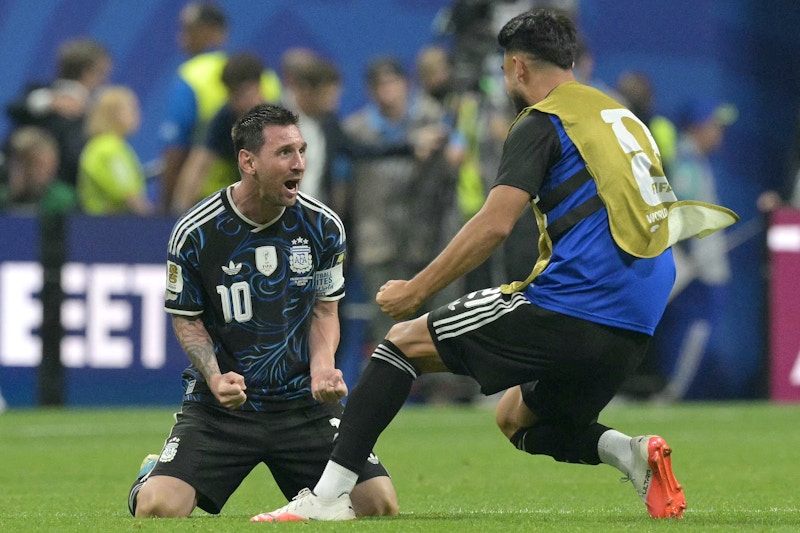
At the end of this final, history will record a winner.
A captain will lift the World Cup.
A nation will celebrate.
Another will experience heartbreak.
But beyond the scoreboard, football will have witnessed something much more profound.
A farewell to one era.
A welcome to another.
A reminder that greatness is not permanent ownership.
It is a responsibility passed from one generation to the next.
Messi’s legacy is already secured.
Whether Yamal wins or loses, his presence on this stage confirms that football’s future has arrived.
The beautiful game survives because every legend eventually inspires another legend.
Every champion creates another dreamer.
Every era gives birth to the next.
And on this historic night, Argentina and Spain will not only compete for the World Cup.
They will participate in football’s greatest tradition:
The passing of the torch.
