

On 6 October 2026, at the Estadio Monumental in Buenos Aires, Lionel Messi wore the shirt of Argentina for the last time. This is the story of that night, and of the twenty-one years that led to it.
The night the stadium held its breath
Before he appeared, the shirt appeared. It lay across the centre of the pitch, sky blue and white, as wide as a house, with a single number on its back. A hundred hands held its edges. Above it, the stands of the Monumental were already full and already singing.
Then the tunnel. He came down the steps slowly, the way a man walks through a house he is about to leave. Children lined the wall with their hands out, and he touched every one he could reach. One boy threw his arms around him and would not let go. He did not hurry the boy.
When he finally stepped into the light, the fireworks went up and the noise came down, and the cameras went looking for his face. They found his eyes first. They were already wet.
The greatest footballer of his age had come home to say goodbye, and for a few minutes the most famous man in the world looked like what he had always been underneath: a quiet boy from Rosario who never quite understood why everyone was looking at him.
The boy who was too small
Every legend needs a wound at its beginning, and his was in his bones. He was born in Rosario on 24 June 1987, and by the age of ten the doctors had given a name to what his family already knew: he was not growing. The treatment was a nightly injection that his family could not afford for long.
So the boy who was too small crossed an ocean. At thirteen he left Argentina for Barcelona, a club so anxious to keep him that its first promise to his father was scribbled on a paper napkin. He cried on the journey, and by his own account he cried often in those first months, far from the streets he knew. Then he picked up a ball, and the crying stopped.
It is worth remembering this, now that the statues are being cast. Nothing about him was inevitable. He was a child who injected his own legs every night so that one day he might be tall enough to be ordinary. He became something else instead.
Spain wanted him. He chose Argentina. His first cap, in August 2005, lasted barely two minutes before a referee sent him off, and he wept in the dressing room. It was a strange way to begin the longest love story in the modern game.
The years the shirt weighed more than he did
For a long time Argentina did not love him back. Not fully. In Barcelona he was a miracle on a weekly schedule. At home he was the boy who had left, who sang the anthem too quietly, who was not Diego.
And the finals kept slipping through his fingers. The Copa América of 2007. The World Cup of 2014 in Rio, lost to Germany deep in extra time, where he climbed the steps to collect the award for the tournament’s best player and walked past the trophy he actually wanted with the face of a man at a funeral. The Copa América of 2015, lost on penalties. The Copa América of 2016, lost on penalties again, his own kick sailing over the bar.
That night in New Jersey he said it was over. He told the cameras that the national team was finished for him, and for a few weeks a country had to imagine itself without him. It could not. Strangers begged him to stay. A schoolteacher’s open letter went around the world. He came back.
This is the part of the story that the highlight reels leave out, and it is the most important part. Greatness that has never been humiliated is only talent. He was humiliated in public, four times, in the shirt he loved most, and he kept putting it on.
The night the shirt finally fit
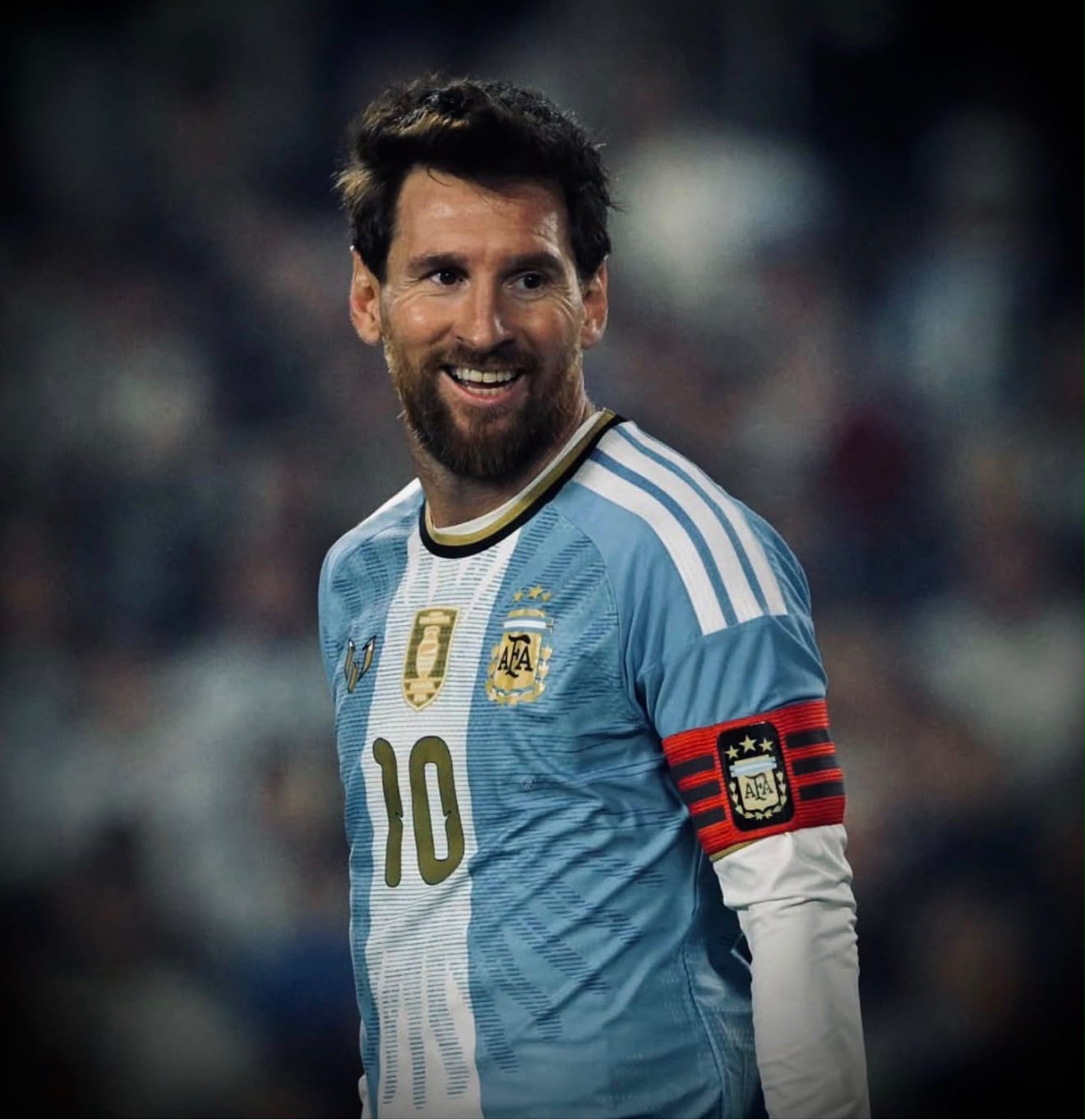
Redemption, when it came, came in the house of the enemy. On 10 July 2021, at the Maracanã in Rio de Janeiro, Argentina beat Brazil 1-0 and won the Copa América. At the final whistle he dropped to his knees and covered his face, and his teammates did not run to the trophy. They ran to him. He was thirty-four, and it was his first major title with his country.
Then Qatar. The tournament began with a defeat to Saudi Arabia that the whole world laughed at, and ended on 18 December 2022 in the greatest final the game has seen: Argentina 3, France 3, and then the long walk to the penalty spot. He scored twice that night and once more in the shoot-out. When he lifted the World Cup, the argument that had followed him for fifteen years simply stopped.
He could have left then, with the story complete. He stayed. He won the Copa América again in 2024, weeping on the bench with a swollen ankle while his teammates finished the job for him. And in the summer of 2026, at thirty-nine, he carried Argentina to one more World Cup final, his sixth tournament, with eight goals and four assists, before Spain beat them 1-0 after extra time.
On 31 August he announced that it was over. This time nobody doubted him, and nobody blamed him.
Ninety minutes to say goodbye
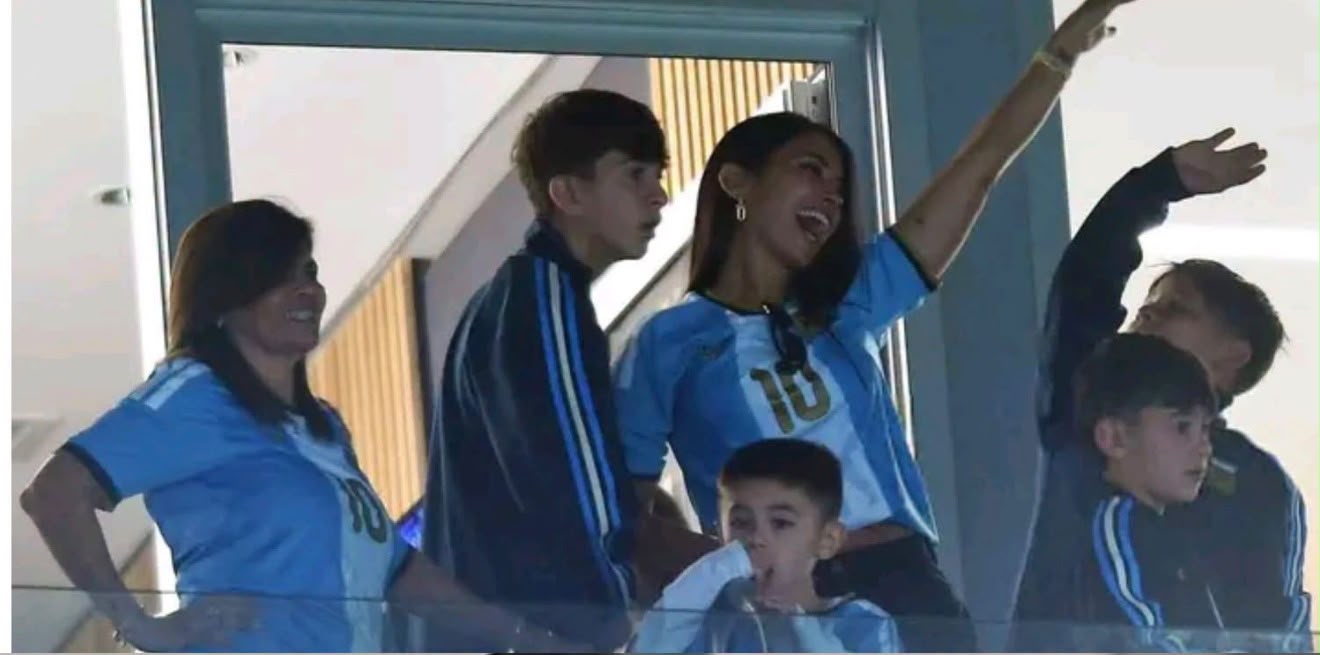
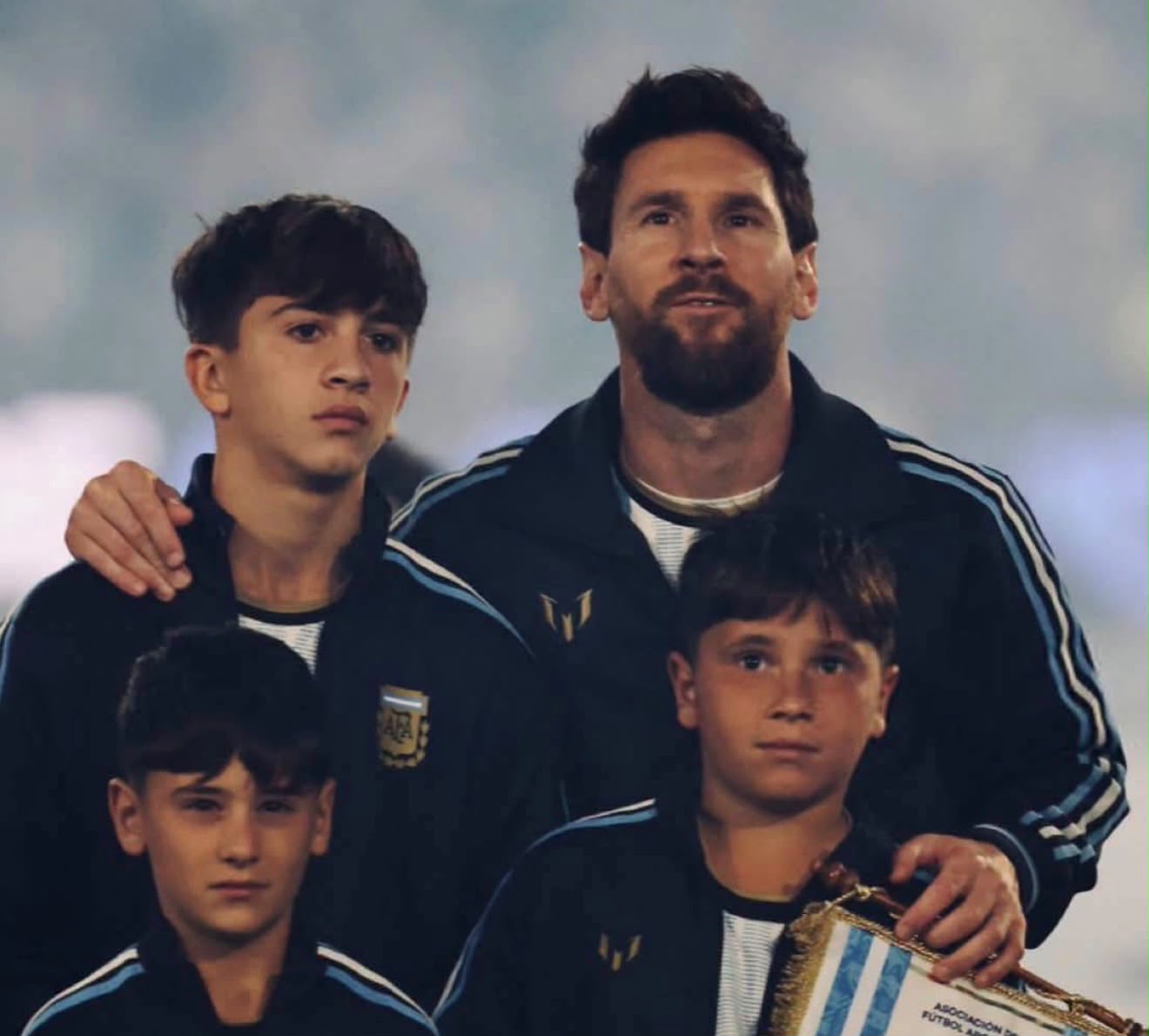
So they gave him a night. Eighty-five thousand people filled the Monumental, and the federation dressed him for it: a one-off shirt with wider stripes, a great sun, a golden number 10, and, hidden in the print on the back, the horns of a goat. He walked out with his sons, Thiago, Mateo and Ciro. When the anthem played he broke, and his goalkeeper, Emiliano Martínez, put an arm around his shoulders and held him up.
The opponent was Benin, and Benin had not come to be scenery. For forty-five minutes the Cheetahs made the party nervous. Aiyegun Tosin went close. Junior Olaitan forced Martínez into a save. Argentina’s coach, Lionel Scaloni, admitted afterwards that his players were so desperate to serve their captain that they forgot how to play.
Ten minutes in, the referee stopped the game. Both teams, the men in sky blue and the men in yellow, walked over to him one by one. He raised a hand to the stands. It is a rare thing in sport for a match to pause and bow.
Then the second half, and the old music. In the 48th minute he swung in a corner and Nicolás Otamendi headed it home. In the 61st he slid a pass to Nico Paz, twenty-two years old and born the year before that first red card, who finished with his left foot. In the 71st he stood over a penalty, and put it in the top corner. Argentina 3, Benin 0. A hand in all three. It was his 126th goal for his country, in his 208th game.
At thirty-nine, in a match arranged for sentiment, he had more shots, more chances created and more touches in the opposing box than anyone on the field. He did not know how to play a farewell. He only knew how to play.
Why Africa was in the room
There is a quiet justice in the fact that the last team to share a pitch with him came from our continent. Africa has been in his story from the first page.
His first world title of any kind was won against Africans. In 2005, in Utrecht, an eighteen-year-old Messi scored two penalties to beat Nigeria in the final of the World Youth Championship. Three years later, in Beijing, it was Nigeria again across the pitch in the Olympic final, and his pass that set up Ángel Di María for the only goal. At senior World Cups he met the Super Eagles in 2010, 2014 and 2018. Ask Vincent Enyeama, who spent an afternoon in Johannesburg keeping him out by himself.
At Barcelona he grew up beside Samuel Eto’o of Cameroon, Yaya Touré of Côte d’Ivoire and Seydou Keita of Mali. And far from any stadium, his name went where no scout ever travelled: painted on barbershop walls in Lagos, stitched on market-stall shirts in Cotonou, shouted on dust pitches from Accra to Nairobi by boys who had decided that the smallest one on the team would be Messi.
So when the Cheetahs of Benin lined up to embrace him in the tenth minute, they were not extras in an Argentine ceremony. They were delegates. They carried the thanks of a continent that never had him, and loved him anyway.
What makes him the GOAT
Begin with the ledger, because the ledger is absurd. Two hundred and eight games for Argentina and 126 goals, both national records. Six World Cups. One world title, two Copa Américas. Eight Ballons d’Or, which is more than any footballer has ever won. More than eight hundred goals across a career that began before some of his teammates could walk.
But numbers are what we reach for when we cannot explain a thing, and the numbers are not why grown men wept in Buenos Aires.
Pelé had power and joy. Maradona had fury and theatre. Messi had something quieter and stranger: he made the hardest game in the world look like a private conversation between a man and a ball. He rarely sprinted until the moment mattered. He walked, and watched, and seemed to read the next ten seconds of the match before anyone else had finished the last one. Defenders who knew exactly what he was going to do spent twenty years failing to stop him doing it.
He stayed on his feet when it would have been easier to fall. He passed when he could have shot. He let lesser players take the glory of the finish and looked happier for it. In an age that rewards noise, the best player on earth was the least interesting man at every press conference, and he seemed content with that.
And he endured. That is the word. Greatness is usually a flame, brilliant and brief. His was a hearth that burned for two decades, through four lost finals and one public resignation, until it finally warmed the house it was built for. His last coach said after the match that he never expected to manage the best footballer in history, and that he has never seen such an aura in another human being. That is not a statistic. That is a witness statement.
The last curtain
When the whistle went, they brought him a microphone and left him alone in the centre circle, a small man in a tracksuit top with eighty-five thousand people waiting for him to speak.
He called it “the saddest day of my career.” He said that wearing the shirt for more than twenty years had been his pride, that he had never stopped fighting for it even in the worst of times, and that if it were up to him he would go on playing for Argentina for the rest of his life. He said the first person in his mind was his father, Jorge, the man who had carried a sick child across an ocean on the strength of a promise written on a napkin, and who did not live to see this night.
Behind him, world champions cried like boys. Then he made the crowd a promise of his own. “Now I’ll be on your side,” he said: one more supporter in the stands, singing for whoever comes next.
He did not want to leave the pitch, and for a while he did not. He walked a slow lap by himself, looking up at the tiers as if trying to memorise each face. Fireworks and a drone show lit the sky above him. Somewhere in those stands there was surely a child too young to remember any of it, who will one day ask who that man was. The parent will try to explain, and will not manage it.
That is how it ends. Not with a trophy, though he has those. Not with a goal, though he scored one. It ends with a man standing in the place he loved most, reluctant to go, while a stadium refused to stop singing his name.
The curtain is drawn. The stage will have other players. It will not have another one of him.
Gracias, Leo.
About the film
This article accompanies Messi The Goat: The Last Curtain Drawn, a six-minute short documentary produced by 1stafrika.com and written, edited and produced by Jide Adesina. The film follows the night in six chapters: The Arrival, The Song, The Beauty of the Game, The Ones He Played For, The People and The Goodbye.
Footage and picture credits
- Broadcast footage: ELEVEN and TyC Sports, as identified by the broadcasters’ on-screen marks, which remain visible on that footage in the film.
- Additional clips and photographs: the crowd clip, the schoolchildren’s celebration and the still photographs are credited to their original owners. Named credits to be added before publication.
- All footage and photographs remain the property of their respective broadcasters and rights holders. 1st Afrika claims no ownership of the match footage.
Sources
Match details, attendance, the speech and the post-match remarks are drawn from these reports, read on 7 October 2026:
- Associated Press, via ABC News: Messi caps Argentina farewell with a penalty and 2 assists in a 3-0 win over Benin
- beIN SPORTS: Lionel Messi ‘at peace and proud’ after Argentina farewell
The account of his earlier career is drawn from the public record.
