

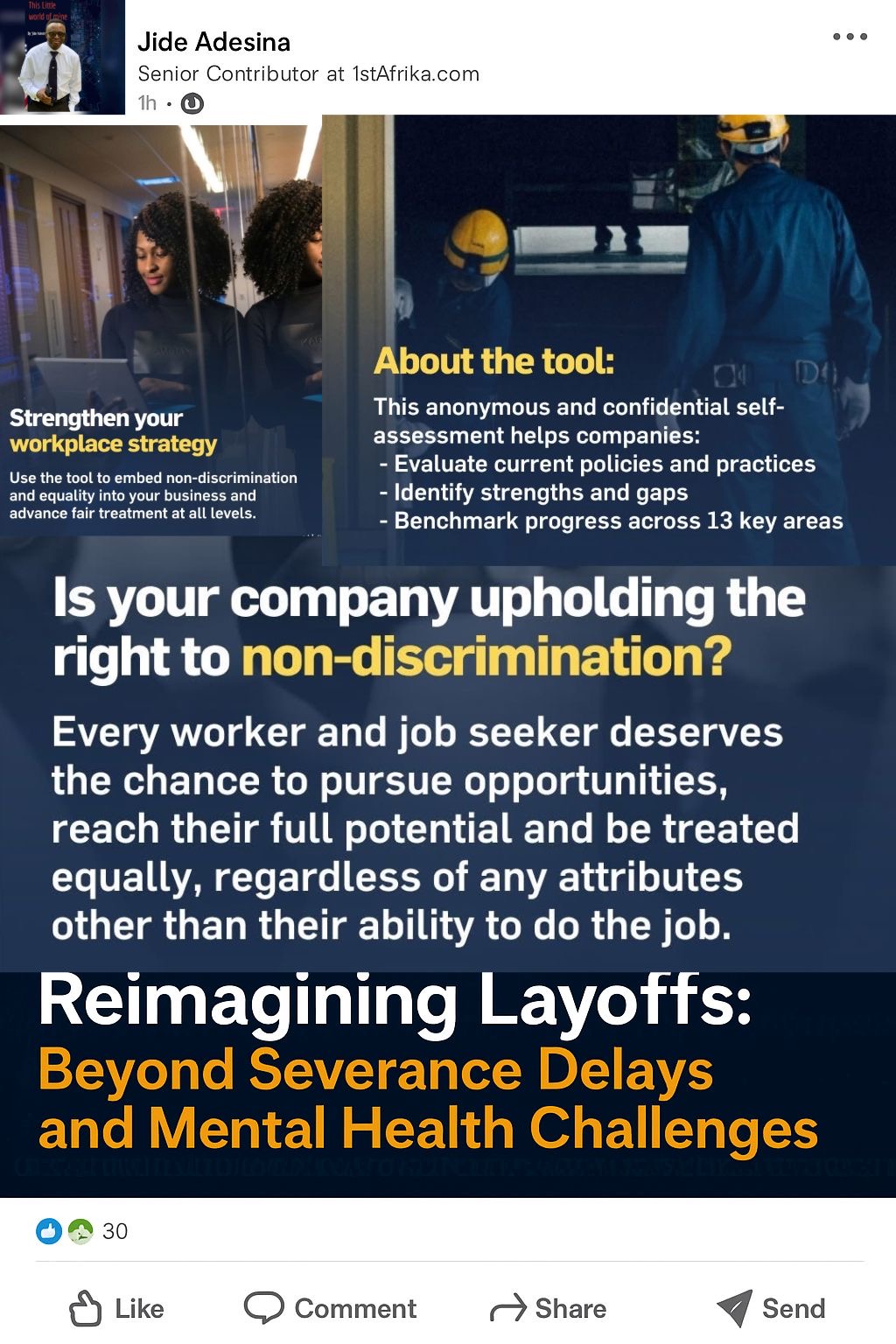
 In today’s volatile corporate landscape, being laid off is no longer an anomaly. From tech giants to manufacturing firms, corporations continue to release employees by the thousands—often with cold, automated messages, silent security escorts, and vague promises of severance. But while corporate profit sheets recover, the human cost—especially the psychological trauma and financial strain—often goes unnoticed, unmeasured, and unresolved.
What lingers behind the polished statements of “restructuring” and “market realignment” is an unspoken epidemic: the anguish of delayed severance payments, discriminatory exit procedures, and a mental health crisis worsened by neglect and betrayal. And while society is quick to label the aftermath as mental illness or, in some tragic cases, workplace violence, we must ask a deeper question: Where is the government’s accountability structure to ensure that corporations treat laid-off workers with the same dignity they demand when recruiting them?
Severance Delay: A Systemic Failure in Disguise
For many employees, especially in the U.S., severance is not just a contractual obligation—it’s a lifeline. It’s the bridge that helps a worker breathe, survive, and recalibrate after losing the income that feeds their family. Yet, countless companies delay these payments without consequence, leaving workers suspended in financial limbo.
 In 2023 alone, thousands of laid-off employees from major companies reported delayed severance or unexplained gaps in receiving their 401(k) rollover, stock options, or final paychecks. Employees of a prominent software firm in California described waiting months—some up to 180 days—for severance, even after being promised “immediate compensation upon termination.” When asked, the company cited “administrative backlog,” a response disturbingly common across industries.
But these delays are not mere paperwork issues. For a recently laid-off father, this delay can mean missed mortgage payments. For a single mother, it’s choosing between medicine and rent. For someone on the brink of a mental breakdown, it may be the final push into a dark place.
When Corporate Negligence Turns Tragic
In recent years, America has seen a haunting trend—workplace-related gun violence following layoffs or toxic terminations. One of the most chilling incidents occurred in February 2020, when an employee at a manufacturing plant in Aurora, Illinois, opened fire after being informed of his termination. Five were killed. Investigation later revealed he had been denied severance and escorted out aggressively.
In 2022, a laid-off engineer in California, after months of trying to retrieve unpaid stock earnings and being bounced between HR and finance departments, committed suicide. His family would later sue the company, alleging psychological distress caused by the firm’s deliberate delay and lack of support.
While these are extreme cases, they reflect a broader problem: when corporations ignore the humanity of those they lay off, they plant the seeds of unrest, despair, and sometimes, violence.
Government Cannot Be Silent
There is no shortage of agencies meant to protect the American worker—Department of Labor, Equal Employment Opportunity Commission, state labor boards—but none of them has created enforceable federal policy around mandatory severance timelines, transitional mental health counseling, or anti-discrimination audits during layoffs. This must change.
The U.S. government and other national systems around the world must begin holding companies accountable before layoffs are executed. Corporations should be legally required to:
• File pre-layoff impact reports that outline how the severance will be paid and who will be disproportionately affected (e.g., race, gender, disability).
• Guarantee severance payment timelines, with legal consequences for delays.
• Provide mental health counseling and outplacement services for every laid-off employee.
• Automatically trigger unemployment insurance support within 72 hours of layoff confirmation.
• Make 401(k) disbursements or rollovers seamless, especially for older employees approaching retirement.
Moreover, companies with repeated complaints of prejudice or discriminatory exit practices should face federal audits, with results made public. For too long, systemic racism and workplace discrimination have been camouflaged beneath the spreadsheets of “performance restructuring.” This culture must end.
A Culture of Silence: The Hidden Mental Toll
Today, many employees suffer in silence. After being laid off, some are left without health insurance, without therapy options, and without legal help. They battle depression, anxiety, shame, and isolation—all while society demands they “move on.”
But moving on is not always a linear process. The psychological weight of being discarded, especially when paired with financial insecurity and perceived injustice, creates the perfect storm for mental health deterioration.
We cannot keep diagnosing people with mental illness without first addressing the structural violence that pushed them into despair. It’s not always a chemical imbalance—it’s often the slow erosion of dignity, the unanswered emails to HR, the cold bureaucracy that treats people like broken assets.
From Termination to Transition: What Support Should Look Like
Laid-off workers deserve more than a pat on the back or a pre-written reference letter. They need a national transition infrastructure—a real, funded framework to help them re-enter the workforce or reinvent their lives.
Imagine a system where:
• The moment a layoff is confirmed, employees are paired with a state-backed career coach.
• A mental health professional is assigned, with six months of counseling covered by either the company or the state.
• A digital transition portal tracks all severance, benefits, and next steps, ensuring transparency and dignity.
• Employees from vulnerable communities (e.g., immigrants, disabled individuals, single parents) receive additional support to prevent long-term socioeconomic damage.
It is possible. But only if governments stop acting like observers and start governing.
The Call to Act
Corporations must no longer be allowed to evade their moral and legal responsibilities by hiding behind PR statements and legal teams. Governments must legislate with urgency. Labor departments must enforce with courage. And society must stand with workers—not only when they succeed, but especially when they fall.
The silence after a layoff is not just about income lost—it’s about identity fractured, trust betrayed, and dignity denied. If we don’t fix the system now, we will continue to see broken people trying to rebuild themselves in a world that never should have shattered them in the first place.
Let us build a future where layoffs don’t mean collapse, where transitions are humane, and where every worker, no matter how they exit, is treated with the same honor they gave to the job.
By Jide Adesina
Senior Contributor | 1stAfrika.com
Policy | Governance | Labor Equity
July, 2025
Cc – US. Department of Labor
