

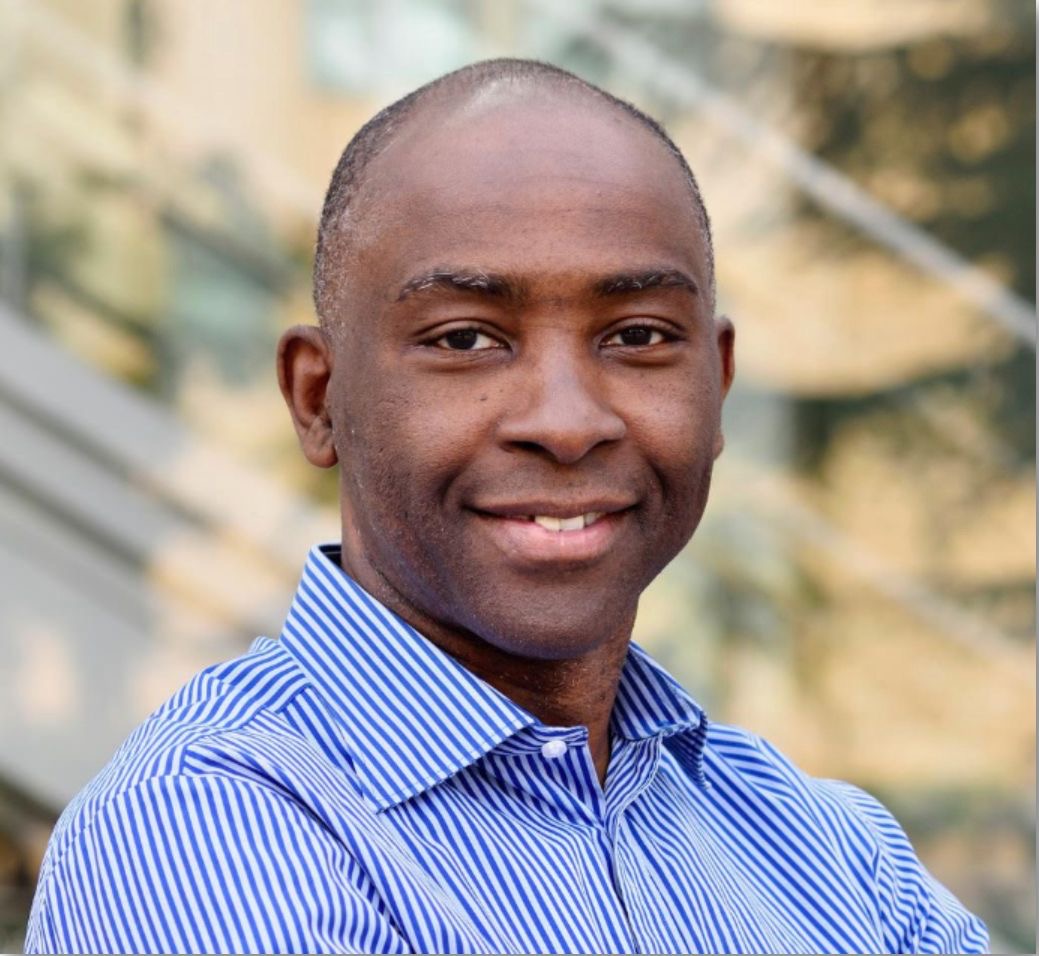
For more than three decades, Kunle Olukotun has done something very few technologists ever achieve: change the basic shape of a machine the world takes for granted. The British‑born Nigerian professor at Stanford University is widely credited as a pioneer—often described as the “father of the multicore processor”—for advancing the idea that many modest CPU cores working in parallel can beat one gargantuan core trying to do everything at once. That shift in chip design reshaped servers, smartphones, and supercomputers, and it unleashed the practical parallelism modern artificial intelligence feeds on today.
Olukotun’s most famous academic milestone is the Stanford Hydra Chip Multiprocessor project, a research effort that put multiple general‑purpose processor cores and their caches on a single die and then tackled the hardest part: making ordinary programs run fast on them. Hydra didn’t just bundle cores—it added hardware support for “thread‑level speculation,” an approach that lets the machine execute pieces of a sequential program in parallel and roll back safely if dependencies are violated. That combination—single‑chip multiprocessor plus speculative parallelism—became a landmark in the literature and a blueprint for real systems.
The historical claim that Olukotun “invented” multicore is too simple; parallel processors, and even dual‑core chips, had prior art. What Hydra established—clearly and measurably—was that a chip built as several simpler cores could outperform ever‑wider “superscalar” single cores while using less power and silicon complexity, provided the architecture and software cooperated. That insight now feels obvious. It wasn’t in the 1990s. Hydra’s papers and follow‑on work helped persuade an industry staring down the limits of frequency scaling that parallelism on a chip was not only feasible but essential.
 The bridge from laboratory to marketplace came quickly. In 2000, Olukotun co‑founded Afara Websystems around a radical, thread‑heavy SPARC design for energy‑efficient web servers. Sun Microsystems acquired Afara in 2002; three years later, Sun released UltraSPARC T1 “Niagara,” an eight‑core, 32‑thread processor that became the flagship of its CoolThreads line. Niagara proved the commercial logic of multicore‑plus‑multithreading for internet workloads and seeded a generation of massively parallel server processors. Oracle’s later SPARC servers carried that DNA forward.
Academic recognition followed. Olukotun is a Fellow of both the ACM and IEEE, a 2021 electee to the U.S. National Academy of Engineering, recipient of the IEEE Computer Society’s 2018 Harry H. Goode Memorial Award, and the 2023 ACM–IEEE CS Eckert–Mauchly Award—computer architecture’s highest honor—for “contributions and leadership in the development of parallel systems, especially multicore and multithreaded processors.” These honors reflect a through‑line in his career: invent the hardware, co‑design the software, and show the world where the performance gains truly live.
If multicore processors were the spark, artificial intelligence became the wildfire. After returning to Stanford to lead the Pervasive Parallelism Lab (PPL), Olukotun pushed beyond cores into the next frontier—domain‑specific computing. With collaborators, his group created the Delite framework and domain‑specific languages such as OptiML, which compile high‑level machine‑learning code into optimized kernels that run efficiently across CPUs, GPUs, and FPGAs. The philosophy was simple: instead of asking every developer to master CUDA, OpenMP, and MPI, capture the intent in a focused language, then let compilers and runtimes orchestrate the parallelism. That approach prefigured today’s explosion of specialized ML compilers and accelerators.
In 2017, Olukotun co‑founded SambaNova Systems to industrialize that idea at silicon scale. Rather than bolt AI onto general‑purpose GPUs or CPUs, SambaNova’s “Reconfigurable Dataflow Architecture” centers on a new processor, the Reconfigurable Dataflow Unit (RDU), and a full stack called SambaFlow. The RDU is built as a tiled fabric of reconfigurable compute and memory units that the compiler maps directly to an application’s dataflow graph. The result is to push whole ML layers, tensor contractions, and even SQL operations into spatial pipelines that minimize data movement—the true enemy of performance and efficiency. This is not a tweak to the old von Neumann model; it is a reconception of the machine around the flow of data in modern AI.
At Argonne National Laboratory’s AI Testbed, for example, the SN30 generation of SambaNova systems arranges eight RDUs per node and scales across racks, while SambaFlow ingests PyTorch graphs and maps them automatically. In published material and white papers, the company shows how dataflow execution reduces costly memory traffic and allows training and inference on large models without the endless hand‑tuning that GPU kernels often demand. Whether for scientific workloads or enterprise LLMs, the thesis is consistent with Olukotun’s earlier work: the fastest path is the one that respects the structure of the computation and the physics of moving bits.
This technological arc—Hydra’s parallel cores, Niagara’s commercial multithreading, PPL’s domain‑specific languages, and SambaNova’s dataflow silicon—has had an outsize impact on AI’s current boom. Large‑scale recommendation engines, transformer models, and autonomous systems are all exercises in orchestrating massive parallelism under tight energy and latency budgets. Without multicore’s normalization of parallel processing and the accompanying software ecosystems that Olukotun championed, it’s hard to imagine AI progressing at anything like today’s pace.
The influence stretches well beyond data centers. In robotics, the union of many cores and specialized accelerators enables real‑time perception and control, where dozens of concurrent threads ingest sensor streams, run neural networks, and plan motion within strict deadlines. In mobile and edge computing, multicore SoCs balance always‑on AI inference against battery life. In cloud economics, thread‑rich servers like Niagara demonstrated how to pack more useful parallel work per watt and per rack unit—principles that hyperscalers now apply across fleets of CPU, GPU, and accelerator nodes. In high‑performance computing, dataflow architectures promise to reduce the energy per training step and push giant models closer to sustainability. Each of these advances rests on the same foundation: treat parallelism as the default, not the exception.
Olukotun’s story also resonates culturally. The son of Nigerian parents, he has kept Yoruba touchstones close—naming his startup Afara, “bridge,” in Yoruba—while bridging academia, entrepreneurship, and national labs. For students from Africa and the diaspora who rarely see their heritage reflected in the pantheon of computer architecture, his trajectory is not just inspiring; it is a proof of participation at the field’s highest level.
None of this is to say he “single‑handedly” transformed the industry. Computer architecture is a relay, not a sprint. IBM’s POWER4, DEC and Intel research programs, Sun’s own multiprocessor lines, NVIDIA’s GPU compute push, and a global army of software and systems engineers all advanced the cause. What makes Olukotun singular is the coherence of his contributions across the stack and across time: he argued for multicore when the world still worshipped frequency; he proved it on real chips and real workloads; he built the tools to make parallel machines usable; and when AI’s appetite dwarfed incremental gains, he embraced a new architecture—the dataflow RDU—that once again aligns hardware with how we actually compute. That pattern—see the wall before others do, then re‑architect to go around it—is why his peers honored him with the Eckert–Mauchly Award and why his research remains a touchstone for the next generation.
As AI systems scale, the next challenges are already visible. Memory is becoming the bottleneck of everything; programmability must expand from kernels to entire dataflows and pipelines; and sustainability will determine which architectures thrive. Olukotun’s current work—both at Stanford’s Pervasive Parallelism Lab and through SambaNova—aims squarely at these problems by combining high‑level domain‑specific programming models with hardware that natively executes the graphs those models produce. If the past is prologue, that blend of ideas and implementation will keep pushing computing toward systems that are not just faster, but smarter about how they spend every joule and every nanosecond.
Disclosure and fact‑check notes for readers: Olukotun is widely referred to in reputable profiles and press as the “father of the multicore processor,” a recognition of his pioneering role in single‑chip multiprocessors and multithreaded server CPUs. The phrase is an honorific, not a claim of sole invention. Historical timelines include other important multicore milestones beyond Hydra and Niagara. The awards, projects, and company details cited here are confirmed by Stanford, ACM/IEEE, and SambaNova sources.
