

A Must-Watch Historical Epic for Every Lover of African History and Culture
Film Reviewed by Jide Adesina
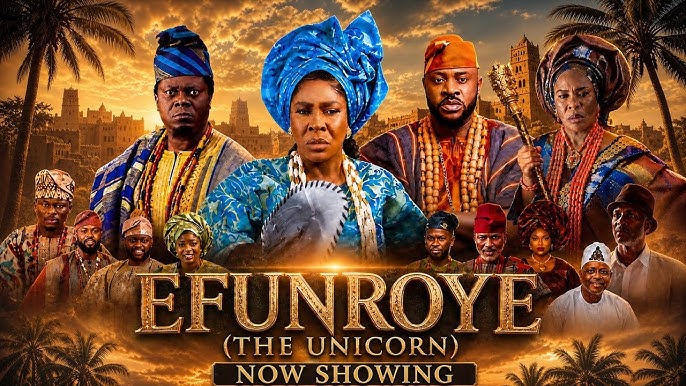
In an era when African stories are increasingly finding their rightful place on the global stage, Efunroye: The Unicorn emerges as one of Nollywood’s most ambitious and visually captivating historical epics. Produced by acclaimed actress and filmmaker Faithia Williams, the film revisits the life and times of Madam Efunroye Tinubu, one of the most influential women in nineteenth-century West African history, bringing her remarkable journey to life through a blend of drama, culture, politics, and historical imagination.
From the opening scenes, the film immerses viewers in a richly reconstructed Yoruba world filled with royal intrigues, commerce, tradition, spirituality, and the struggle for power. Every frame reflects an intentional effort to showcase the grandeur of Yoruba civilization, from the elaborate costumes and palace settings to the carefully choreographed cultural performances and traditional music. Critics and audiences alike have praised the film’s production quality, cultural authenticity, and emotional depth, while the movie has achieved impressive box-office success across Nigerian cinemas.
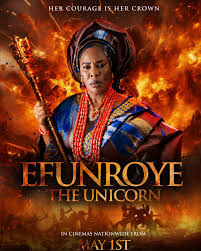
What immediately stands out about Efunroye is its visual ambition. The cinematography captures the majesty of a bygone era with remarkable elegance. The attention to detail in costume design, set construction, language, and cultural symbolism demonstrates a level of commitment rarely seen in historical productions. The film does not merely tell a story; it recreates a world.
Faithia Williams delivers a commanding performance in the title role, portraying Efunroye as a woman of extraordinary intelligence, resilience, and determination. She embodies the complexities of leadership and ambition, presenting a character who navigates a male-dominated political landscape with courage and strategic brilliance. Supporting performances from some of Nollywood’s most respected actors further elevate the production, creating a compelling ensemble that sustains the film’s emotional and dramatic weight.
Perhaps the greatest achievement of Efunroye lies in its ability to provoke conversation. Historical figures are rarely simple heroes or villains, and Efunroye Tinubu remains one of the most debated personalities in Nigerian history. The film embraces this complexity, encouraging audiences to engage with history rather than ignore it. While some critics have questioned aspects of its interpretation, the very existence of such debate underscores the film’s significance. Great historical cinema does not merely entertain; it inspires discussion, reflection, and renewed interest in the past.
Beyond its historical themes, the movie serves as a celebration of African storytelling. For decades, many African stories have been told through foreign lenses. Efunroye is a reminder that Africans possess the creative talent, cultural depth, and cinematic capability to tell their own stories with authenticity and grandeur. The film represents a growing confidence within Nollywood, an industry increasingly willing to invest in large-scale productions that showcase the richness of African history and heritage.
The soundtrack deserves special recognition. Traditional Yoruba musical elements are woven seamlessly into the narrative, enhancing the emotional resonance of key scenes. The music does not merely accompany the story; it becomes part of the storytelling itself, helping to transport audiences into the historical world the filmmakers have created.
What makes Efunroye especially relevant today is its portrayal of female leadership. At a time when discussions about women’s roles in politics, business, and society continue across Africa and beyond, the story reminds viewers that powerful African women have shaped history for centuries. Whether one agrees with every interpretation presented in the film or not, there is no denying that Efunroye Tinubu’s influence on the political and economic landscape of her time remains remarkable.
The commercial success of the film demonstrates that audiences are hungry for stories rooted in African history and culture. Its strong box-office performance reflects widespread appreciation for a production that combines entertainment with cultural education. Moviegoers have praised its storytelling, visual quality, historical significance, and emotional impact, helping establish it as one of the standout Nollywood releases of the year.
As a cinematic experience, Efunroye: The Unicorn succeeds on multiple levels. It entertains. It educates. It provokes thought. Most importantly, it celebrates African history through the power of film. In doing so, it contributes to the ongoing evolution of Nollywood as a global cultural force.
This is more than a movie. It is a cultural event. It is a tribute to Yoruba heritage. It is a reminder that African history is filled with stories worthy of the world’s attention.
For lovers of history, culture, politics, and epic storytelling, Efunroye: The Unicorn is not merely recommended—it is essential viewing.
It is a film that deserves to be seen, discussed, and celebrated.
Verdict: 9/10
A visually stunning and culturally significant historical epic that showcases the growing maturity and ambition of Nollywood. Whether viewed as a historical drama, a cultural celebration, or a cinematic spectacle, Efunroye stands as one of the most important Nigerian films of recent years.
Must Watch.
