

 Ethiopian Airlines Group, Africa’s aviation giant and one of the world’s fastest-growing airline brands, has added yet another milestone to its illustrious history. The airline recently inaugurated the Yabello Airport in southern Ethiopia’s Oromia Regional State, marking not only an expansion of its domestic aviation network but also a renewed commitment to regional connectivity, economic growth, and community empowerment.
The ceremony in Yabello was attended by senior government officials, Ethiopian Airlines executives, community leaders, and a host of stakeholders who gathered to witness the unveiling of a project years in the making. Beyond the celebration of a new airport, the event symbolized the power of aviation as a catalyst for development, integration, and national pride.
A Landmark Inauguration
The Yabello Airport, constructed at a cost surpassing 1 billion Ethiopian Birr, sits approximately 11 kilometers from Yabello Town in Borena Zone, a region historically underserved by modern transport infrastructure. The project features a modern airfield, a network of access roads, a temporary terminal, and all essential support facilities needed to meet international operational standards. While modest in its initial design, the airport is built with scalability in mind, ensuring it can expand alongside the growth of passenger demand and commercial activity.
Speaking at the inauguration, Ethiopian Airlines Group CEO, Mr. Mesfin Tasew, emphasized the broader significance of the project. “The Yabello Airport reflects our dedication to building aviation infrastructure that connects communities and transforms lives across Ethiopia,” he said. “This is a proud moment for us as Ethiopia’s flag carrier, as we contribute to the region’s socio-economic progress.” His remarks underscored a reality that has long been true for Ethiopian Airlines: the carrier does not simply fly aircraft, it drives development and integration across the Horn of Africa and beyond.
Regional Impact and Socio-Economic Promise
The opening of the Yabello Airport is more than just a ribbon-cutting exercise; it has the potential to transform the socio-economic fabric of southern Oromia and the wider Borena Zone. Long characterized by limited infrastructure and vast distances that slowed economic activity, the region can now expect improved access to markets, faster mobility for its people, and an open door to tourism and investment.
For Borena’s communities, the airport is an invitation to opportunity. Farmers, traders, and small-scale entrepreneurs will find easier routes to transport their goods to urban centers. Young people in the region will see expanded employment opportunities in aviation, hospitality, and logistics. Moreover, improved accessibility can help attract investment in industries such as agribusiness, livestock, and eco-tourism—sectors well-suited to the natural and cultural wealth of the region.
Tourism, in particular, stands to benefit. Yabello and its surrounding areas are rich in cultural traditions and natural attractions, including the Borena rangelands, traditional Gadaa governance heritage, and unique wildlife habitats. With improved air connectivity, these assets can be better showcased to domestic and international travelers, contributing to Ethiopia’s growing tourism sector.
The strategic significance of the airport also aligns closely with Ethiopia’s national development blueprint, which emphasizes infrastructure development, regional equity, and sustainable growth. By linking underserved areas to the national grid of commerce and mobility, projects like Yabello embody the government’s goal of balanced national progress.
Ethiopian Airlines: Africa’s Aviation Powerhouse
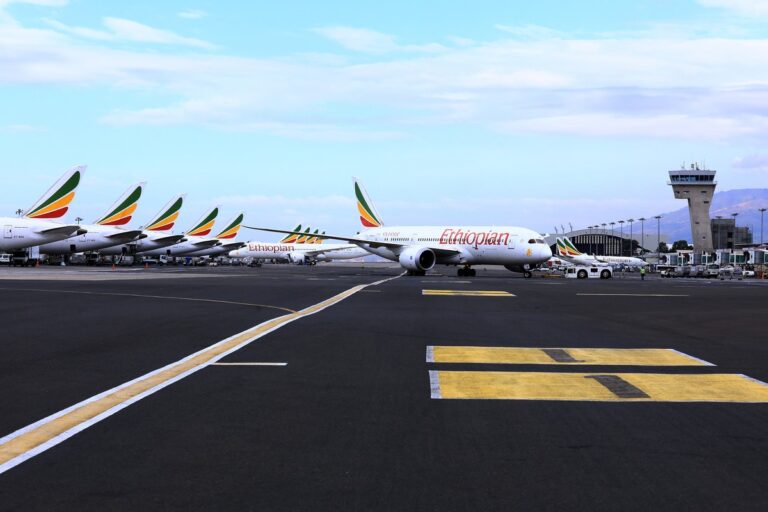
The success of the Yabello project cannot be divorced from the larger story of Ethiopian Airlines. Founded in 1945, the airline has grown into Africa’s largest and most prestigious carrier, consistently setting benchmarks for operational excellence, innovation, and connectivity. With a modern fleet that includes Boeing 737s, 777s, and 787s, Airbus A350-900s and A350-1000s, as well as De Havilland Q400 turboprops, Ethiopian Airlines has created a fleet mix that balances efficiency, sustainability, and passenger comfort.
Currently, the airline operates flights to over 160 destinations across five continents, connecting Africa to the world like no other carrier on the continent. Its membership in the Star Alliance has further solidified its global standing. Over the years, it has accumulated a string of international awards, including the coveted Skytrax “Best Airline in Africa” for eight consecutive years, as well as recognition from APEX and other global aviation bodies. These accolades reflect a track record of reliability and leadership that makes Ethiopian a model of African excellence in aviation.
Beyond passenger flights, Ethiopian Airlines also dominates the cargo sector. With its dedicated cargo fleet and state-of-the-art cargo terminal in Addis Ababa—one of the largest in the world—the airline plays a vital role in global supply chains, particularly for Africa’s agricultural exports such as coffee, flowers, and fresh produce.
Looking Ahead: Vision 2035 and Pan-African Leadership
The inauguration of Yabello Airport forms part of Ethiopian Airlines’ grand “Vision 2035” strategy, an ambitious roadmap that aims to position the airline among the top 20 aviation groups globally. This vision is anchored not only on expanding fleet size and route networks but also on investing in aviation infrastructure, training, and technology.
Part of this strategy involves developing a multi-hub presence across Africa. Ethiopian has already established successful partnerships in Lomé, Togo (ASKY Airlines), Lilongwe, Malawi (Malawi Airlines), Lusaka, Zambia (Zambia Airways), and is working to strengthen operations in Kinshasa, Democratic Republic of Congo (Air Congo). These hubs create a web of connectivity that ensures African passengers are not solely reliant on European or Middle Eastern transit points but can travel within and beyond Africa with greater ease.
For Ethiopia itself, the national carrier’s expansion is more than an aviation achievement—it is a pillar of state strategy. The airline consistently contributes to foreign exchange earnings, job creation, and the country’s global image. With projects like Yabello, it also ensures that development is decentralized, reaching communities that might otherwise remain excluded from the benefits of globalization.

A Gateway to Opportunity
The Yabello Airport is not merely a terminal for flights; it is a symbol of progress, resilience, and opportunity. It demonstrates how strategic infrastructure investment can redefine the fortunes of a region, creating ripples that extend far beyond aviation. For Ethiopian Airlines, it is another feather in its cap, showcasing its role as both a commercial entity and a development partner for Ethiopia.
By linking southern Oromia to Addis Ababa and the rest of the world, Ethiopian Airlines is doing more than flying planes—it is bridging cultures, enabling commerce, and creating pathways for a brighter, more connected future. The inauguration of Yabello Airport, therefore, stands as both a celebration of achievement and a promise of possibilities yet to unfold.
