

Football has always been more than ninety minutes played on a rectangular field. It is emotion, identity, history, culture, and a global conversation carried by billions of people across continents. The World Cup, more than any other sporting event, transforms the game into a stage where nations tell their stories, where dreams collide, where heroes emerge, and where the world watches not only how teams compete but also how societies respond under pressure.
The World Cup is a reflection of humanity itself. It brings together different nations, cultures, languages, histories, and experiences under one shared passion. It creates moments of celebration, but it also exposes deeper conversations about society, leadership, identity, and responsibility.
That is why the controversy involving French football superstar Kylian Mbappé and Paraguayan Senator Celeste Amarilla created such a powerful reaction across the global football community. The issue was not simply about a football match, a political statement, or a social media exchange. It became a larger conversation about race, identity, public responsibility, freedom of expression, and whether the passion surrounding sport can sometimes become a vehicle for division rather than unity.
The incident arrived at a moment when football should have been celebrating competition and achievement. Paraguay’s national team had captured global attention with its World Cup campaign, representing a nation whose football culture carries deep pride and emotional investment. France, meanwhile, entered the tournament as one of the world’s football powers, led by Mbappé, a player whose career has placed him at the center of conversations about talent, heritage, migration, and modern football.
But instead of the conversation remaining about tactics, performances, and sporting excellence, attention shifted toward a political and cultural confrontation after comments made by Senator Amarilla about Mbappé circulated publicly.
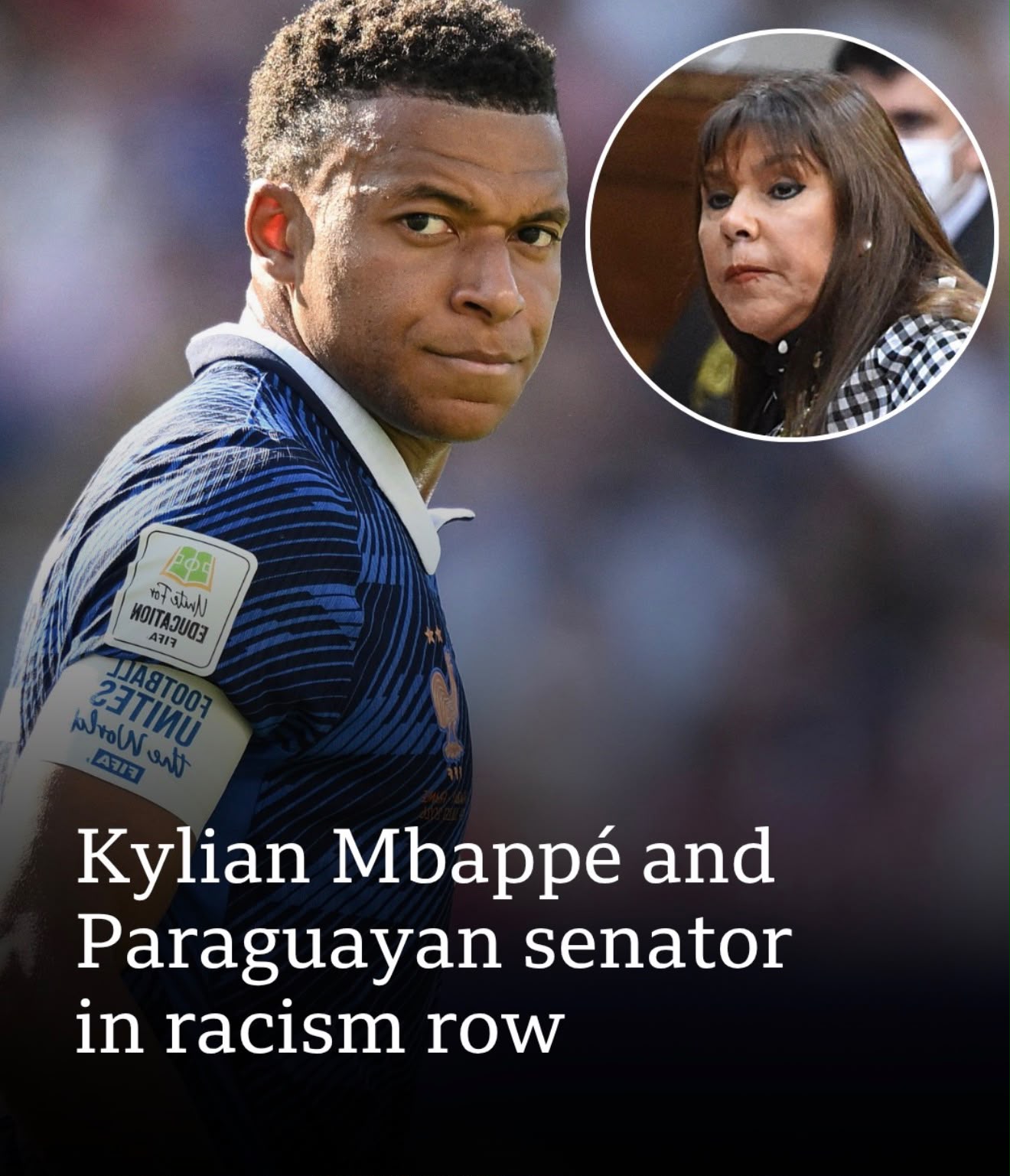
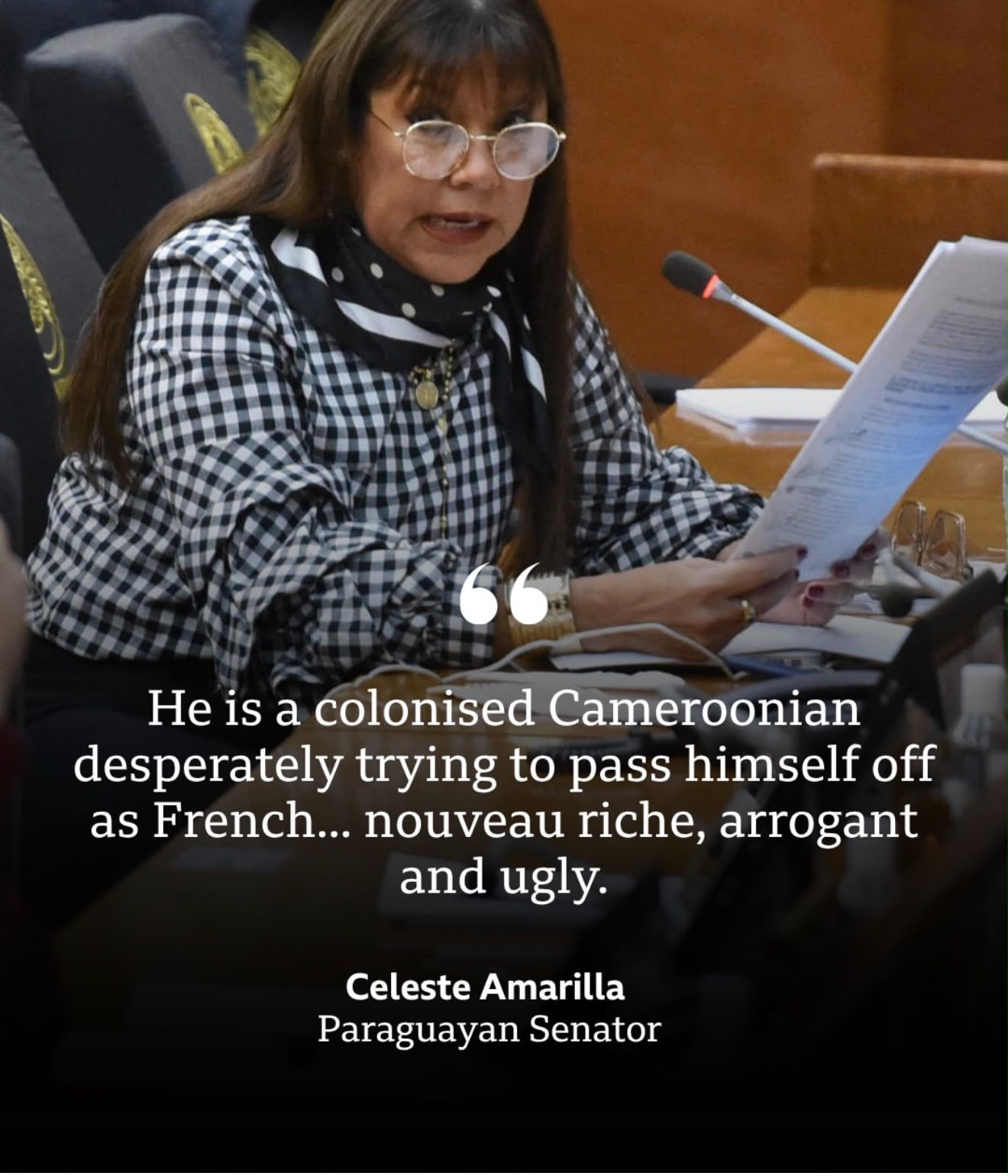
The remarks generated immediate criticism because many observers interpreted the language as targeting Mbappé’s African heritage and identity rather than simply criticizing him as a footballer. Referring to a player through the lens of colonial history and ancestry opened a much deeper debate about how public figures speak about athletes whose backgrounds represent multiple worlds.
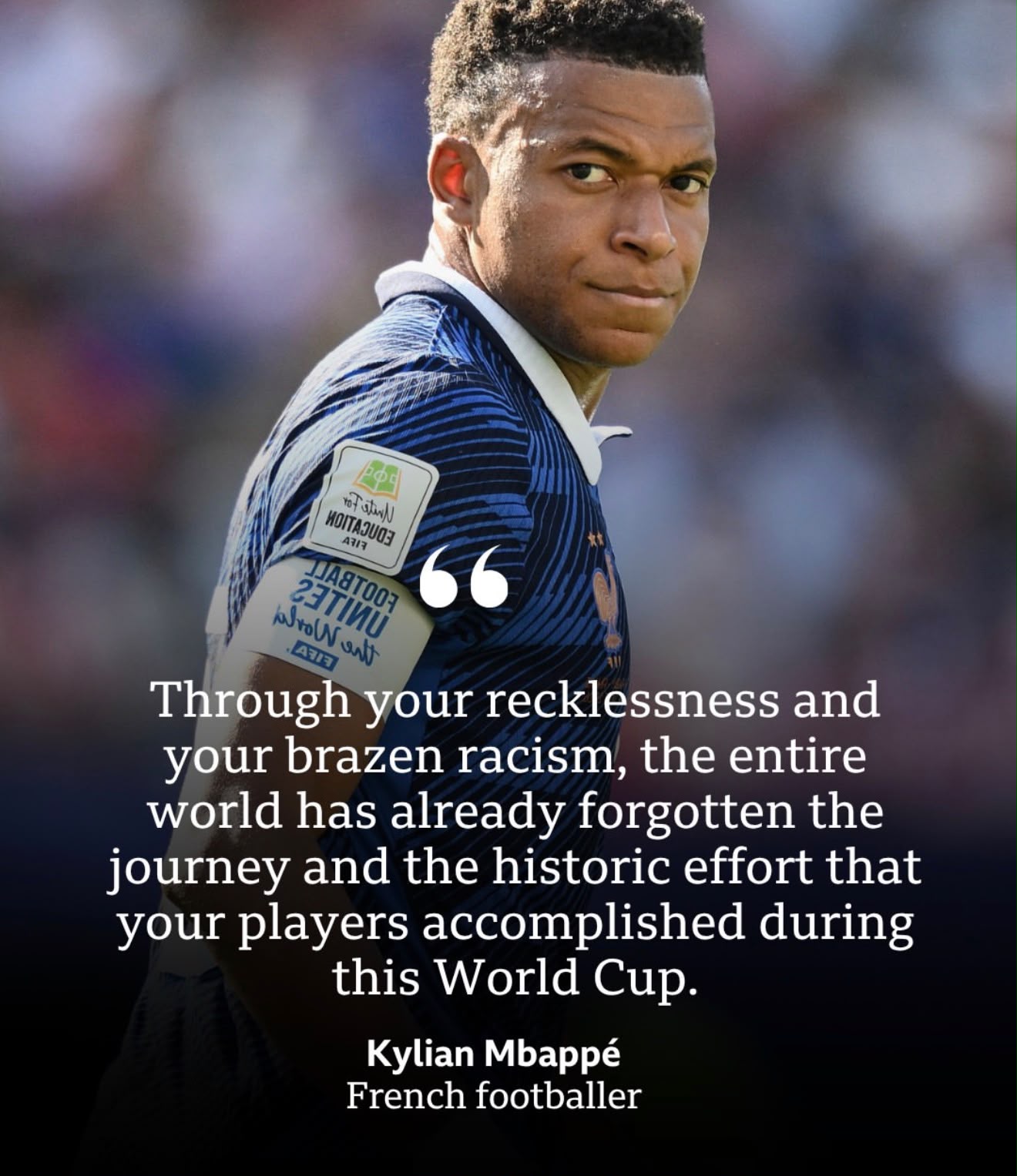
Mbappé’s response reflected that broader concern. He argued that the comments crossed a line and transformed a football discussion into something more personal and harmful. His reaction was not simply about himself as an individual player; it represented a wider frustration among athletes who have repeatedly faced questions about their identity, nationality, and belonging despite their achievements.
For many supporters around the world, the controversy touched a sensitive reality in modern football. The sport has become one of the greatest examples of multicultural success. Players with African heritage represent European nations. Footballers born in one country may carry family histories from another continent. Teams themselves have become reflections of migration, globalization, and cultural exchange.
The modern footballer is often a symbol of a world that is interconnected. A player like Mbappé represents France, but also carries the history of African migration and the experiences of millions of people whose identities cannot be reduced to one simple category. This complexity is one of football’s greatest strengths.
Football has become a place where different histories meet. It is where cultures blend, where nations compete, and where individuals from different backgrounds can become symbols of shared achievement.
However, the controversy also highlighted the challenges that come when sport intersects with politics, identity, and public commentary.
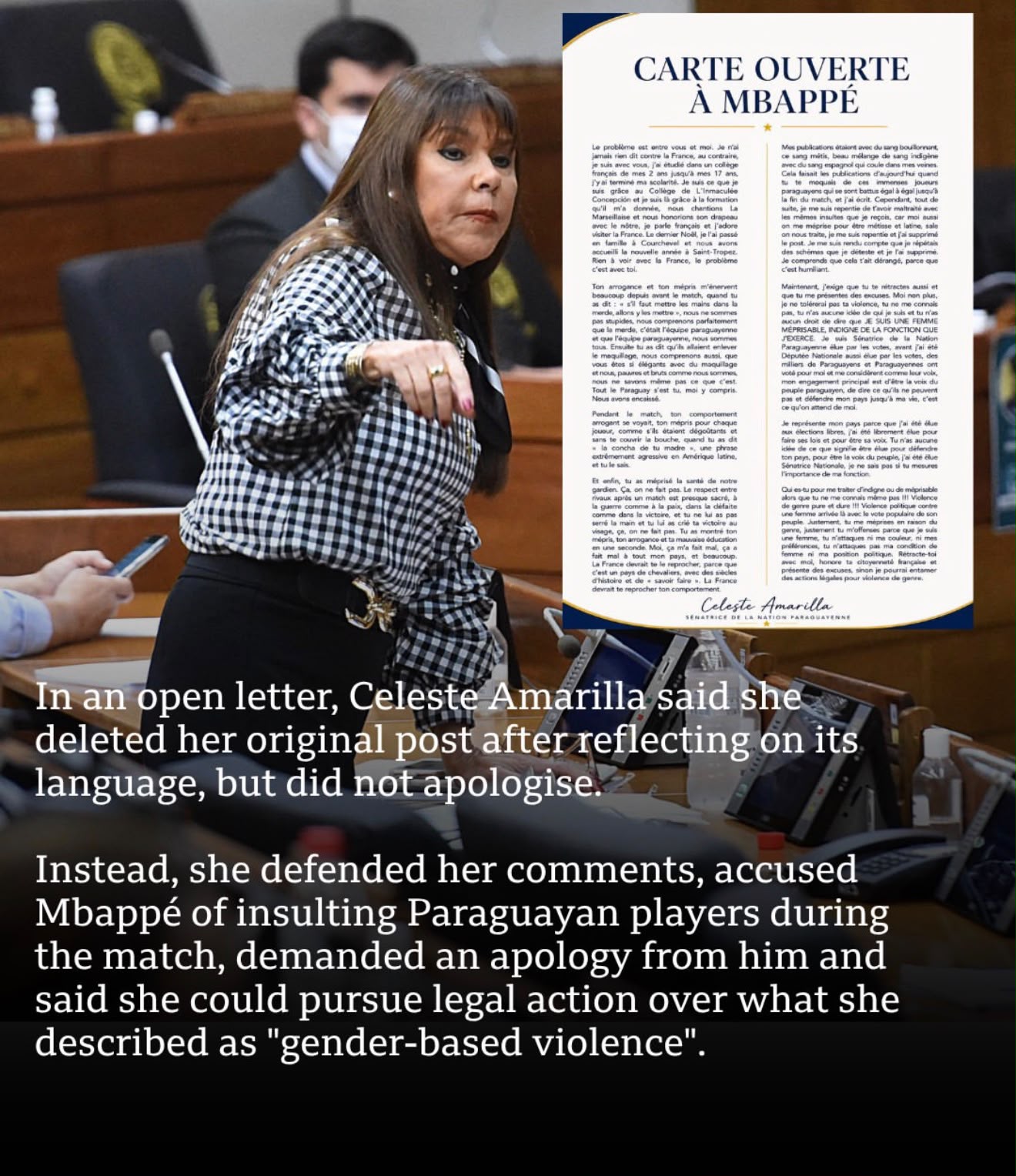
Senator Amarilla later explained her position and argued that her criticism was directed at Mbappé personally and not against France as a country. She stated that her reaction was based on comments she believed Mbappé had made before the game and his behavior during the match.
She said she was angered by what she described as his “arrogance and contempt” and that she was particularly hurt by what she viewed as his refusal to shake hands with Paraguay’s goalkeeper.
She stated:
“In a single moment, you showed your contempt, your arrogance and your bad manners.”
She added:
“It hurt me and it hurt my whole country deeply. France ought to call you to account, because it is a nation of gentlemen with centuries of history and savoir-faire. France should condemn your behaviour.”
Following the backlash, Amarilla later expressed regret over responding with similar insults that she had personally experienced. She referenced her own experiences of being looked down upon because she was dark-skinned and Latin American.
She stated:
“Later, I regretted responding with the same insults that I myself have received, because I too have been looked down upon for being dark-skinned, Latin American and, as they call us, sudacas.”
She continued:
“I realised I was repeating the very behaviour that I despise, so I deleted the post.”
She acknowledged that her comments had caused offense and stated:
“I understand that it upset you, because it was humiliating.”
However, she also demanded that Mbappé withdraw his remarks and apologize to her.
She said:
“Now I expect you to do the same: withdraw your remarks and apologise to me. I will not tolerate your aggression. You have no idea who I am and you have no right to say that I AM A DESPICABLE WOMAN, UNWORTHY OF THE OFFICE I HOLD.”
She further described Mbappé’s response as:
“This is gender-based violence, plain and simple.”
She argued:
“It is political violence against a woman who reached her position through the votes of her people.”
She called for Mbappé to retract his remarks, honor his French citizenship, and apologize, adding that she could consider legal action on the grounds of gender-based violence
The exchange between Senator Amarilla and Kylian Mbappé transformed what began as a football-related disagreement into a much wider global conversation about race, identity, political responsibility, and the limits of public commentary.
At the center of the debate was the question of whether criticism of an athlete had remained within the boundaries of football or whether it had moved into a more sensitive area involving personal identity and heritage.
For many supporters around the world, this controversy touched a sensitive reality in modern football. The sport has become one of the greatest examples of multicultural success. Players with African heritage represent European nations. Footballers born in one country may carry family histories from another continent. Teams themselves have become reflections of migration, globalization, and cultural exchange.
The modern footballer is often a symbol of a world that is interconnected. A player like Mbappé represents France, but his story also carries the history of African migration and the experiences of millions of people whose identities cannot be reduced to one simple category.
This complexity is one of football’s greatest strengths.
Football has demonstrated repeatedly that talent, dedication, and excellence are not limited by geography, ethnicity, or background. The game has provided opportunities for players from different communities to become global icons and ambassadors of their nations.
At the same time, the senator’s response after the criticism introduced another layer into the debate. She argued that her statements were misunderstood and later challenged Mbappé’s reaction, framing the dispute around freedom of expression and the treatment of a female political figure.
Her position raised questions about the boundaries between criticism, political speech, accountability, and the responsibilities of public officials.
This is where the conversation becomes important.
Democracies protect freedom of expression, but public expression also carries responsibility. Holding public office means words are not received in the same way as words from an ordinary private citizen. Leaders influence public conversations, shape attitudes, and represent institutions larger than themselves.
A public official has the right to express opinions, but society also has the right to examine whether those opinions promote understanding or deepen divisions.
The controversy also highlights an important distinction in football culture. Disagreement is part of the sport. Football thrives because fans passionately debate tactics, referees, players, coaches, and national teams. Passion is part of what makes the game powerful.
The danger begins when disagreement moves away from sporting performance and enters the territory of attacking identity, heritage, or human dignity.
Football has faced this challenge for decades. Racism, discrimination, nationalism, and political tensions have repeatedly entered stadiums and sporting conversations.
Football organizations around the world have launched campaigns promoting inclusion because the game understands something fundamental: a sport watched by billions has the power to either unite people or amplify society’s worst instincts.
The controversy also cannot be separated from the wider discussion that took place before the match.
Amarilla’s comments came on the back of another racism-related controversy before the game involving former Paraguay goalkeeper José Luis Chilavert. His remarks describing France’s national team as a squad “from Africa” generated criticism, with French Football Federation President Philippe Diallo condemning the statement.
The incident added another layer of sensitivity to an already emotionally charged football environment.
The World Cup is not played in isolation. It carries national pride, historical memories, political emotions, and cultural identity. A single statement can quickly become amplified because millions of people are already emotionally invested in their teams and countries.
This controversy also raises questions about the responsibility of social media in modern football.
A statement written in seconds can travel across continents within minutes. A political argument that once might have remained within a national conversation can suddenly become an international debate involving athletes, governments, supporters, and football institutions.
Social media has transformed the relationship between athletes, politicians, and fans. It has created a direct channel of communication, but it has also increased the speed at which conflicts escalate.
Words have consequences, especially when they come from individuals with public influence.
The global reaction demonstrated how deeply people care about the values surrounding the World Cup. Young football fans watching these events are not only learning about winners and losers; they are learning about leadership, respect, accountability, and how society treats people who are different.
For young women and young supporters everywhere, especially those looking toward football as a space of opportunity and equality, the message from leaders matters.
Sport has become one of the most important platforms for challenging discrimination and encouraging participation from communities that historically felt excluded.
Football represents possibility. It tells millions of young people that talent and determination can create opportunities regardless of background.
The responsibility now falls on football institutions, governments, and public figures to learn from this moment.
FIFA and football associations must continue strengthening policies against racism and discrimination, not only among players and supporters but also in public discourse surrounding the game.
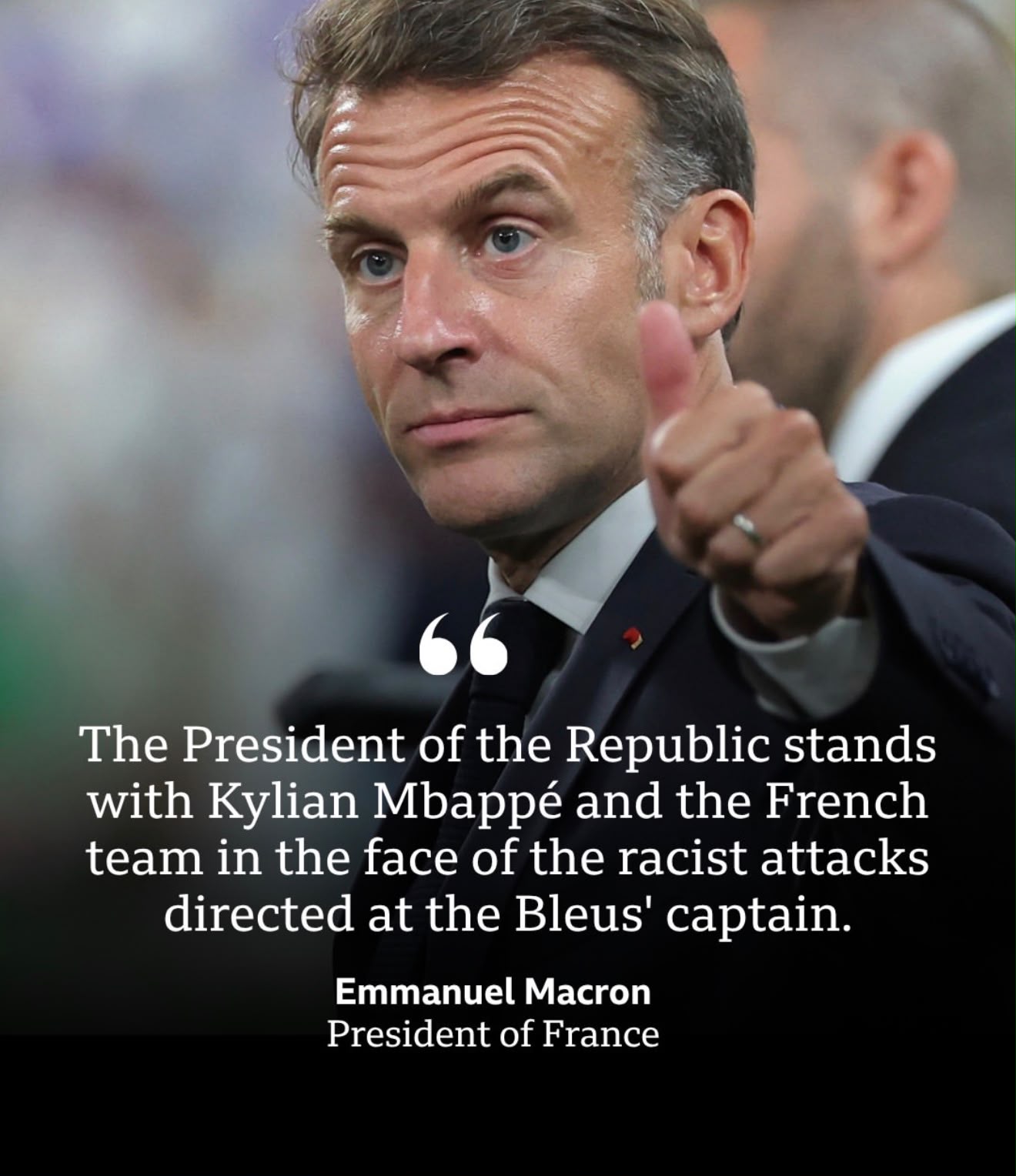
The responsibility to protect football’s values belongs to everyone connected to the sport.
However, the answer cannot be creating another cycle of hostility.
Football’s greatest power has always been its ability to bring people together after moments of conflict. Accountability and reconciliation must exist together.
Paraguay’s football story should not be defined only by a political controversy. The achievements of its players, the passion of its supporters, and the country’s contribution to the World Cup deserve recognition.
At the same time, moments like this provide an opportunity for every nation to examine how its representatives communicate on the world stage.
Leadership is not only measured by position or influence. It is measured by judgment, responsibility, and the understanding that words can have consequences far beyond the moment they are spoken.
To be cont

Jide Adesina
Editor-In-Chief | 1stAfrika.com
