

There is a particular kind of silence that falls over Nigerian football when the Super Falcons stumble, and it fell hard on Sunday evening in Casablanca. At the Larbi Zaouli Stadium, nineteen-year-old Myriam Maéva Nyadjou Wamen sent a vicious strike past Chiamaka Nnadozie in the nineteenth minute, and for the rest of the match Cameroon’s goalkeeper turned into the unlikely hero of the tie, repelling everything the Super Falcons threw at her defence. When the final whistle blew, Cameroon had done what they had not managed in four consecutive WAFCON editions: they had beaten Nigeria in a knockout match, ending the Super Falcons’ reign as defending champions and denying them a tenth appearance at the semi-final stage of the tournament they have dominated for a generation.
It is easy, in the immediate aftermath of a result like that, to reach for the language of finality. An earlier version of this story did exactly that, describing the defeat as another World Cup opportunity slipping through Nigeria’s fingers. That framing was wrong, and it deserves to be corrected plainly rather than quietly, because the truth is both more accurate and, in its own way, more compelling. Nigeria have not been eliminated from qualification for the 2027 FIFA Women’s World Cup in Brazil. They have lost a battle of enormous symbolic weight, against a rival they have owned for nearly three decades, but the war for a place at football’s biggest stage is still very much alive.
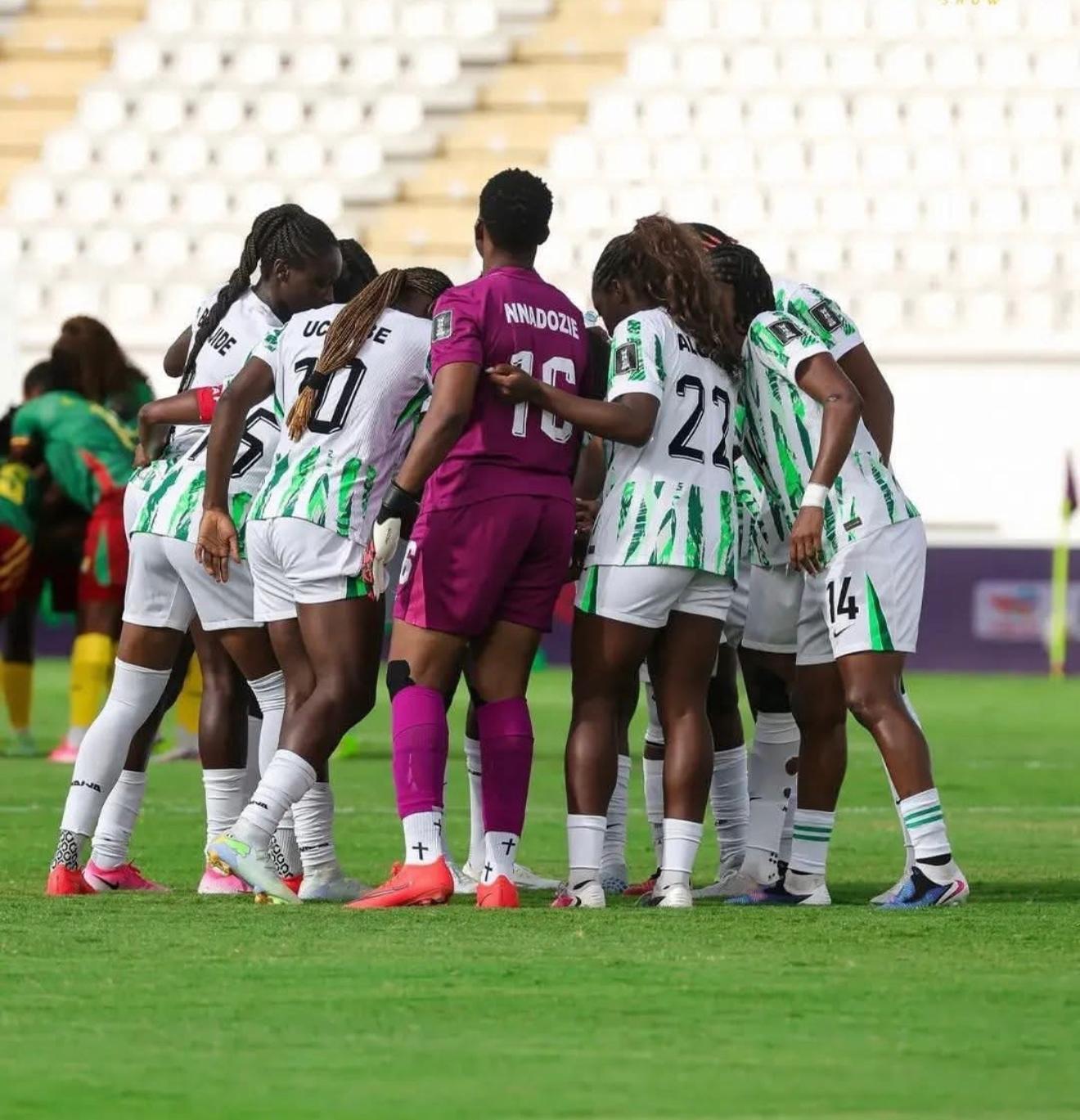
To understand why requires understanding how FIFA and the Confederation of African Football restructured the qualification pathway for this cycle. WAFCON 2026 is not simply a continental championship that happens to double as qualifying; it is now a two-tier qualification system with an explicit safety net built into it. The four teams that reach the semi-finals — this year that means Morocco, Algeria, and the winners of the Cameroon-Nigeria and Malawi-Ghana ties — qualify automatically and directly for Brazil 2027. That part of the mechanism is straightforward and has been reported correctly everywhere. What has been widely missed, including in the earlier version of this piece, is what happens to the four teams that lose in the quarter-finals. Those four sides — Nigeria among them, alongside South Africa, Côte d’Ivoire or Algeria’s beaten opponent, and whichever of Malawi or Ghana falls short — are not discarded. They are funnelled into a second-chance play-off structure, contesting two qualification matches among themselves. The two winners of those play-off ties do not go straight to the World Cup, but they do secure Africa’s two places in the FIFA Women’s World Cup Play-Off Tournament, the global inter-confederation mini-tournament that will determine the final entrants to Brazil 2027 from across Africa, Asia, Europe, the Americas and Oceania.
For Nigeria, then, Sunday’s scoreline reshapes the path rather than closing it. Cameroon 1, Nigeria 0 means the Super Falcons will not walk straight into Brazil the way they walked into France in 2019 or Australia and New Zealand in 2023. It means they must now win a play-off fixture against one of South Africa, the Côte d’Ivoire-Algeria loser, or the Malawi-Ghana loser, in order to reach the FIFA Play-Off Tournament, and from there survive a gauntlet of teams from other confederations before a ticket to Brazil is secured. It is a longer, harder, more precarious route than the one Nigeria’s players and coaching staff had hoped to walk. But it is a route, and Nigerian football has walked longer and harder ones before.
There is history worth sitting with here, because it explains both the shock of Sunday’s result and the reason nobody inside Nigerian football should treat it as catastrophe. Cameroon and Nigeria have now met fourteen times at WAFCON finals, more than any other pairing in the tournament’s history, spanning group stages, semi-finals, a final, a third-place play-off and now a second quarter-final. Going into Sunday, Nigeria had won nine of those thirteen previous meetings in open play and two more on penalties, a run of dominance that included a 6-0 demolition in the 1998 semi-final, a 5-0 statement in 2006, a 5-1 rout in 2010, and the tense 1-0 quarter-final victory in this very city in 2022, settled by a Rasheedat Ajibade goal that sent the Super Falcons on to the 2023 World Cup in Australia and New Zealand. Cameroon’s only previous win over Nigeria at a centralised WAFCON finals came in the 2012 third-place play-off, a footnote rather than a statement. Sunday, then, was not merely a defeat; it was a genuine rupture of a pattern that had held for the better part of thirty years, and it happened to a Nigerian side that had arrived in Morocco as defending champions, having lifted a record-extending WAFCON title only the previous year and chasing what would have been an extraordinary tenth World Cup appearance in a row.
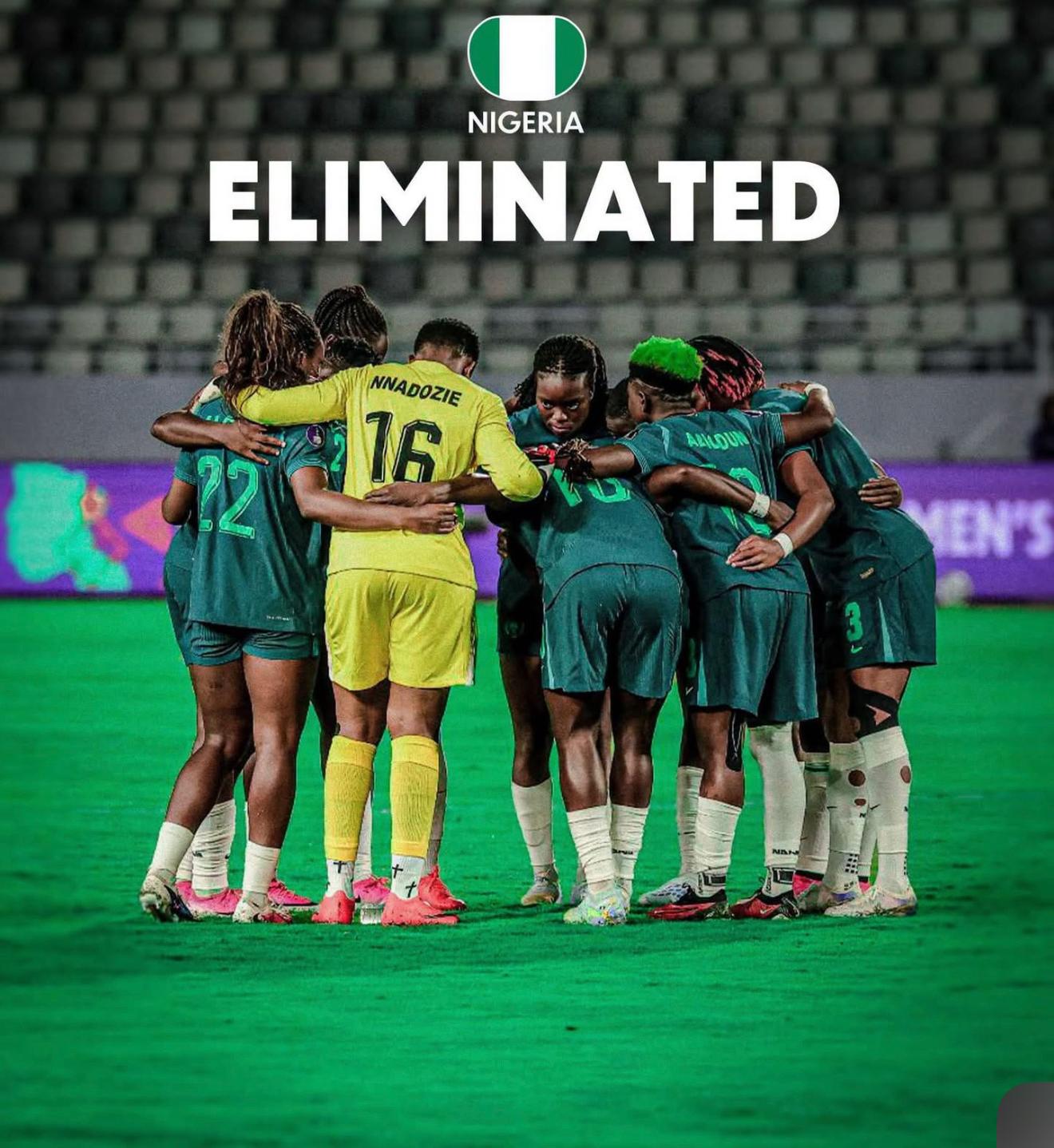
That Nigeria’s group-stage form had already been shaky adds useful context rather than excuse. The Super Falcons opened this WAFCON with a stunning 3-2 loss to Malawi, one of the tournament’s genuine shocks, before steadying themselves with a 1-0 win over Zambia and a ruthless 6-2 demolition of Egypt that carried them through on a head-to-head tiebreaker rather than a dominant group campaign. Even the two most recent friendlies between Nigeria and Cameroon this year had split evenly, Cameroon winning 1-0 in Yaoundé before Nigeria answered with a 3-1 win in the return leg, a reminder that the gap between the two nations had already been narrowing well before Sunday’s quarter-final. None of that makes the defeat sting less for a team carrying the names of Ajibade, Nnadozie, Michelle Alozie and Asisat Oshoala, players who understand exactly what a missed direct qualification means for preparation time, seeding, and the psychological armour that comes with knowing your place at a World Cup is already secured. But it does mean this was not a bolt from a clear sky. Cameroon, unbeaten through their own group and growing in confidence under a settled coaching group, arrived believing they could finally end Nigeria’s mastery over them, and on the day they did.
Women’s football on the continent has, for most of its modern history, been built on exactly this kind of margin — one dominant power, usually Nigeria, and a chasing pack that spent years absorbing heavy defeats before slowly closing the gap. What Cameroon did in Casablanca is part of a broader continental story that has been building for years: South Africa’s Banyana Banyana winning the 2022 WAFCON title on Nigerian soil, Zambia’s Copper Queens reaching a World Cup, Morocco hosting and reaching a World Cup of their own in 2023 as debutants. The era in which Nigeria could treat continental qualification as a formality is ending, and Sunday’s result is the clearest single data point yet that African women’s football is deepening rather than remaining a one-nation story. That is, in the long run, good for the game even when it is painful for the nation that has carried it for decades.
None of that changes what Nigeria must now do. The Super Falcons will need to regroup quickly, address whatever is being asked of Nnadozie and a defence that, by most accounts from Casablanca, competed well for large spells without finding the finishing touch, and turn their attention to a play-off tie against one of three possible opponents drawn from South Africa, the Côte d’Ivoire-Algeria loser, or the Malawi-Ghana loser. Win that, and Nigeria enter the FIFA Women’s World Cup Play-Off Tournament alongside representatives of other confederations, fighting for one of the small number of places still available for Brazil 2027. It is a path that demands more matches, more travel, more resilience, and offers no guarantees. But it is not the end of the story, and describing it as such does a disservice both to the facts of the qualification system and to a Super Falcons squad that has earned, across three decades of continental dominance, the benefit of being judged on the full campaign rather than a single quarter-final night in Casablanca.
Nigeria lost the battle against Cameroon. The World Cup war is not over.
