

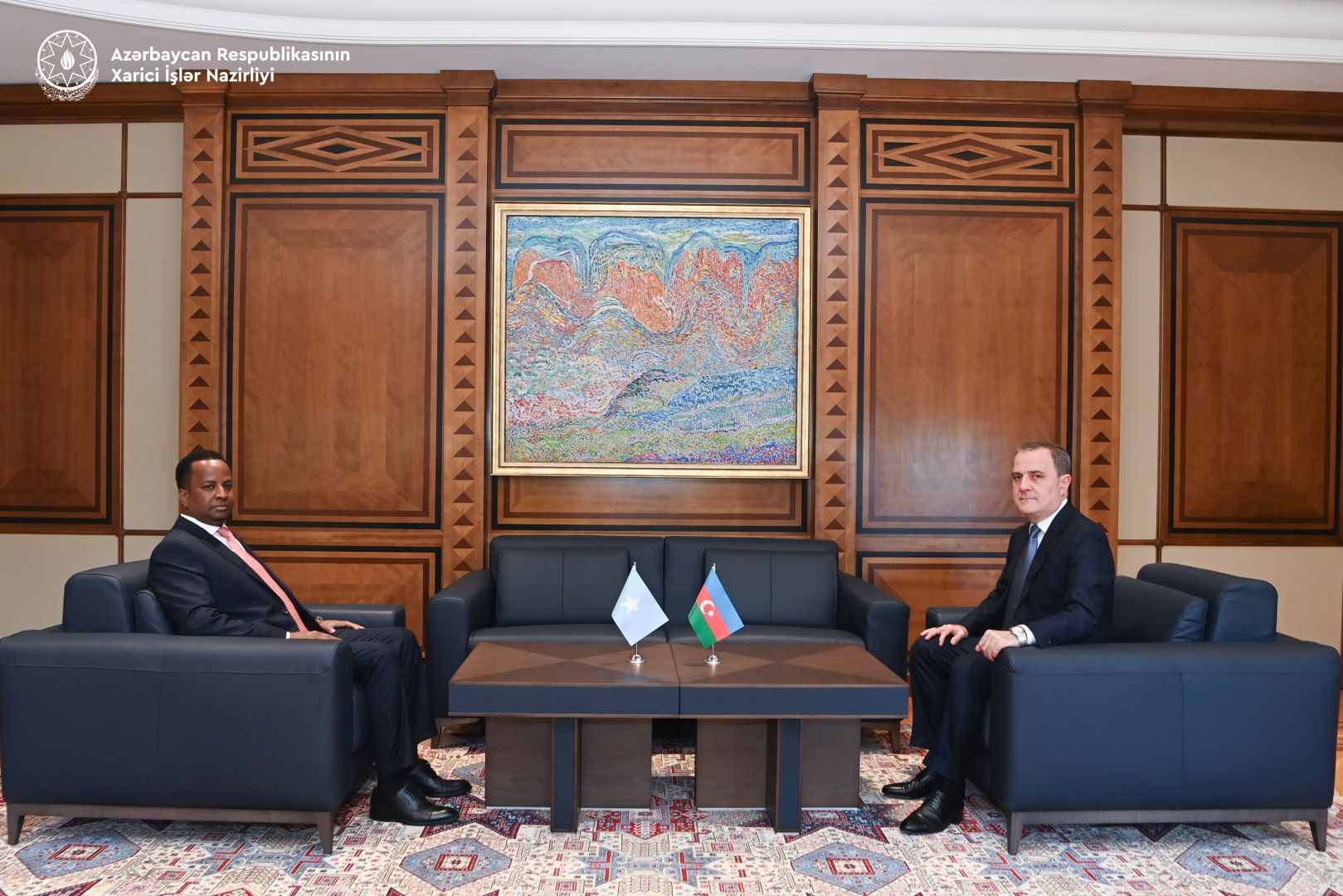
Azerbaijan and Somalia have moved to deepen diplomatic and strategic cooperation following the 51st session of the OIC Council of Foreign Ministers in Istanbul, where high-level talks reaffirmed bilateral partnership and launched several key initiatives. Somali Foreign Minister Abdisalam Abdi Ali and Azerbaijan’s Foreign Minister Jeyhun Bayramov discussed mechanisms to strengthen ties in sectors such as agriculture, education, green energy, humanitarian assistance, and governance innovations including the ASAN public service model.
They agreed to establish a Joint Intergovernmental Commission to oversee implementation of agreed areas of collaboration, with future meetings alternating between Mogadishu and Baku. Both ministers underscored the importance of coordinated diplomacy within the OIC, the Non-Aligned Movement, and the United Nations.
 Their discussions followed a broader ceremony in Baku where Somalia’s President Hassan Sheikh Mohamud and Afghanistan’s President Ilham Aliyev witnessed the exchange of multiple memoranda. These included agreements on public service delivery innovation, green energy development, educational exchanges, and defense industry collaboration.
Earlier consultations in February 2025 saw the first-ever political consultation meeting between the foreign ministries of both countries. An Azerbaijani government mission to Somalia engaged with senior Somali officials to explore cooperation in areas spanning energy, governance, tourism, agriculture, and public enterprise reform—highlighting growing diplomatic momentum since bilateral ties were officially established in 2019.
Through these agreements and institutional mechanisms, both nations aim to build a sustainable framework for multifaceted cooperation. For Somalia, tapping into Azerbaijan’s technical experience in public service modernization, energy infrastructure, and defense provides tangible pathways toward capacity building. For Azerbaijan, alignment with Somalia enhances strategic engagement in the Horn of Africa and expands its footprint in international development networks.
The diplomatic drive reflects a broader trend of South–South cooperation, leveraging collective membership in multilateral organizations to foster shared prosperity and reinforce strategic ties between Africa and the Caucasus region.
