

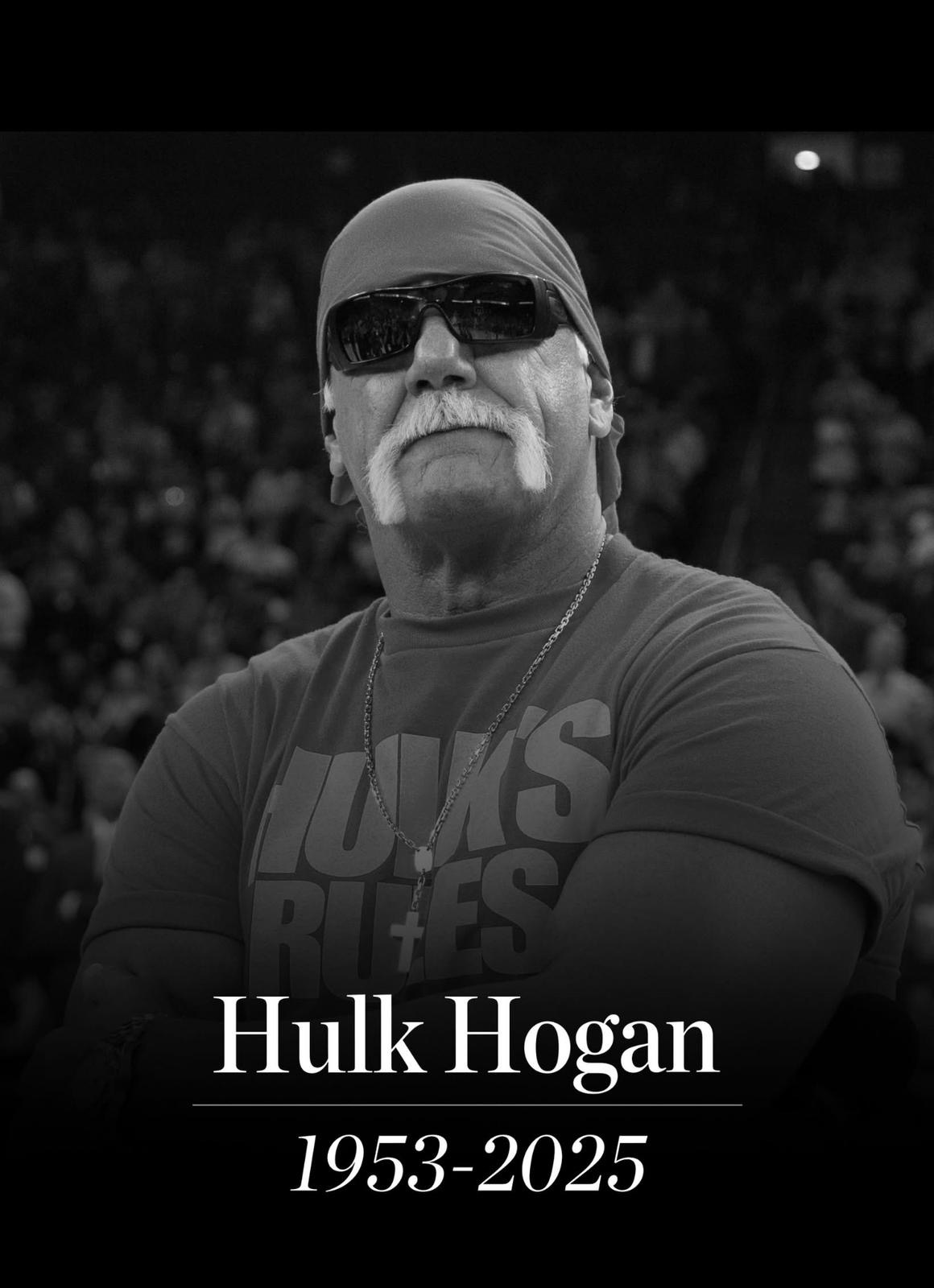
In the theatre of modern mythology, where sports, spectacle, and persona collide, few names resonate as thunderously and universally as Hulk Hogan. Born Terry Gene Bollea on August 11, 1953, in Augusta, Georgia, the man who would come to define an era in professional wrestling did not simply perform for audiences—he embodied an entire cultural movement. With his iconic handlebar mustache, bandana, and the immortal battle cry of “Whatcha gonna do when Hulkamania runs wild on you?”, Hogan transcended the ring to become a larger-than-life figure whose story weaves a patchwork of strength, vulnerability, redemption, family, and enduring fame.
Terry Bollea’s journey from a soft-spoken, guitar-playing youth in Tampa, Florida, to the undisputed titan of sports entertainment is not merely a tale of athletic conquest—it is a chronicle of the American dream, wrapped in 24-inch pythons and fueled by charisma. Trained by Hiro Matsuda, Hogan paid his dues in the regional circuits before stepping into the national spotlight in the late 1970s. But it was in 1984, upon his return to the World Wrestling Federation (WWF), that the legend of Hulk Hogan truly took form. He defeated the Iron Sheik in Madison Square Garden to capture the WWF World Heavyweight Championship, a victory that birthed “Hulkamania”—an era where Hogan’s star power revolutionized wrestling, bringing it from smoky arenas to mainstream television, toys, Saturday morning cartoons, and global superstardom.
At the heart of Hulk Hogan’s persona was a set of simple, if theatrical, values: say your prayers, eat your vitamins, and believe in yourself. These weren’t just slogans but pillars of a code that endeared him to millions of fans—children who saw him as a superhero in red and yellow and adults who admired his showmanship and determination. Hogan’s appeal cut across demographics, reaching Middle America and international markets alike, turning wrestling into pop culture’s coliseum.
His feuds were the stuff of storytelling legend. Whether clashing with André the Giant in front of 93,000 fans at WrestleMania III, facing off against Randy “Macho Man” Savage, or reinventing himself as “Hollywood” Hogan with the notorious NWO faction in WCW, Hogan wasn’t just a wrestler—he was an institution. Every slam, every boot to the face, every cup of his ear to the crowd was poetry in motion, scripted yet viscerally real. He bridged the kayfabe of wrestling fiction with the authenticity of a hero fans could believe in, even when they knew the outcomes were predetermined.
But Hulk Hogan’s story was not without its shadows. The years brought both triumph and turmoil. There were surgeries and the slow toll of a body battered by decades of performance. There were controversies—legal battles, personal missteps, and the painful process of public redemption. Yet, like the hero he portrayed so many times, Hogan often found a way to rise again. Apologies were made. Bridges were mended. And fans, for the most part, welcomed back their icon with the grace befitting a flawed but beloved champion.
Beyond the squared circle, Hogan ventured into television and film, from Thunder in Paradise to Suburban Commando and countless guest appearances. Though critically panned, his roles still added to the Hulkamania aura—campy, over-the-top, and thoroughly entertaining. His reality TV series Hogan Knows Best gave audiences a look into his family life, peeling back the layers of the persona to reveal a father, husband, and man striving to balance legacy with love.
Family, to Hogan, was not just a storyline trope. He spoke often of his children, Brooke and Nick, and even amidst public difficulties, his love for them remained steadfast. He saw in them the values his own father taught him—hard work, belief, resilience. His relationships may have faltered, but his role as a father always returned to center stage.
In his later years, Hogan became a revered elder statesman of the wrestling world, a symbol of a golden era that helped lay the foundation for modern-day WWE. He was often called upon to induct younger wrestlers into the Hall of Fame, appear at milestone WrestleManias, and provide commentary on the evolution of the business he helped to elevate. His catchphrases, his poses, his silhouette—all became archetypal symbols of pro wrestling itself.
Yet what made Hulk Hogan great was not just the wins, the belts, or the sold-out arenas. It was the connection he forged with people. In a cynical world, Hogan offered a kind of sincerity that felt refreshing, even when filtered through the pageantry of pro wrestling. He was a dreamer who made his dreams tangible and let millions of others live them too, if only for the duration of a match. He inspired strength in the weak, confidence in the unsure, and joy in those who needed escape.
He gave time to countless charities, particularly those focused on children, veterans, and health awareness. Hogan’s Make-A-Wish visits were legendary. Many terminally ill children called meeting him the greatest moment of their lives. And in return, Hogan often said those visits reminded him of what truly mattered: making people smile, giving hope, standing tall even when life body-slams you.
As the world mourns his passing on July 24, 2025, from cardiac arrest at the age of 71, we are reminded not only of the legend, but of the man. The man who sang in rock bands. The man who cried when his friends passed away. The man who fought personal demons. The man who prayed and believed in second chances. The man who once said, “To all my little Hulkamaniacs, say your prayers and eat your vitamins—be true to yourself, and you can achieve anything.”
His death leaves a colossal void in the world of wrestling and pop culture. But death does not silence a legend. As long as there are kids flexing in front of mirrors, as long as the roar of a crowd still echoes in a stadium, as long as dreams are chased with unbreakable belief, Hulk Hogan lives on.
Terry Bollea was not perfect. But in his imperfections, he was real. And in his persona, he was eternal. In the great ring beyond, may the lights never dim, the ropes stay tight, and the cheers remain forever thunderous.
Rest well, Hulkster.
You truly ran wild.
Jide Adesina, reporting for 1stafrika.com
Houston, USA | July 2025
