

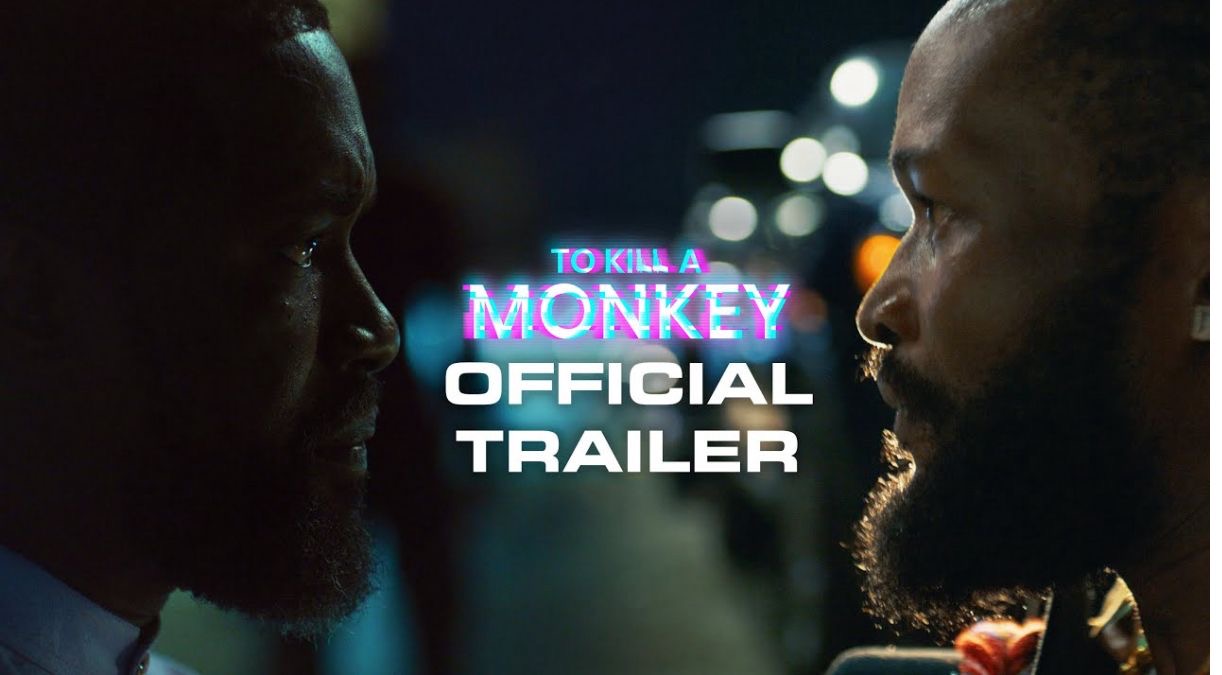
 When Kemi Adetiba picks up the lens, it doesn’t merely capture. It wounds. It heals. It breathes. And in To Kill a Monkey, she does not just tell a story—she dissects a society, peels its hidden layers of trauma, carves into the brittle bones of familial deceit, cultural betrayal, and the mythology of silence. This film does not arrive; it erupts—like the thunderous whisper of a people who have forgotten how to scream. This is not a movie. This is a reckoning. A prophetic howl embedded in the quiet, fragile voice of a girl who was told she must never speak.
Set against the dark, intimate corridors of an unnamed but achingly familiar Nigerian city, To Kill a Monkey begins not with a bang but with breath. The kind of breath that trembles before it is stolen. The camera lingers, like a hesitant witness, capturing the unsaid through stares, gestures, the heaviness of silence. Kemi Adetiba, known for her trailblazing King of Boys, reinvents her artistry in this profound psychological tragedy, opting for a stripped-down style that becomes increasingly operatic in its emotional charge. It is through minimalism that she creates a haunting maximalist effect. Every shot, every sigh, every cut bleeds with deliberate intent.
The title alone is a dirge, a fable laced in allegory. “To Kill a Monkey” is not about animals nor the jungle. The ‘monkey’ here is metaphorical—ancestral secrets, predatory systems, taboos hidden in smiles, and traditions that suffocate even as they promise protection. The film carries the trauma of many generations in its belly. It carries the story of a young girl, Adaobi, whose voice is buried by the very people meant to amplify it. Her rape, her torment, her silence becomes the pivot on which the film’s narrative spine rests.
The scripting by Adetiba—herself a poet of pain and fire—is not verbose, yet it echoes louder than words. Dialogues are crafted with the meticulous touch of an African griot; short, potent phrases fall like daggers in the dark. Characters don’t say much, but what they leave unsaid fills the screen with a brooding presence. There is poetry in every silence. When a mother says to her daughter, “It is better we bleed at home than disgrace outside,” it is not just a line—it is a tombstone over centuries of cultural complicity. Each line is weighted with generational trauma, gendered expectations, and the myth of respectability that has long gagged women in African society.
Cinematographically, To Kill a Monkey is a painting dipped in ash and gold. Cinematographer Ayo Akinwale deploys natural lighting, shadows, and handheld cameras with the precision of a watchmaker dismantling time. The camera is often positioned behind windows, half-closed doors, through mirrors—framing the story not from the outside in, but from the inside out. You do not watch To Kill a Monkey; you are watched by it. You feel judged, implicated, peeled apart. The visual style is intimate but accusatory, like an ancestral eye reminding you that you are part of the silence.
There is a persistent friction narrative embedded deep in the DNA of the film—a clash between modernity and tradition, between a daughter’s trauma and a mother’s loyalty to silence, between the sanitized bourgeois Lagos living rooms and the rotting truth buried beneath them. The friction is not just narrative—it is emotional, spiritual, psychological. You feel it in the pounding music by Seun Abegunde, whose soundscape fuses haunting Yoruba chants, dissonant strings, and eerie piano keys. The score does not accompany the story—it scorches it, like the ghost of Fela whispering in the walls.
The content curation is intensely curated, with no shot wasted and no scene treated as filler. From the opening slow-motion sequence of Adaobi running through a rain-soaked alley to the final confrontation with her mother, everything feels like it is part of an ancestral script written in invisible ink. The wardrobe, stark yet symbolic, echoes a palette of decay and muted resistance. Even the food on the dining table—a constant motif—is a character of its own, often uneaten, untouched, symbolic of what lies beneath the surface of polished Nigerian family life.
The film’s curative is not in catharsis but confrontation. It doesn’t try to resolve the trauma. It does not offer neat endings, because life in these dark corridors of abuse seldom does. Adaobi’s arc is not one of redemption but of resistance. When she finally speaks, not in screams but in confession, the entire theater falls silent—not because her voice is loud, but because it is raw. Her voice is the voice of millions who have been told to wear shame like wrapper, to protect family honor over personal truth.
And the cast? Oh, the cast. Nse Ikpe-Etim delivers a masterclass in controlled devastation as the mother—torn between tradition and truth. Her eyes alone tell stories that dialogue cannot carry. Newcomer Chisom Udeh, as Adaobi, is not acting—she is exorcising. There is no performative flair. She simply becomes the wound we’ve all tried to forget. Ramsey Nouah, in a rare dark role as the abuser cloaked in charm, manages to create the kind of terror that feels too real, too close, too Nigerian. This is not a villain you hate. It is the villain you recognize.
In the broader discourse of African cinema, To Kill a Monkey is a ritual. It baptizes the viewer in questions—uncomfortable, accusatory, necessary questions. It is one of the rare African films that does not exoticize pain or seek international applause through trauma porn. Instead, it dares to confront a society so enamored with appearances, it forgets its own rot. It forces us to reckon with how silence has become our most dangerous language. The film is not just art. It is advocacy. It is an indictment. It is a libation to the forgotten and the silenced.
Kemi Adetiba has created not only a film but a cultural monolith—a Yoruba-inflected Greek tragedy, a feminist manifesto wrapped in whispering shadows, a cinematic rebellion etched in ancestral ink. This is a film that will live long after its credits roll, not because of marketing, but because it dares to touch what others dare not name.
To Kill a Monkey is not merely to end innocence. It is to dismantle the systems that feed off of it. It is to kill the silence. To kill the complicity. To kill the lie. This film, in all its devastating brilliance, is an epitaph for every voice that was buried too soon—and a clarion call for those who still tremble to speak.
Reviewed by Jide Adesina
Editor, 1stAfrika.com
On the watchtower of stories that must be told.
