

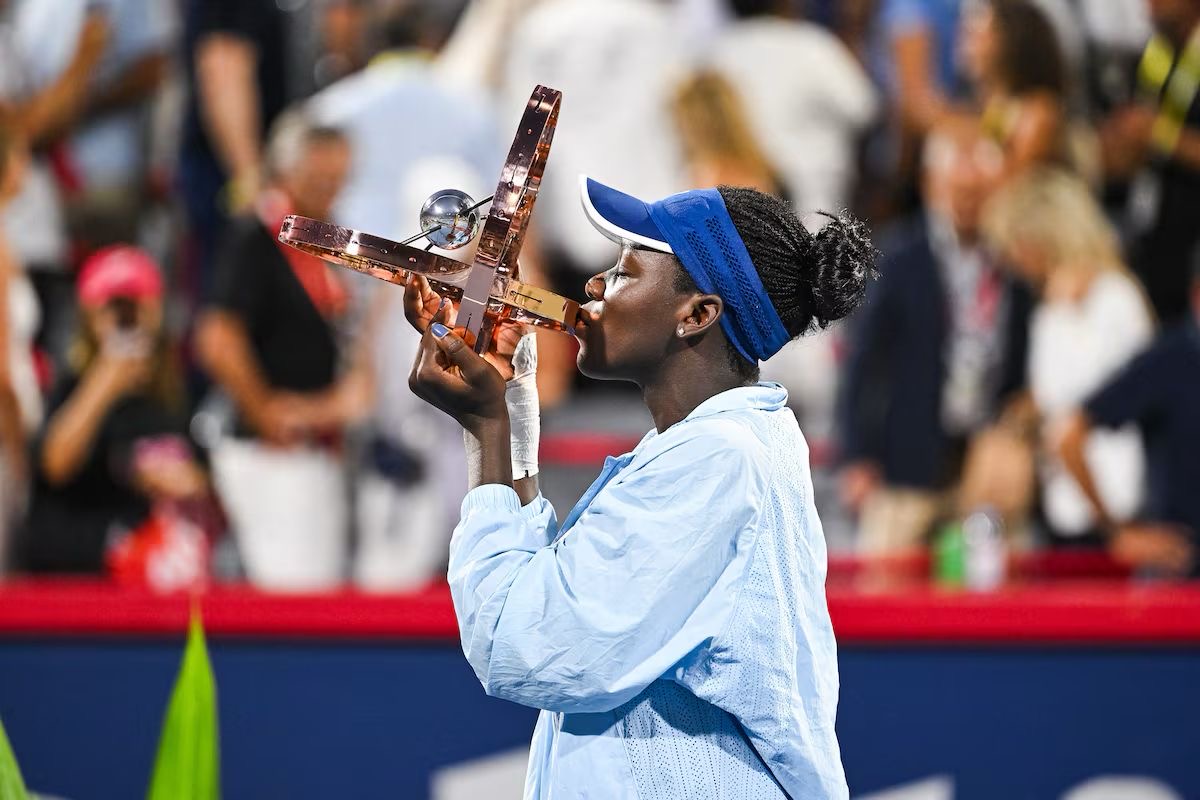
It is not often that a new chapter in tennis history is written with such bold, unflinching ink. The 2025 Canadian Open did not simply crown a champion—it birthed a legend. In Montreal, under the warm August sky, the crowd rose to its feet for a teenager whose name, until weeks ago, was whispered mostly in ITF scorelines and junior tennis circles. Victoria Vanessa Mboko, just 18 years old, became the youngest Canadian woman in the Open Era to win her nation’s most prestigious tournament. Her victory was not merely a win—it was an explosion, a seismic announcement that the future of tennis has arrived and it carries the heart of Africa, the resilience of Canada, and the ambition of the world.
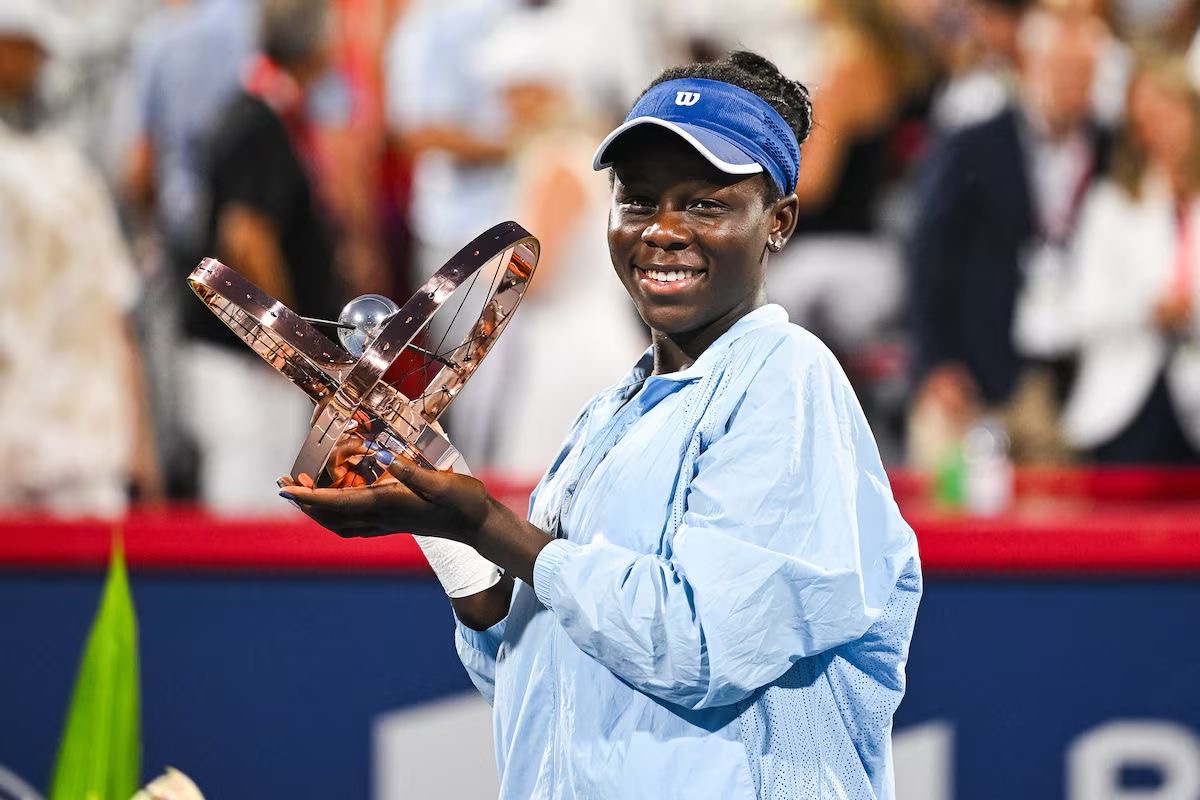 Her story began far from the roars of Centre Court. Born in Charlotte, North Carolina, in August 2006 to Congolese parents Cyprien Mboko and Godee Kitadi, Victoria’s life moved north when she was barely two months old. Toronto became home, though the journey was far from easy. Her father, a man who sacrificed sleep for stability, working night shifts to keep the dream alive, and her mother, balancing academic pursuits with raising a family, built a foundation of discipline and belief. In the Mboko household, tennis was not a casual pastime—it was part of the family DNA. Her siblings played, her parents encouraged, and young Victoria, barely old enough to grip a racquet, was already chasing balls across the court with a determination that foreshadowed greatness.
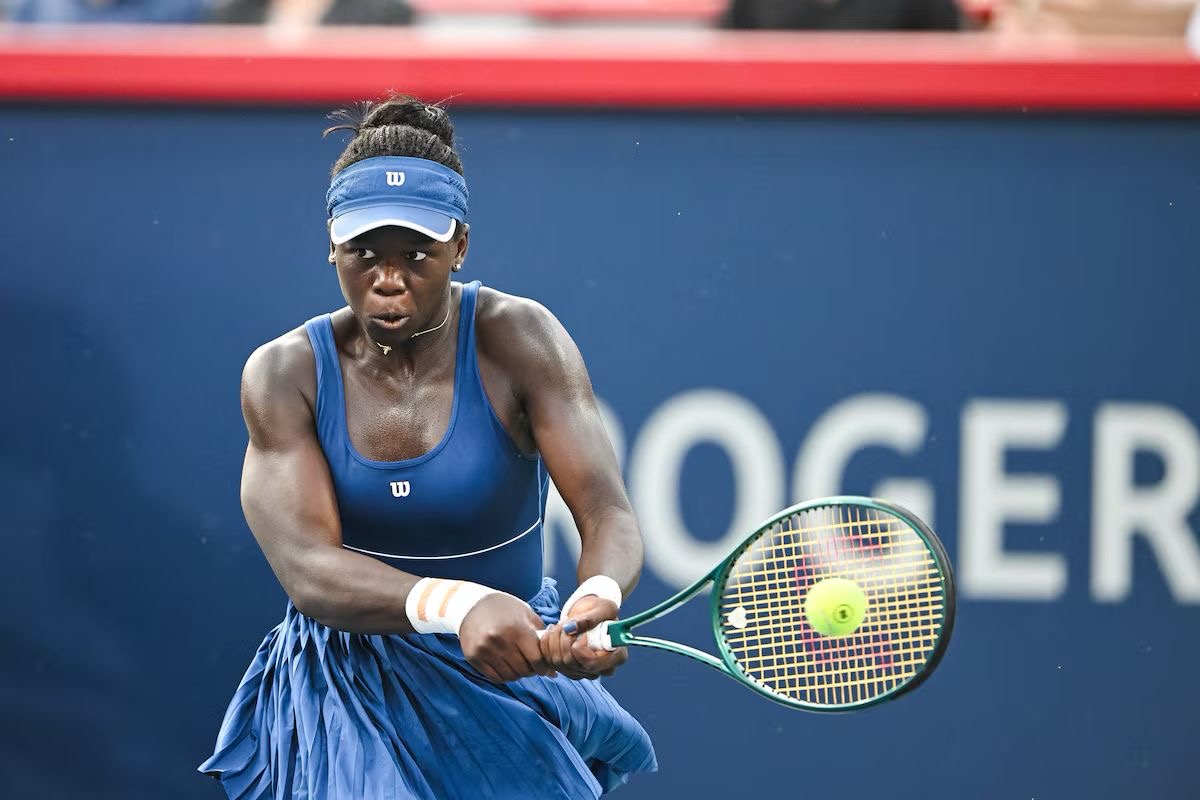 That determination carried her through the grind of junior tournaments, through days when the victories were small but the lessons were immense. She announced herself to the professional circuit in 2022 with a doubles appearance at the Canadian Open, but it was 2025 that redefined her trajectory. Before the summer even began, Mboko had been on a blistering tear, claiming 22 consecutive match wins without dropping a set, sweeping titles in Martinique, Guadeloupe, Rome, Manchester, and Porto. She climbed from outside the top 300 to within striking distance of the top 150, a surge so rapid that seasoned tennis watchers began to murmur her name with curiosity.
 By the time she landed in Montreal, she was ranked No. 85 in the world—a ranking that would soon be shattered into irrelevance. Her first match, a poised 6-2, 6-3 dismissal of Sofia Kenin, was a strong opening statement. But it was her second-round clash that lit the fuse. Facing Coco Gauff, the world No. 2 and reigning US Open champion, Mboko did not flinch. She dismantled Gauff’s game with fearless aggression, winning 6-1, 6-4 in just over an hour. It was not simply an upset; it was a public unmasking of a star-in-the-making, the kind of win that lives in highlight reels and record books.
From there, she surged past Jessica Bouzas Maneiro into the semifinals, becoming the youngest Canadian WTA 1000 semifinalist in a decade. Then came Elena Rybakina, the reigning Wimbledon champion, who pushed Mboko to the brink. In a match laced with tension, the teenager saved a match point with an audacious forehand winner that drew gasps from the crowd. She emerged from that battle battered but unbroken, earning her ticket to the final.
The morning of the championship match brought an unexpected twist. Mboko woke up with pain shooting through her wrist, the residue of her grueling semifinal. Hours before she was to face Naomi Osaka, a four-time Grand Slam champion, she was rushed to the hospital. The diagnosis was not a career-threatening injury, but the wrist was swollen and sore enough to require heavy taping. For many, this would have been a reason to falter. For Victoria Mboko, it became another reason to fight.
When she walked onto the court to face Osaka, the stadium could sense the weight of the moment. The first set was all Osaka, who used her power and experience to take it 6-2. Lesser players might have wilted. Mboko instead reset her mind, adjusted her tactics, and began to dictate the rallies with depth and precision. She broke Osaka early in the second set and held firm, taking it 6-4. By the third set, the match had shifted entirely. The teenager was in full flight—attacking with fearless forehands, finding impossible angles, and moving with the calm confidence of someone who knew destiny was on her side. The final set ended 6-1, and with it, the birth of a champion.
In that moment, Victoria Mboko joined the pantheon of Canadian tennis royalty, alongside Faye Urban and Bianca Andreescu, yet she also claimed records uniquely her own. She became the youngest Canadian woman in the Open Era to win the Canadian Open, the lowest-ranked player to ever lift the trophy, and the second-youngest player in WTA 1000 history to defeat four Grand Slam champions in a single tournament. She did it all as a wildcard, a privilege she transformed into prophecy.
What makes her rise even more compelling is not just her technical ability but her mental architecture. Her coach, former Wimbledon finalist Nathalie Tauziat, calls her “unshakably certain” every time she steps on the court. Analysts praise her intelligent point construction, her fearless baseline aggression, and her poise under pressure. She has the rare combination of physical athleticism and emotional stability that has historically defined the greats.
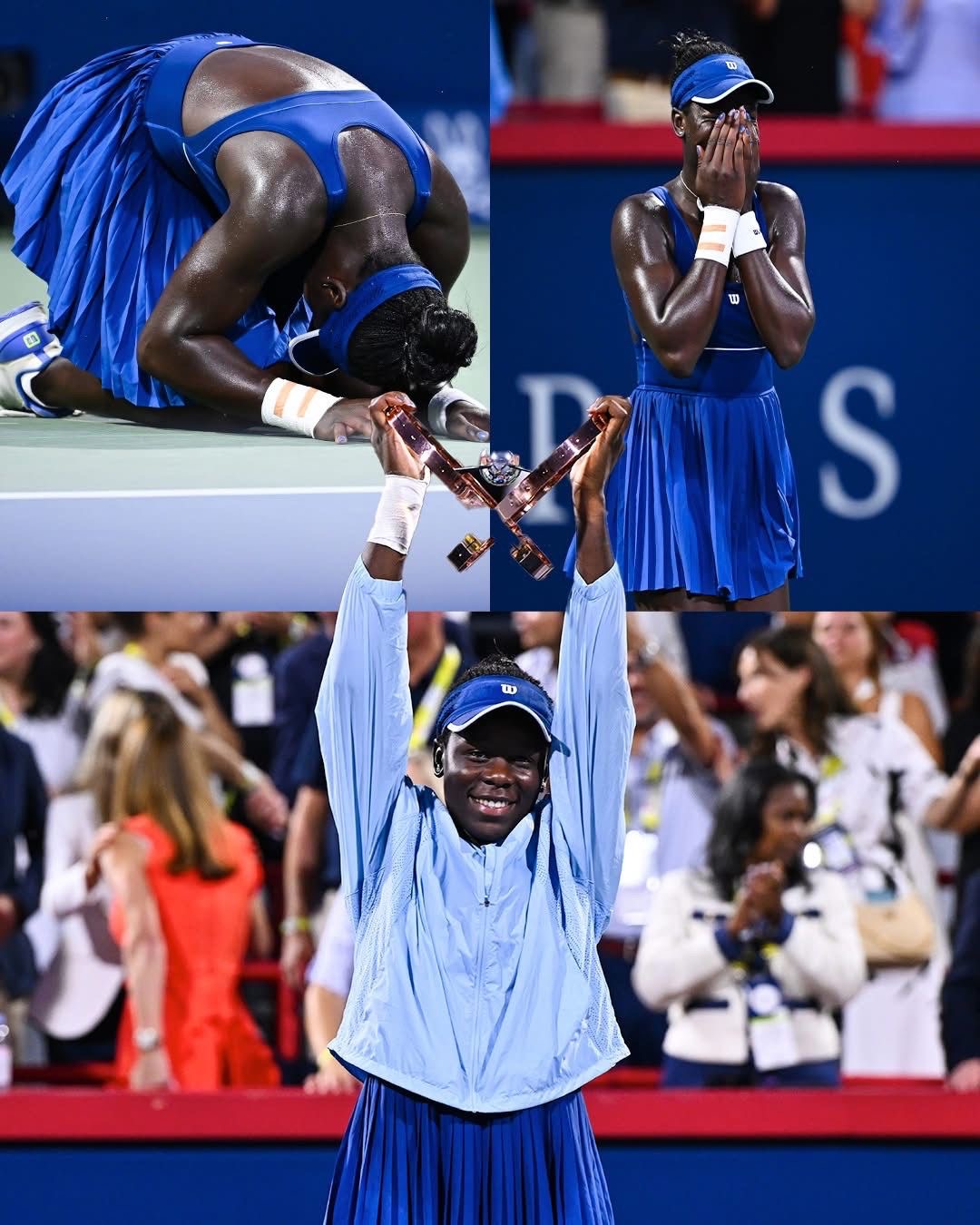 In her post-match reflection, Mboko’s voice wavered between disbelief and pride. “I would have never thought that I would have made it to the final, let alone win the tournament,” she said, her smile revealing both humility and hunger. That hunger will now carry her into the US Open, where she will no longer be a dark horse—she will be the player no one wants to face.
For Canada, this victory is more than a sporting triumph—it is a reaffirmation of a multicultural dream. For Africa, it is a reminder of its global sporting sons and daughters who carry the continent’s spirit into arenas far from home. And for the world, it is a glimpse into the future of women’s tennis. At just 18, Victoria Mboko has already shown she can outplay the best, outthink the experienced, and outlast the strong.
Montreal will remember the day the crowd roared for a teenager with a taped wrist and an untaped heart. The Canadian Open has a new champion, and tennis has a new star. The journey is only beginning, but the legend of Victoria Mboko has already been written in bold letters.
