

In a move that has reignited political fault lines, President Donald Trump has quietly orchestrated the removal of former President Barack Obama’s official portrait from its prominent perch in the Grand Foyer of the White House to a dimly lit, rarely accessed corner atop the Grand Staircase. The decision, confirmed by White House officials, stands in stark defiance of long-standing tradition—where the two most recent presidents’ portraits are displayed conspicuously for public viewing during tours and events. With Joe Biden’s own portrait still incomplete, Obama and George W. Bush had occupied these significant positions—until now  .
The symbolism is palpable. Obama’s portrait, unveiled in 2022 by President Biden, once stood in clear view of visitors as part of a broader ethos of mutual respect and historical continuity. Now, however, it resides in a space accessible only to the First Family, Secret Service, and select staff—effectively removed from public sight  . CNN characterized its new location as “firmly out of view,” reinforcing the message that this is more than mere decoration—it’s political theater  .
This redecorative twist is far from unprecedented for this administration. Earlier this year, in April, Trump installed a larger-than-life painting of himself—depicting the moment after surviving an assassination attempt in Butler, Pennsylvania—right at the heart of the Grand Foyer. The new portrait replaced Obama’s, driving a dramatic wedge between the personal and the institutional    . The replacements of not only Obama’s but also both Bushes’ portraits to the hidden staircase deepen the departure from established decorum, and some commentators have described the shifts as acts of political pettiness or symbolic retribution    .
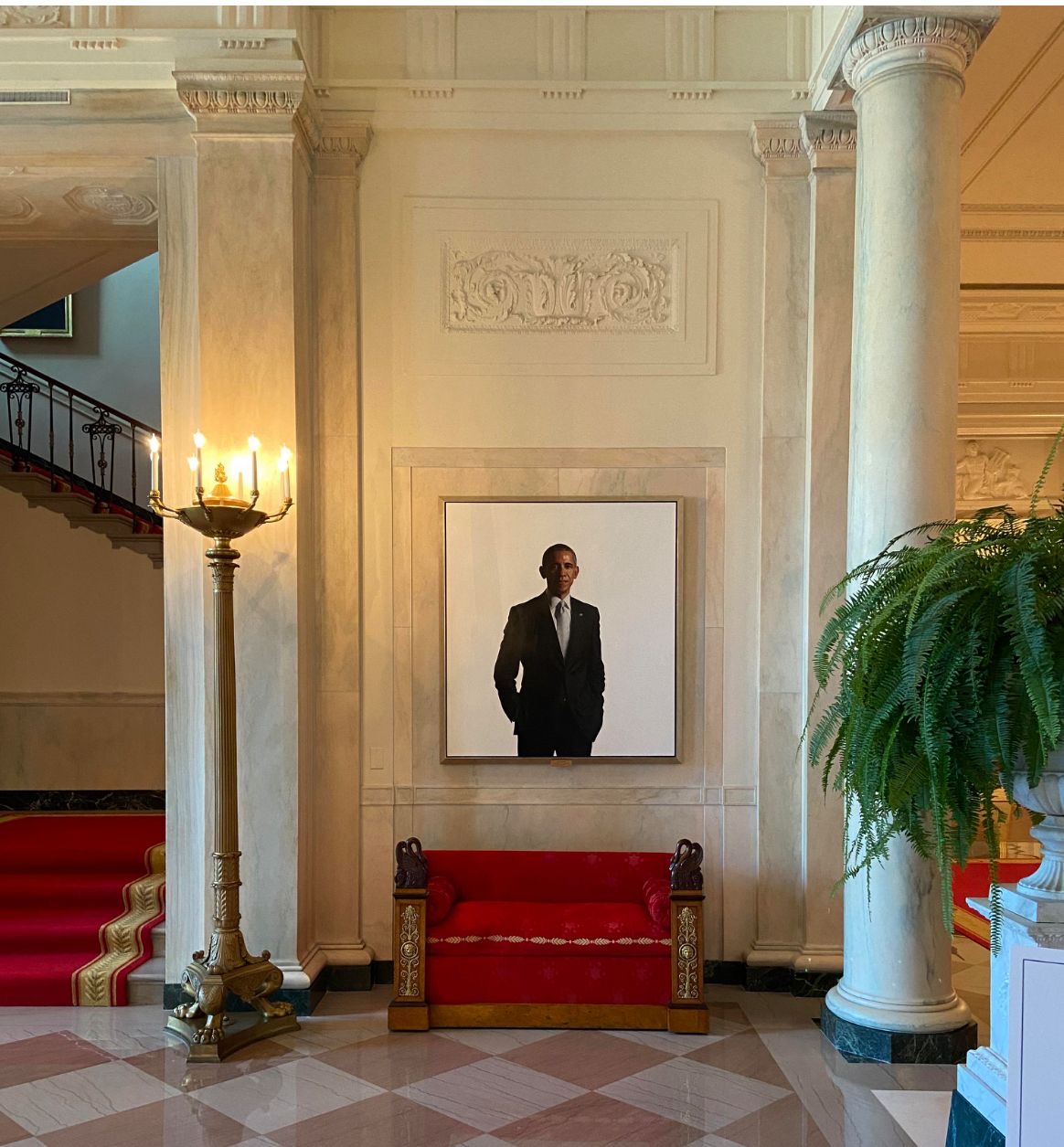 Reactions from the political arena have been just as fraught. While the White House has offered little in public commentary—Obama’s office declined to comment—the optics of the move speak volumes. Observers suggest that the act not only diminishes the visibility of a former president but also reflects a broader struggle over historical legacy and public memory.
From the opposition’s perspective, this is yet another insult in an ongoing feud. Obama’s supporters and many political commentators view the redecorative choices as emblematic of an insecure and vindictive worldview—“Small men hide from history’s giants,” quipped California Governor Gavin Newsom in a pointed response . Social media, particularly Reddit, erupted with remarks ranging from calling the act “petty” and “pathetic” to mocking the president for letting his private resentments interfere with national heritage  .
On the other hand, Trump loyalists and conservative commentators have embraced the redesign as a bold, unapologetic reassertion of personal narrative. Some hail the assassination-survivor portrait as an emblem of resilience and patriotic defiance—“epic,” “powerful,” “emotionally charged”—symbols meant to mark what they see as a legacy of strength on display in the executive mansion   .
At the heart of the matter is the question: what role does the White House serve? A museum of legacies past or a stage for the present president to curate identity and power? In sidelining Obama—a figure still deeply revered by many—the administration sends a message: décor is now as much about political messaging as it is historic preservation.
Whatever the deeper motivations—whether personal vendetta, political signaling, or simply aesthetic preference—the result is clear. A tradition of civility masked in portraiture has given way to spectacle. The White House may be a residence, but for many, it remains a canvas for something far more consequential than interior design: the narrative we choose to commemorate and the leaders we decide to render invisible for the sake of ego.
