

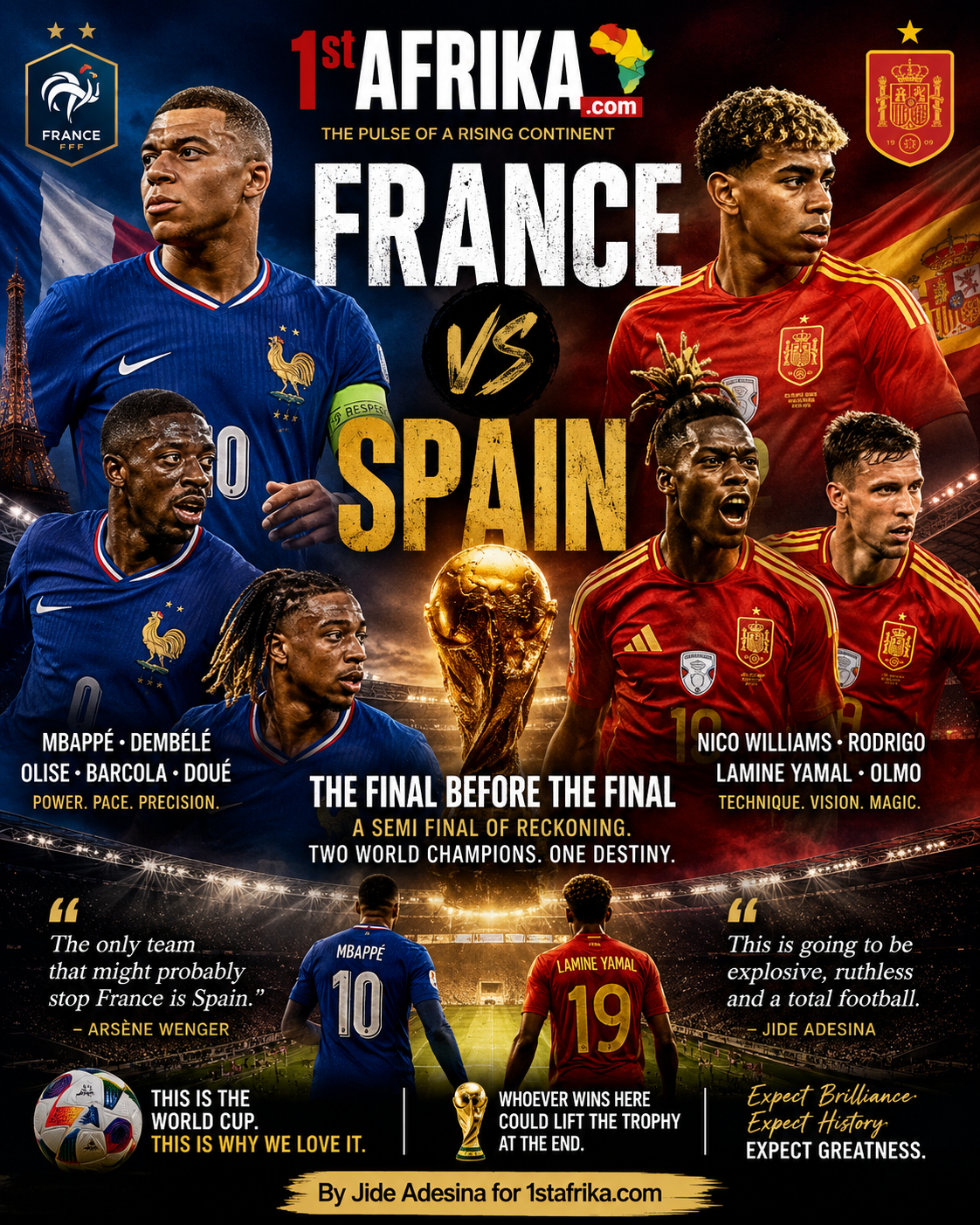
 Spain’s victory over France was more than another international football match. It was a symbolic passing of the torch, showcasing a Spanish generation built on technical brilliance, tactical discipline, and collective responsibility. France, despite possessing one of the world’s most talented squads, found themselves outplayed by a team that controlled the rhythm of the game from the opening whistle.
The post-match discussion, however, quickly shifted away from Spain’s outstanding performance to the comments made by French captain Kylian Mbappé. Following the defeat, Mbappé publicly questioned aspects of France’s performance and expressed frustration over tactical decisions and the team’s inability to respond effectively during the match. Such remarks have inevitably fueled debate across French football.
While elite players are entitled to express disappointment after painful defeats, leadership demands restraint. The captain of a national team carries responsibilities beyond his own performance. Public criticism of tactical decisions or teammates can create unnecessary divisions within a squad that has consistently been among the strongest in world football.
Football history has shown that France possesses a culture of demanding accountability from even its biggest stars. No individual, regardless of reputation, is considered bigger than Les Bleus. Throughout the decades, French football has never hesitated to move on from legendary names whenever it believed the collective interest came first.
Whether Mbappé’s relationship with the French coaching staff suffers lasting damage remains uncertain. Any suggestion that future coaches—including someone like Zinedine Zidane, who has frequently been linked with the France job—would automatically drop Mbappé is purely speculative. Zidane has never publicly indicated such an intention, and Mbappé remains one of the finest players in world football.
Nevertheless, this episode has inevitably raised questions about leadership under pressure.
One of the defining images of this new football era is the emergence of Lamine Yamal. While Mbappé has already won the FIFA World Cup and reached another final, Yamal continues to build a remarkable résumé at an age when most players are only beginning their professional careers.
Whenever Spain and France have recently met with Yamal involved, Spain has often emerged victorious, adding another fascinating chapter to what could become football’s defining rivalry over the next decade.
Should Yamal eventually lift the FIFA World Cup, comparisons with Mbappé would intensify dramatically. Mbappé would still possess the distinction of winning the World Cup as a teenager in 2018, but Yamal’s achievements with both Spain and Barcelona at such a young age would strengthen his own claim to football greatness.
The debate would no longer revolve around Lionel Messi and Cristiano Ronaldo. Instead, attention would increasingly shift toward football’s next generation—Mbappé, Yamal, and potentially Erling Haaland, whose remarkable goal-scoring exploits continue to make him one of the sport’s dominant figures. Their contrasting personalities, playing styles, and ambitions promise a rivalry capable of defining the next decade.
Spain’s collective football deserves particular praise. Rodri once again dictated the tempo whenever he was involved, while Dani Olmo’s intelligent movement constantly disrupted France’s midfield structure. Spain’s pressing, possession, and positional discipline reflected years of development rather than dependence on individual brilliance.
France equally possesses exceptional young talent. Michael Olise, Bradley Barcola, Eduardo Camavinga, Aurélien Tchouaméni, William Saliba, and others ensure that the future remains bright despite this disappointment.
Some supporters have suggested that the absence of N’Golo Kanté weakened France’s midfield and that his ball-winning abilities could have helped contain Spain’s midfield dominance. However, there is no verified evidence that Kanté missed matches because of any confrontation with Mbappé. Such claims remain unsubstantiated and should not be presented as fact.
Defeat is part of football. Germany, the Netherlands, England, Portugal, Brazil, Argentina, and many other great football nations have all suffered painful eliminations despite producing excellent performances. Fine margins often determine success at the highest level.
True champions respond not by searching for excuses but by accepting responsibility, learning from defeat, and returning stronger.
As captain of France, Mbappé has an opportunity to demonstrate precisely that.
Former French greats such as Thierry Henry, Didier Deschamps, Marcel Desailly, Lilian Thuram, Patrick Vieira, and even Paul Pogba—should he return to prominence within French football—understand that leadership is measured most clearly in moments of disappointment.
France remains one of the favourites for every major tournament they enter. Mbappé remains one of the world’s elite footballers. But the spotlight is now shared with an extraordinary teenager from Spain whose rise appears almost unstoppable.
If the trajectory continues, the road to the 2030 FIFA World Cup may well be defined by one unforgettable rivalry: Kylian Mbappé versus Lamine Yamal.
Football’s next great era has already begun.
By : Jide Adesina – Fifa world cup 2026 journalist reporter for 1stAfrika.com
