

The Niger Delta Cannot Afford to Sacrifice Its Hard-Won Leverage on the Altar of One Man’s Political Desperation
By Jide Adesina | 1STAFRIKA.COM
There comes a moment in the life of a people when the words of one man, spoken in the heat of personal ambition, can undo decades of strategic patience and political capital accumulated drop by drop, sacrifice by sacrifice, election by election. The Niger Delta stands at such a moment. And the man standing at the microphone, torch in hand, is Chibuike Rotimi Amaechi.
In the span of a few short weeks, the former governor of Rivers State and now Vice Presidential candidate of the African Democratic Congress has managed to do what external enemies of the Niger Delta could not achieve in sixty years: he has begun to systematically dismantle the moral and political foundation upon which the region’s claim to national leadership rests. By describing those who support the sitting president as “mad people,” by railing against the very economic reforms that are stabilising the federation’s fiscal architecture, and by marching through Delta State with the swagger of a conqueror rather than a son of the soil seeking reconciliation, Amaechi is not merely campaigning. He is committing political arson. And the bridge he is burning is the same bridge that carried Isaac Jasper Adaka Boro, Alfred Diete-Spiff, and ultimately Goodluck Ebele Jonathan from the creeks of the Niger Delta to the commanding heights of the Nigerian state.
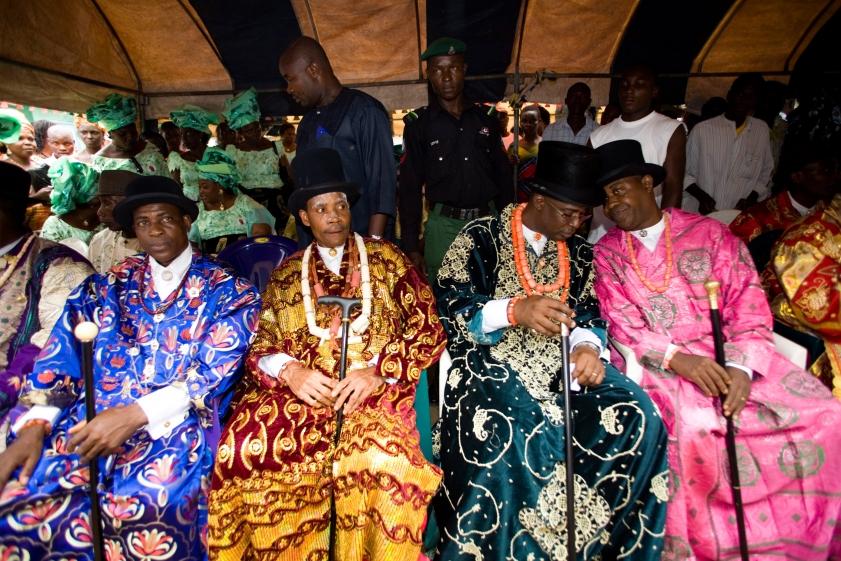
To understand the gravity of what Amaechi is unraveling, one must first understand what the Niger Delta has been, what it has chosen, and what it has sacrificed to remain inside the Nigerian federation. This is not a region that stumbled into Nigeria by accident. It is a region that has had every reason to leave, and yet, at every critical juncture in national history, it has chosen to stay, to fight for Nigeria, and to demand its place not outside the federation but at the very center of it. That choice was made first and most dramatically during the Nigerian Civil War, when the question was not abstract but existential: Biafra or Nigeria?
In May 1967, when Emeka Ojukwu declared the Republic of Biafra, the Niger Delta faced a fateful decision. Geographically contiguous with the Eastern Region, culturally intertwined with Igbo neighbours, and historically marginalised by the Northern and Western power blocs, the Niger Delta could easily have thrown its lot with the secessionist cause. Many expected it to. But the region’s leaders understood something fundamental that Amaechi appears to have forgotten: minority communities do not win their freedom by joining larger ethnic empires in rebellion; they win it by negotiating power within the structures that exist, by building alliances across fault lines, and by proving their indispensability to the survival of the whole. The Niger Delta chose Nigeria. And it did not choose passively.
Isaac Jasper Adaka Boro remains the most profound symbol of this paradox. Here was a man who, in February 1966, had declared the Niger Delta Republic, raised an army of volunteers, and fought the federal government for twelve days before being crushed, imprisoned, and tried for treason. Boro was the original Niger Delta secessionist, the first to look Abuja, or rather Lagos, in the eye and say “we will not be slaves to your federation.” And yet, when the Civil War broke out, Boro did not join Biafra. He accepted amnesty from General Yakubu Gowon, was commissioned as a major in the Nigerian Army, and led the federal forces into the creeks he knew better than any cartographer. He fought for Nigeria not because he loved the Nigerian state, but because he understood that a fractured Nigeria offered the Niger Delta nothing but exchange of one master for another. He died in May 1968 at Ogu near Okrika, fighting for the same federation whose injustice he had spent his youth denouncing. That is the price the Niger Delta has paid for its belief in Nigeria. That is the blood debt the federation owes the region. And that is the legacy Amaechi is treating with contempt.
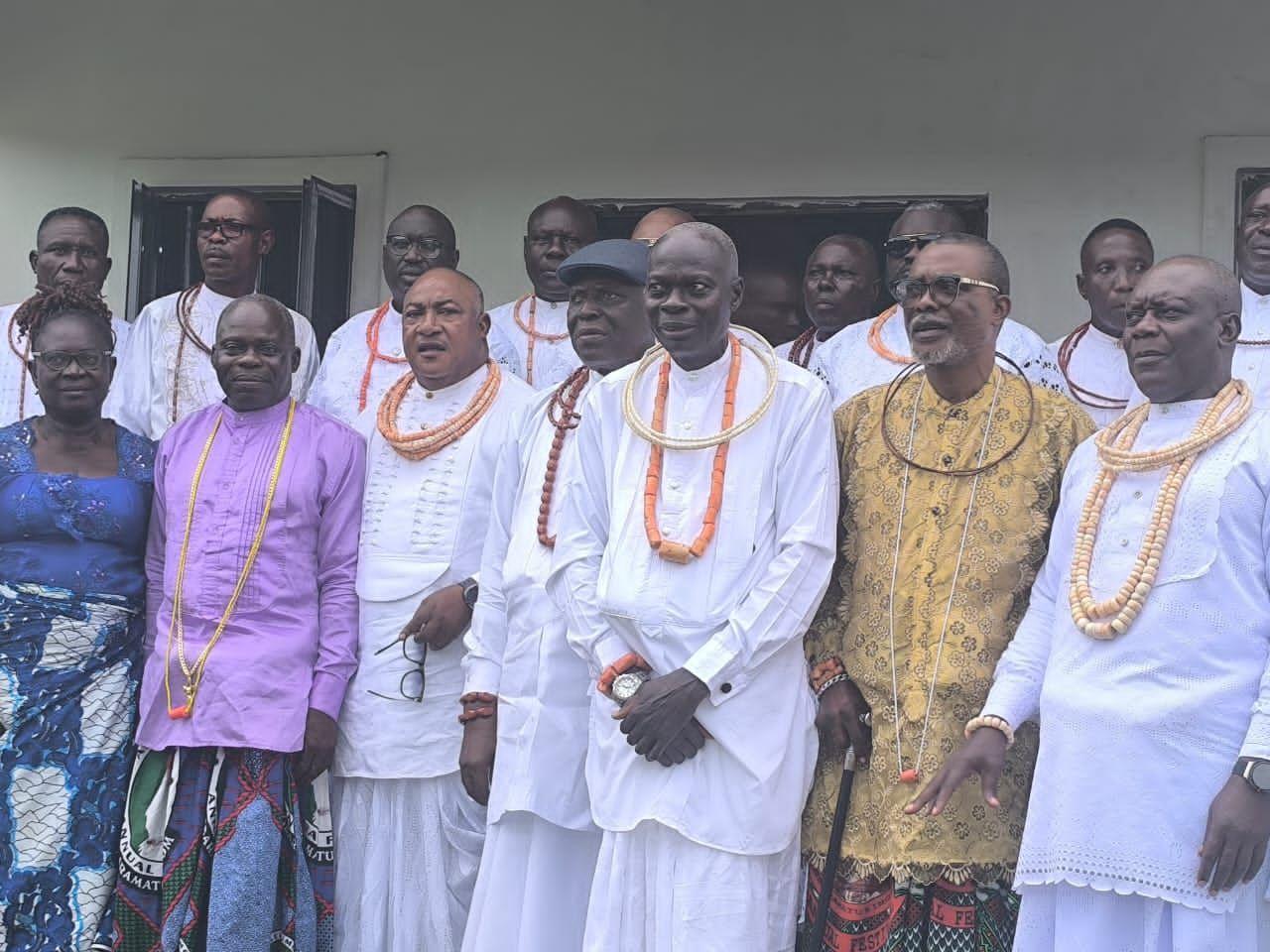
Alfred Papapreye Diete-Spiff understood the same logic from a different angle. As the first military governor of Rivers State, appointed in the immediate aftermath of the Civil War in 1967, Diete-Spiff faced the unenviable task of rebuilding a devastated region while convincing its war-scarred people that their future lay not in separation but in reconstruction within the Nigerian framework. He did not have the luxury of populist rhetoric. He had to build schools, roads, and institutions. He had to look traditional rulers in the eye and tell them that the same army that had bombed their villages now held the key to their children’s education and employment. He stayed the course. He kept the Niger Delta inside Nigeria during its most fragile hour. And in doing so, he laid the administrative and political groundwork that would eventually make it possible for a son of Otuoke to become president four decades later.
The trajectory from Boro to Diete-Spiff to Jonathan is not accidental. It is the story of a region that refused to be counted out, that refused to be mere oil-producing backdrop to other people’s political dramas. When Goodluck Ebele Jonathan ascended to the presidency in 2010, first as acting president and then as elected leader in his own right, it was the culmination of every sacrifice the Niger Delta had made to remain loyal to the Nigerian project. Jonathan did not become president because the Niger Delta threatened secession. He became president because the region had proven, over half a century, that it could be trusted with power, that it could govern without vengeance, and that it could hold the federation together rather than pull it apart. His presidency was the ultimate validation of the Adaka Boro paradox: fight for your people, demand justice for your region, but never close the door to the center.
Jonathan’s presidency also proved something else that Amaechi would do well to remember. The Niger Delta’s path to national leadership has never been through confrontation, insult, or the demonisation of other regions. Jonathan became president because the South-South and the wider Niger Delta had built alliances across the Middle Belt, the Southwest, and even parts of the North. He became president because the region had learned to speak the language of national unity rather than ethnic grievance. When he conceded defeat in 2015, he did not call his supporters “mad” for voting differently. He did not burn bridges. He walked across them, and in doing so, he preserved the region’s dignity and its future electoral viability. That is statesmanship. What Amaechi is offering is something else entirely.
The political mathematics of the Niger Delta’s presidential ambition has always been delicate. The region is not the most populous. It does not command the vast electoral territories of the Northwest or the Southwest. What it commands is strategic leverage: the oil that powers the economy, the gas that fuels the power sector, the ports that connect the hinterland to the Atlantic, and the maritime boundaries that define Nigeria’s claim to offshore wealth. But leverage is only useful to those who know how to wield it. Used wisely, it opens doors in Abuja, secures developmental appointments, attracts federal investment, and builds the kind of cross-regional goodwill that produces presidents. Used foolishly, it becomes a weapon that invites federal retaliation, scares away investors, and turns potential allies into enemies. Amaechi’s utterances are textbook examples of leverage squandered. When you call voters in other regions “mad” for supporting a sitting president, you are not attacking the president; you are attacking the democratic choice of millions. When you condemn fuel subsidy removal without offering a credible fiscal alternative, you are not defending the poor; you are defending the same subsidy barons who have looted the treasury for decades. And when you march into Delta State telling Deltans that their local aspirations are conditional on delivering votes to your northern presidential candidate, you are not building a coalition; you are issuing a political invoice that insults the intelligence of a proud people.
The Niger Delta Youth Congress was right to condemn Amaechi’s earlier call for “brutal force” to seize power. But condemnation is not enough. The region’s elders, its traditional rulers, its intellectuals, and its business leaders must now do what they did during the Biafra crisis: they must look beyond the immediate noise and ask where Amaechi’s rhetoric leads. It leads to isolation. It leads to the reinforcement of the old stereotype that the Niger Delta is too emotional, too volatile, too unreliable to be trusted with national leadership. It leads to a future where the next time a Niger Delta politician aspires to the presidency, the rest of Nigeria will remember not Jonathan’s gentle statesmanship but Amaechi’s inflammatory arrogance. That is the true cost of what is happening right now. Not the loss of an election, but the loss of a reputation sixty years in the making.
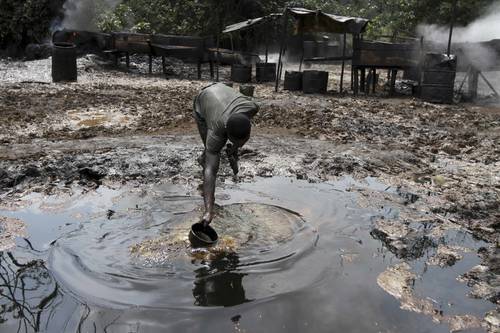
What does the Niger Delta stand to gain by aligning with the federal centre rather than railing against it from the periphery? Everything. The region currently produces the bulk of Nigeria’s foreign exchange earnings, yet its infrastructure remains among the worst in the country. Its people breathe the soot of illegal refineries while the formal sector cannot get gas-to-power projects completed. Its youth are restive not because they lack ambition but because they lack opportunity. These are not problems that will be solved by a vice presidential candidate who spends his time insulting the electorate. They are problems that require the exact opposite approach: quiet, sustained, strategic engagement with the federal government, regardless of which party occupies Aso Rock. The Niger Delta needs the coastal highway completed from Lagos to Calabar. It needs the East-West Road fully rehabilitated. It needs the Brass LNG project revived, the Trans-Saharan Gas Pipeline anchored, the Port Harcourt-Maiduguri rail line constructed, and the long-promised Niger Delta Development Commission reformed into an effective vehicle rather than a cash cow for political contractors. None of these will come through antagonism. They will come through the region proving, as it has proven before, that it is too valuable to ignore and too mature to alienate.
There is a deeper truth here that transcends Rotimi Amaechi’s personal ambitions. The Niger Delta has always had two paths before it. One path is the path of Boro the rebel, who challenged the federation but ultimately died defending it. The other path is the path of perpetual opposition, of seeing every federal government as an enemy, of cutting off the nose to spite the face, of winning the argument while losing the region. The first path produced a presidency. The second path produces nothing but bitterness and broken pipelines. Amaechi is currently walking the second path, and he is asking the entire region to follow him into the wilderness.
The Niger Delta must refuse. It must refuse not because Tinubu is perfect, not because the APC has delivered everything it promised, and not because the current economic reforms are painless. It must refuse because the region’s strategic interest lies in preserving its options, in keeping its bridges intact, and in remembering that the same federal government Amaechi is urging his people to antagonise is the same federal government that will, one day, be staffed by a Niger Delta president if the region does not destroy its own credibility today. Politics is not poetry. It is arithmetic. And the arithmetic of Nigerian presidential politics has never favoured those who specialise in burning bridges.
Adaka Boro understood this. Diete-Spiff understood this. Goodluck Jonathan understood this. They understood that the Niger Delta’s destiny is not to be the perpetual victim of the Nigerian state, nor its perpetual antagonist, but its eventual master. They understood that power is not given to those who shout the loudest, but to those who build the widest. And they understood that the road from Oloibiri to Abuja is paved not with insults, but with patience, sacrifice, and the quiet confidence of a people who know that the oil may run dry, but political wisdom never does.
Rotimi Amaechi should be stopped, not by federal force, but by the collective wisdom of the very people he claims to represent. The Niger Delta has come too far, sacrificed too much, and waited too long for another shot at the presidency to allow one man’s desperation to torch the bridge that Boro built, Diete-Spiff guarded, and Jonathan crossed. The region must speak, and it must speak now: not with the language of Amaechi’s rage, but with the language of its own history. That history says, clearly and without ambiguity, that the Niger Delta wins when it stays in the room, not when it storms out of it. The door to national leadership is still open. But only a fool sets fire to the frame on his way through it.
—

Jide Adesina writes from Abuja
© 2026 1STAFRIKA.COM | All Rights Reserved
