

When the curtains rise at the London Palladium on Monday evening for the 70th anniversary of the Ballon d’Or, the betting markets will tell you that Harry Kane is the man to beat, installed as short as 1/3 by British bookmakers after a prolific trophy-laden campaign with Bayern Munich. The whispering galleries of social media will insist the future belongs to Lamine Yamal, Barcelona’s 19-year-old phenomenon who already owns a World Cup winner’s medal and a La Liga title. But neither the odds nor the hype can obscure the essential truth of the 2026 season, a truth that will be confirmed the moment the envelope is opened in London. This is Kylian Mbappe’s time.
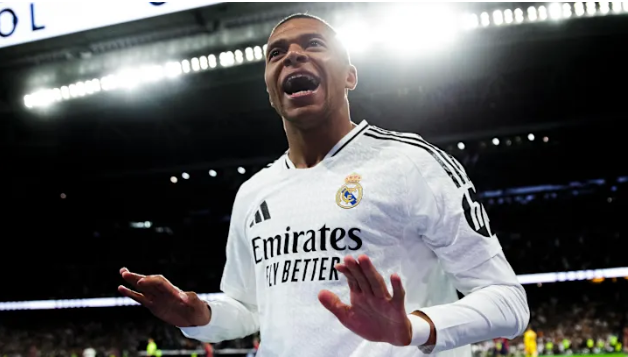
The case for Mbappe does not rest on the polished silverware that usually accompanies a Ballon d’Or coronation. Real Madrid’s 2025-26 campaign was, by the stratospheric standards of the Bernabeu, a study in frustration. Xabi Alonso was sacked in January and replaced by Alvaro Arbeloa. The club finished second in La Liga, crashed out of the Copa del Rey in the round of 16 to Albacete, lost the Supercopa de Espana final to Barcelona, and bowed out of the Champions League in the quarter-finals against Bayern Munich. France, meanwhile, finished fourth at the World Cup in North America, failing to reach the podium despite Mbappe’s heroics. By the traditional metric of team trophies, his rivals have him beat.
But the Ballon d’Or is not a team award, and if its purpose is to recognize the player who dominated the sport more completely than any other across a single season, then 2026 offers no serious alternative to the Frenchman. Mbappe’s numbers across the campaign are not merely impressive, they are historically anomalous. For Real Madrid, he scored 42 goals in 44 matches in all competitions, winning the Pichichi Trophy as La Liga’s top scorer with 25 goals in 31 appearances and finishing as the UEFA Champions League’s leading marksman with 15 goals, a tally that outstripped Harry Kane, Julian Alvarez, Anthony Gordon and Khvicha Kvaratskhelia. When a club endures a season of managerial upheaval and collective underachievement, yet its forward still tops the scoring charts in both domestic football and the world’s most prestigious club competition, it speaks to a level of individual transcendence that cannot be measured in medals.
It was, however, on the grandest stage of all that Mbappe cemented his claim to immortality. The 2026 World Cup in the United States, Canada and Mexico was supposed to be the tournament where the old guard made their final stand and the new generation announced itself. Instead, it became the Kylian Mbappe show. He scored 10 goals across the competition to win the Golden Boot, becoming the first player in history to claim the award at consecutive World Cups after his eight-goal haul in Qatar four years earlier. In the chaotic third-place playoff against England, a match that ended 6-4, Mbappe scored twice to take his tournament tally to double figures and, more significantly, to take his career World Cup goal total to 22, surpassing Lionel Messi as the competition’s all-time leading scorer. When the final history of football is written, that record will stand as one of the sport’s most hallowed benchmarks, and it was achieved by a 27-year-old operating at the peak of his powers.
To understand why this matters for the Ballon d’Or, one must consider the context of those goals. France’s squad was talented but disjointed, lacking the midfield control of its 2018 triumph and the defensive cohesion of its 2022 run. Yet Mbappe dragged Les Bleus through the knockout stages almost single-handedly, scoring in every elimination match and keeping alive a campaign that might otherwise have collapsed. In an era where the award’s voting criteria have shifted to emphasize individual performance and decisive impact as much as collective success, Mbappe’s World Cup represents the ultimate case study in carrying a team beyond its structural limitations.
The contrast with his rivals only sharpens the argument. Kane has been extraordinary, scoring 36 goals in the Bundesliga and 61 in all competitions for Bayern Munich, winning the European Golden Shoe and finally filling his trophy cabinet with the Bundesliga title and DFB-Pokal. At 33, he has been the model of relentless consistency. But Bayern’s European campaign ended without Champions League glory, falling short in Budapest where Paris Saint-Germain were crowned champions, and England’s World Cup ended in the bronze medal match rather than the final. Kane’s year has been magnificent, but it has not redefined what we thought possible from an individual player.
Yamal’s case is perhaps more seductive. He won La Liga with Barcelona, was named the competition’s player of the season with 16 goals and 11 assists, and collected the Sofascore Player of the Season awards for both La Liga and the Champions League. As a key cog in a Spain side that won the World Cup, he represents the perfect blend of individual brilliance and team success. But at 19, he is still ascending. His 24 goals and 17 assists in 45 matches for Barcelona, while remarkable for his age, do not yet approach the sheer volume and historical weight of Mbappe’s output. The Ballon d’Or should not be a promise of future greatness, it should be a recognition of present dominance, and in 2026, no player was more dominant more often than Mbappe.
Even Messi, who led Argentina to the World Cup final at MetLife Stadium before falling to Spain, cannot match the Frenchman’s body of work across the full season. The Argentine’s magic remains undimmed, but his club season with Inter Miami and his international campaign, while glittering, did not produce the sustained, week-after-week avalanche of goals and performances that Mbappe delivered in the white of Real Madrid and the blue of France.
There is also the matter of narrative, which has always coursed through the Ballon d’Or like electricity. Mbappe’s move to Real Madrid in the summer of 2024 was billed as the final step in his journey from prodigy to legend, the coronation of the heir apparent at the club that has housed Di Stefano, Puskas, Ronaldo and Benzema. His first season brought adaptation and promise. His second has brought a brutal, unrelenting demonstration of his ceiling. To score 42 goals for a team in tactical chaos, to break the all-time World Cup scoring record while carrying a nation that fell short of its ultimate goal, to top every major scoring chart in the sport’s most demanding competitions, this is the work of a player who has moved beyond mere stardom into a realm of sustained excellence that defines eras.
When France Football and UEFA gather the votes from journalists around the world, they will face a choice that cuts to the heart of what the Ballon d’Or is meant to represent. They can reward the player who won the most, or they can reward the player who was the best. In 2026, those categories diverged more starkly than they have in years. Harry Kane and Lamine Yamal have the trophies and the headlines. Kylian Mbappe has the numbers, the records, and the irrefutable evidence that for one season, he operated on a plane no one else could reach.
The London Palladium has hosted royalty, rock stars, and theatrical legends. On Monday night, it should welcome the new king of world football. It is Mbappe’s time.
