

The proposed joint venture, supported by the Trump administration and nearly $100 million in American financing, aims to challenge Chinese dominance in Africa’s digital infrastructure while targeting Angola’s mining, oil and agricultural sectors.
In the shadow of a deepening technological rivalry between Washington and Beijing, a new satellite services enterprise is taking shape on the Atlantic coast of southern Africa, one that could redraw the continent’s digital infrastructure map while advancing American strategic interests far beyond the confines of Capitol Hill. Africell, the only United States-owned mobile network operator on the African continent, and the government of President João Lourenço in Luanda are in the advanced stages of preparing a joint venture dedicated to commercial satellite services, a venture that has drawn both financial muscle and diplomatic endorsement from the Trump administration and that signals a significant expansion of American commercial and technological influence into one of Africa’s most resource-rich economies.
The proposed company, which has yet to be formally named but whose contours are already well defined in discussions between the parties, is designed to deliver satellite-enabled solutions to some of Angola’s most consequential industrial sectors, including mining, oil and gas exploration, and large-scale agriculture. These are industries that operate across vast and often remote territories where terrestrial connectivity remains patchy or nonexistent, and where the ability to relay data via satellite is not merely a convenience but an operational necessity. For Africell, which has built a customer base of fifteen million subscribers across Angola, the Democratic Republic of Congo, The Gambia, and Sierra Leone, the move represents a natural evolution from mobile telecommunications into the higher-margin world of geospatial intelligence and satellite-driven enterprise services. For Luanda, it represents an opportunity to monetize and expand the capabilities of Angosat-2, the country’s flagship communications satellite, while reducing technological dependence on Chinese vendors who currently dominate much of Africa’s telecommunications infrastructure.
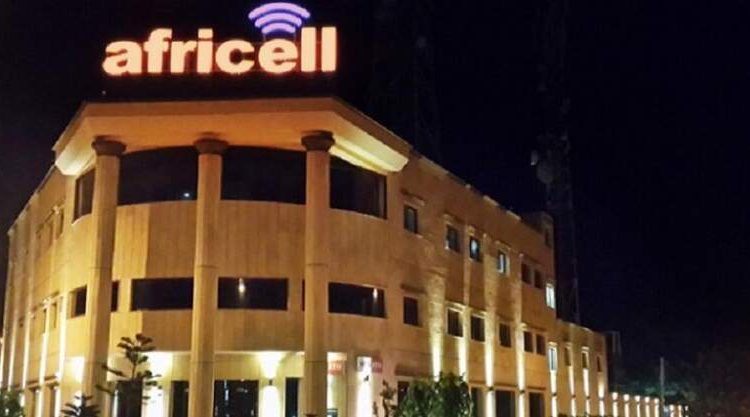
The American hand in this enterprise is neither subtle nor incidental. According to reports from Africa Intelligence, the satellite services joint venture is receiving both financial and diplomatic backing from the Trump administration, a continuation of a broader American strategy to position trusted technology partners in key African markets as a counterweight to Chinese firms, most notably Huawei, which commands an estimated fifty-two percent of the continent’s 5G infrastructure market. This strategy has already taken concrete financial form. In September 2026, the Export-Import Bank of the United States announced a direct loan of ninety-nine point six million dollars to Africell, explicitly earmarked for technology investments in Angola. The loan, which was first reported by Reuters, is intended to enable Africell to purchase and deploy the latest mobile network technology from American and allied suppliers, and it forms part of a wider American push to secure what Washington terms trusted communications infrastructure across sub-Saharan Africa.
That push is deeply intertwined with the geopolitics of the Lobito Corridor, the ambitious infrastructure and economic development zone linking the Atlantic port of Lobito in Angola through the copper belt of the Democratic Republic of Congo to Zambia. The United States has committed more than five billion dollars toward railway upgrades, bridges, broadcasting, and communications infrastructure in the corridor region, and Africell’s expanding footprint in Angola is viewed by Washington as a critical digital backbone for these investments. Ziad Dalloul, Africell’s founder, chief executive, and president, has been unambiguous about the strategic dimension of his company’s work, stating that Africell is flying the flag for American technology leadership while creating secure pathways for future American and allied digital technologies to be deployed across the region. The EXIM loan, in his telling, is not merely a commercial facility but a piece of industrial policy designed to ensure that the next generation of African digital infrastructure is built on American, rather than Chinese, technical standards.
The satellite services joint venture does not emerge from a vacuum. It builds upon a carefully constructed foundation of cooperation between Africell and Angola’s National Space Program Management Office, known by its Portuguese acronym GGPEN. In June 2026, the two entities signed a memorandum of understanding in Luanda aimed at strengthening cooperation and expanding the commercial services offered through Angosat-2, the Angolan communications satellite that serves as the country’s primary orbital asset. That agreement laid the groundwork for the more ambitious corporate structure now under discussion, one that would see Africell and the Angolan state collaborate as equity partners in a dedicated satellite services firm rather than merely cooperating through contractual arrangements.
Even before the MoU, the two sides had already demonstrated their ability to work together in the geospatial domain. In June 2025, on the sidelines of the ANGOTIC technology conference in Luanda, GGPEN and Africell Angola officially launched GEDAE, Soluções Inteligentes do Centro de Geodados, a next-generation geodata center designed to transform Angola’s geospatial capabilities. The facility, which represents a strategic evolution of GGPEN’s former Space Applications Development Unit, is equipped to process high-resolution satellite imagery, artificial intelligence analytics, and big data for applications ranging from precision agriculture and urban planning to environmental monitoring, security, and energy exploration. GEDAE operates as a public-private partnership leveraging technology and data from Airbus, and it has already positioned Angola as one of the few African nations with a commercially oriented, state-backed geospatial intelligence capability.
The proposed satellite services joint venture can be understood as the commercial counterpart to GEDAE’s technical infrastructure. While GEDAE focuses on processing and analyzing geospatial data, the new company would focus on delivering satellite connectivity and data services to end users, particularly in the extractive industries that form the backbone of the Angolan economy. Oil companies operating offshore in the Atlantic, mining conglomerates probing the mineral-rich hinterlands, and agribusinesses managing vast plantations all require reliable, high-bandwidth communications in areas beyond the reach of fiber or conventional mobile towers. A satellite services firm backed by Africell’s commercial expertise and the Angolan state’s regulatory and orbital assets would be uniquely positioned to capture this demand, potentially generating substantial revenue while deepening the integration of American technology into Angola’s critical economic infrastructure.
For the Trump administration, the appeal of this arrangement extends beyond the purely commercial. It represents a tangible manifestation of the clean network initiative first launched during Trump’s initial term, a campaign to purge Chinese telecommunications equipment from sensitive infrastructure in the United States and among its partners. That campaign has taken on renewed urgency as Washington has imposed heavy sanctions on Huawei over allegations, vigorously denied by Beijing, that its equipment could be used for espionage. By backing Africell, a genuinely American-owned operator, in a strategic African market, Washington is attempting to demonstrate that there is a viable, trusted alternative to Chinese vendors, one that comes with American financing, American technical standards, and the implicit security guarantees of alignment with Washington.
The Angolan calculus is more complex but no less rational. President João Lourenço’s government has pursued a foreign policy of strategic diversification, courting investment and partnerships from the United States, Europe, and the Gulf states while maintaining historically close ties with China, which remains Angola’s largest creditor and a major player in its construction and energy sectors. The satellite services venture allows Luanda to deepen its technological relationship with Washington without rupturing its ties to Beijing, giving Angola multiple options in its digital sovereignty strategy. It also aligns with Angola’s broader ambition, articulated through GGPEN, to transform the country into an internationally recognized player in space applications and to move beyond the traditional government-led model of satellite programs into a market-driven approach that leverages private sector investment and expertise.
The timing of the announcement is also significant. It comes after years of steady American diplomatic investment in Africell’s Angolan operations, including high-profile visits by senior U.S. officials. Former Deputy Secretary of State Wendy Sherman toured Africell’s Luanda offices in 2022, and Secretary of State Antony Blinken followed with his own visit in 2024, both emphasizing the strategic importance of trusted telecommunications infrastructure. USAID Administrator Samantha Power also convened a roundtable in Luanda bringing together Africell executives and American business leaders to explore development opportunities. These visits were not merely ceremonial; they laid the diplomatic groundwork for the financial and commercial commitments that are now crystallizing in the satellite services joint venture.
There are, of course, formidable challenges ahead. The African satellite services market is competitive, with established players and new entrants vying for contracts in energy, mining, and government services. The technical and regulatory complexities of operating a satellite services firm, particularly one that handles data for critical infrastructure operators, are considerable. And the broader geopolitical environment remains volatile, with the ever-present risk that U.S.-China tensions could complicate supply chains, financing, or market access for companies caught in the middle of the rivalry.
Yet for now, the momentum appears to be with Africell and Luanda. The EXIM loan provides the financial firepower, the GGPEN partnership provides the institutional and orbital assets, GEDAE provides the geospatial processing backbone, and the Trump administration provides the diplomatic cover and strategic impetus. Together, these elements are coalescing into what could become one of the most significant American commercial entries into Africa’s space and satellite services sector in years, a venture that would not only connect mines, oil rigs, and farms across Angola but also serve as a high-profile test case for whether American technology can truly compete with, and ultimately displace, Chinese dominance in Africa’s digital future.
