

The threat facing Nigeria and West Africa is not theoretical. It is already at the door. As of late October 2026, the Bundibugyo virus disease outbreak that began in the Democratic Republic of the Congo has spilled beyond its epicentre, with Kenya confirming nine cases linked to an imported index patient and Nigeria recording its first laboratory-confirmed case in the Federal Capital Territory, Abuja. The virus, one of the Orthoebolavirus species that causes Ebola disease, has demonstrated its capacity to travel by air and road, to seed secondary infections in healthcare settings, and to exploit the gaps between what public health systems promise and what they can actually deliver on the ground. For Nigeria, a nation of more than two hundred million people, and for the broader West African region still haunted by the memory of the 2014 catastrophe that killed more than eleven thousand people across Guinea, Sierra Leone, and Liberia, the question is no longer whether Ebola can reach them. It already has. The question is whether they can contain it before it triggers a continent-wide emergency.
Nigeria has a story to tell about containment, and it is one of the most remarkable public health success narratives of the twenty-first century. In July 2014, a symptomatic air traveller from Liberia arrived in Lagos, vomiting during his flight, in the car that collected him, and again at the private hospital where he was initially treated for presumed malaria. Lagos was Africa’s largest city, a chaotic, densely populated metropolis of twenty-one million people where many public health experts predicted an urban apocalypse. The index patient died, but not before exposing seventy-two people at the airport and hospital, setting off a chain of transmission that eventually produced twenty confirmed and probable cases, including nine doctors and nurses, four of whom died. Yet the explosion never came. Within three months, Nigeria had contained the outbreak entirely. The World Health Organization declared the country free of Ebola virus transmission on October 20, 2014, and the response became a global textbook case in rapid epidemic control.
What made Nigeria’s 2014 response succeed where so many other countries failed was not luck. It was the immediate activation of an Incident Management System, the precursor to today’s Emergency Operations Centre, which consolidated decision-making under a single incident manager accountable to the Nigeria Centre for Disease Control and the Federal Ministry of Health. It was the existence of a first-rate virology laboratory at Lagos University Teaching Hospital, capable of confirming or ruling out Ebola within hours rather than days. It was the repurposing of polio eradication infrastructure, including global positioning systems for real-time contact tracing and daily mapping of transmission chains, which enabled contact tracing teams to reach one hundred percent of contacts in Lagos and ninety-nine point eight percent in Port Harcourt. It was the government’s willingness to allocate funds quickly, to build isolation facilities in both cities, and to mount house-to-house information campaigns in local languages that calmed public fears and encouraged cooperation. And it was the clinical vigilance of healthcare workers who, despite initially misdiagnosing the index case, quickly recognized the danger and triggered the alarm.
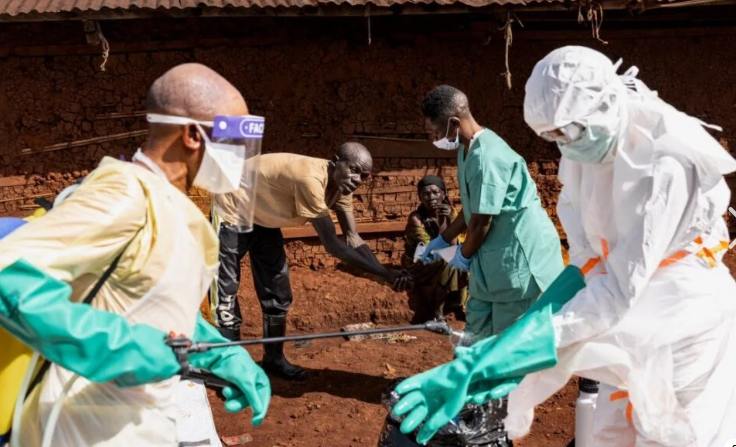
That legacy is both Nigeria’s greatest asset and its potential blind spot. Twelve years after that success, the Nigeria Centre for Disease Control and Prevention has grown into a far more sophisticated institution, with established Emergency Operations Centre infrastructure, expanded laboratory networks, and experience managing multiple simultaneous outbreaks including Lassa fever, cholera, and measles. Yet when the NCDC conducted a dynamic risk assessment in mid-2026 as the Bundibugyo outbreak escalated in the DRC and Uganda, it concluded that Nigeria’s Ebola preparedness stood at only fifty-nine percent. The assessment, disclosed by NCDC Director-General Dr. Jide Idris, revealed critical vulnerabilities, particularly at points of entry. Nigeria’s international airports in Lagos, Abuja, Kano, Enugu, and Port Harcourt represent obvious channels for imported cases, and the Federal Ministry of Health has issued protocols to tighten screening of airline passengers arriving from affected regions. But the more insidious risk lies along Nigeria’s vast and porous land borders, where informal crossings, undocumented migration, and cross-border trade create surveillance blind spots that no thermal scanner at an airport can address.
The current outbreak also presents a more complex biological challenge than the one Nigeria faced in 2014. The 2014 virus was the Zaire ebolavirus, against which the Ervebo vaccine has demonstrated near-complete efficacy and which has been deployed successfully in outbreak responses across the Democratic Republic of the Congo and Guinea. The current threat is Bundibugyo virus disease, caused by a different Orthoebolavirus species for which there is currently no licensed vaccine and no approved targeted therapeutics. This distinction is not academic. Existing Ebola vaccines and monoclonal antibody treatments directed against Zaire ebolavirus do not provide protection against Bundibugyo. As the NCDC explicitly warned in its May 2026 national advisory, control of this outbreak depends entirely on rapid public health measures rather than pharmaceutical countermeasures. Early detection, immediate isolation, strict infection prevention and control, contact tracing, safe burial practices, and community engagement are the only tools available, which makes the quality of Nigeria’s basic public health infrastructure more important than ever.
For Nigeria to beat Ebola without allowing it to spark a wider West African or continental catastrophe, several interconnected priorities must be addressed with urgency and precision. The first is the strengthening of surveillance at every point of entry, not only the international airports but the land borders with Benin, Niger, Chad, and Cameroon, and the seaports that handle commercial shipping. The NCDC has correctly stratified states into high, moderate, and baseline risk categories, with Lagos, the Federal Capital Territory, Rivers, Kano, Enugu, Borno, Akwa Ibom, Cross River, Taraba, and Adamawa designated as high risk due to their airports, seaports, porous borders, and population mobility. But risk stratification on paper means nothing without boots on the ground, trained port health staff, functional screening protocols, and immediate referral pathways for suspected cases. Every state, and particularly those in the high-risk tier, must have at least one functional holding or isolation facility, a clear referral mechanism, and healthcare workers who have been recently trained and equipped with appropriate personal protective equipment.
The second priority is the protection of healthcare workers, who remain the most vulnerable link in any Ebola response. During the 2014 West Africa outbreak, healthcare workers were up to thirty-two times more likely to be infected than the general adult population, and Sierra Leone alone lost nearly seven percent of its entire health workforce to the virus. In the current DRC outbreak, a significant proportion of cases have occurred among health workers, and in Kenya, four of the nine confirmed cases were healthcare personnel exposed to the imported index patient. Nigeria must ensure that every public and private healthcare facility in the country has instituted screening and triage at entry points, that standard precautions including hand hygiene and safe injection practices are non-negotiable, and that staff know how to don and doff personal protective equipment correctly. Healthcare workers should not wait for laboratory confirmation before isolating a patient with compatible symptoms and relevant travel history. The index of suspicion must remain high, particularly because early Ebola symptoms, fever, fatigue, muscle pain, headache, and sore throat, overlap with malaria, Lassa fever, and other endemic infections that clinicians see every day.

The third priority is contact tracing capacity at scale. Nigeria’s 2014 response succeeded because contact tracers conducted approximately eighteen thousand five hundred face-to-face visits to monitor eight hundred and ninety-four contacts over twenty-one days. In the current environment, with faster population movement and more diffuse travel patterns, that capacity must be larger, faster, and digitally integrated. The NCDC’s event-based surveillance system, which captured the alert that led to the detection of Nigeria’s October 2026 case, is a critical foundation, but it must be reinforced by community-based surveillance networks that can detect unusual illness or death patterns before they reach formal health facilities. Traditional leaders, community health workers, religious figures, and market associations must be engaged as active participants in early warning, not merely as recipients of public health messaging.
The fourth priority is laboratory diagnostics. Nigeria has expanded its laboratory capacity significantly since 2014, but the absence of a Bundibugyo-specific vaccine or treatment makes rapid, accurate diagnosis even more consequential. Suspected cases must be tested promptly, with safe sample transport and appropriate biosafety containment. Any delay in confirming or ruling out Ebola creates a window during which contacts continue to move through communities, healthcare workers remain exposed, and containment chains weaken.
The fifth priority, and perhaps the most difficult to operationalize, is community trust. During the 2014 West Africa outbreak, misinformation, fear, and stigma drove sick individuals underground, away from treatment centres, and into traditional healers or home care where transmission amplified unchecked. In today’s information environment, where social media spreads rumours faster than epidemiological data, Nigeria must conduct calm, consistent, and transparent risk communication that explains what Ebola is and is not, how it spreads, what symptoms to watch for, and where to seek care. The NCDC’s toll-free call centre, WhatsApp line, and SMS platforms are important channels, but messaging must also reach those without smartphones or internet access, through radio, community meetings, and local language outreach. Stigma against patients, contacts, and healthcare workers must be actively countered, because every person who hides symptoms out of fear becomes a potential new transmission node.
For West Africa as a region, preventing continent-wide spread requires a level of coordination that goes beyond national boundaries. The 2014 outbreak demonstrated how quickly a virus can move from a remote Guinean village to capital cities, across borders, and eventually to Europe and North America. The current outbreak has already reached five countries, the DRC, Uganda, France, Kenya, and Nigeria, and the risk of further exportation remains high as long as transmission continues in the DRC’s Ituri, North Kivu, and other affected provinces.

West African countries must treat this as a shared threat requiring shared defenses. The Economic Community of West African States, in coordination with the Africa Centres for Disease Control and Prevention and the World Health Organization, should establish a regional Ebola preparedness and response framework that includes standardized case definitions, interoperable surveillance systems, mutual aid agreements for deployment of rapid response teams, and coordinated stockpiling of personal protective equipment, diagnostic reagents, and essential medical supplies. The regional workshop held in Monrovia, Liberia in October 2025, which brought together health officials from twelve African countries including Nigeria to commit to preventive Ebola vaccination, was an important step in building political will. But commitments must be converted into operational plans with dedicated budgets.
Border coordination is particularly critical. Nigeria’s land borders with Benin and Niger, Sierra Leone’s borders with Guinea and Liberia, Côte d’Ivoire’s borders with Guinea and Liberia, and the broader West African corridor of human and commercial movement must be monitored through joint cross-border surveillance mechanisms. When Kenya detected its imported case in October 2026, it was able to trace all one hundred and thirty-five contacts and place them under quarantine because it had surveillance systems and response protocols already in place. Every West African country needs equivalent capacity, because the next imported case could arrive not in Lagos or Abuja but in Freetown, Monrovia, Accra, or Dakar.
The vaccine landscape offers both hope and a sobering reality check. Sierra Leone became the first of the three countries most devastated by the 2014 outbreak to launch a nationwide preventive Ebola vaccination campaign in December 2024, targeting twenty thousand frontline workers with a single dose of Ervebo. Liberia hosted the regional workshop that led twelve countries to commit to accelerating preventive vaccination in 2026. The Gavi-funded global Ebola vaccine stockpile, managed by the International Coordinating Group on Vaccine Provision, has shipped nearly one hundred and forty-six thousand doses, ninety-five percent of which have been used for preventive vaccination of high-risk groups. But Ervebo protects only against Zaire ebolavirus, not Bundibugyo. This means that for the current threat, vaccines cannot be relied upon as a primary defense. The research and development pipeline for broadly protective Ebola vaccines, including candidates that might cover multiple Orthoebolavirus species, must be accelerated, but West African countries cannot wait for scientific breakthroughs before acting. Their immediate protection lies in the fundamentals of public health, surveillance, isolation, contact tracing, infection control, and community engagement.
Nigeria’s confirmed case in Abuja in October 2026 is, paradoxically, both a warning and a testament. It is a warning because it proves that the virus can and will enter the country despite screening protocols and travel advisories. But it is also a testament because the case was detected through the vigilance of healthcare workers and captured by the NCDC’s event-based surveillance system, the patient was rapidly isolated, forty-four contacts were identified and placed under monitoring, and a coordinated national response was activated within hours rather than days. This is not 2014, when the index patient spent days in a general hospital ward before the alarm was raised. The systems exist. The question is whether they can be maintained, scaled, and sustained across all thirty-six states and the Federal Capital Territory for as long as the regional threat persists.
The path to beating Ebola without continent-wide spread runs through Nigeria, not around it. Nigeria is West Africa’s demographic, economic, and transportation hub. If Ebola establishes sustained transmission in Lagos, it can reach any capital on the continent within hours. If Nigeria contains its imported case and prevents secondary transmission, it creates a firewall that protects not only its own population but the entire region. The ingredients for that containment are known, they were proven in 2014, and they are being deployed again now. What remains is the political will to fund preparedness fully, the administrative discipline to ensure every state meets minimum readiness standards, the humility to acknowledge that fifty-nine percent preparedness is not enough when facing a virus with a forty-eight percent case fatality ratio, and the recognition that in an interconnected region, no country can be safe until all countries are prepared.
The Africa Centres for Disease Control and Prevention, in its landmark analysis of lessons from the West Africa outbreak, concluded that if the response had been initiated just two months earlier, up to eighty percent of fatalities in Sierra Leone and Liberia could have been averted. That lesson, written in the graves of eleven thousand three hundred and ten people, must not be forgotten. For Nigeria and West Africa today, the window for action is now, while cases are still numbered in single digits and contact rings can still be closed. If that window closes, the cost will be measured not only in lives lost but in health systems shattered, economies stalled, and a generation’s trust in public authority eroded. Ebola can be beaten. Nigeria has beaten it before. But victory requires speed, coordination, investment, and an unwavering commitment to the basic truth that in epidemic response, hours matter, borders are shared, and no country can stand alone.
