

The title alone is a small act of rebellion. In the old mythologies a bride is a gift to a household, to a dynasty, sometimes to the gods themselves. Iphigenia was led to the altar, and Persephone was taken below the earth. The bride is the one who is given. Jide Adesina’s title turns that inheritance on its head. Here the bride refuses.
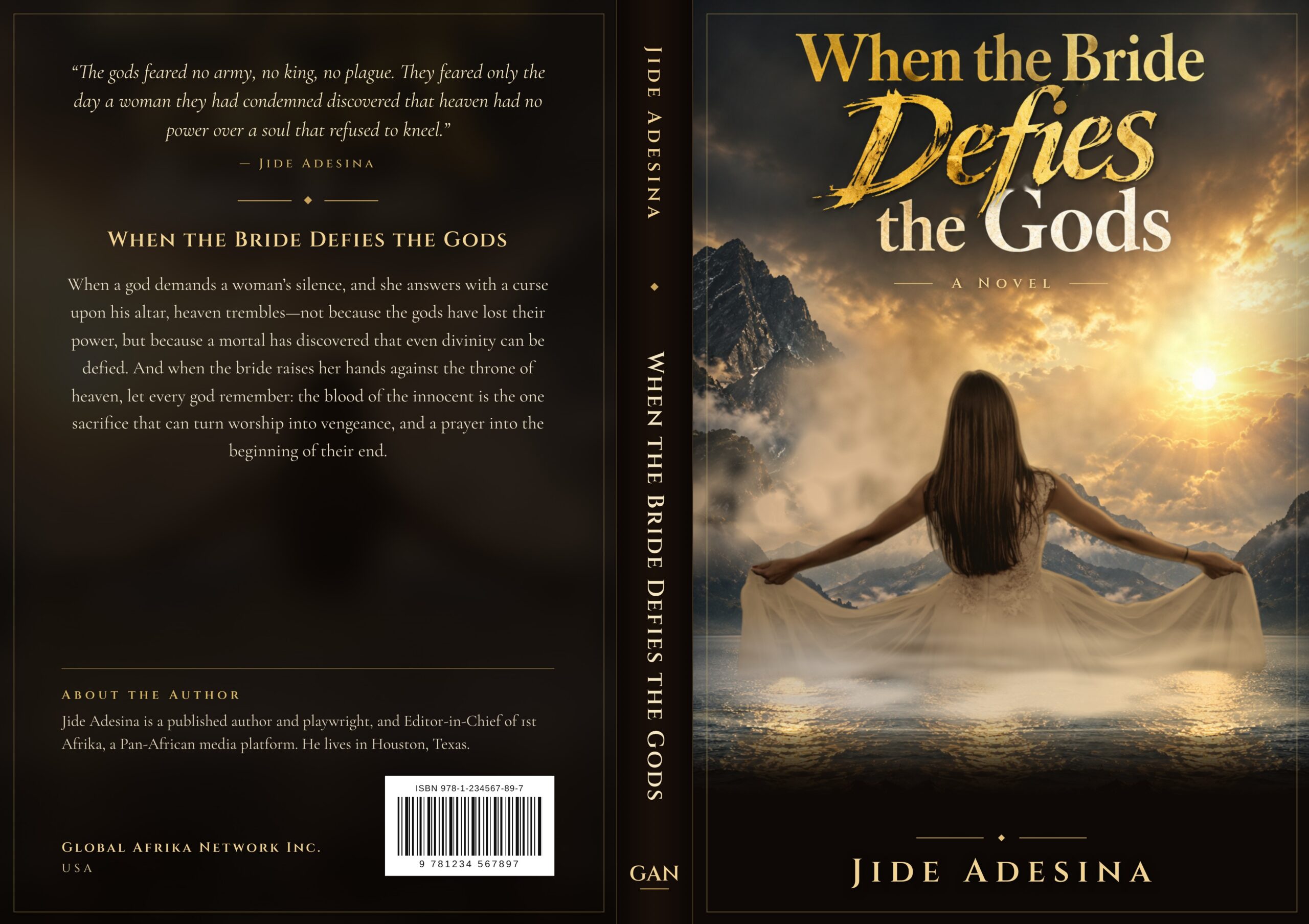
The cover gives us a figure framed against a sky that seems to watch her. The sun, in this world, is not a simple light. It is a witness, perhaps a creditor, a presence older than the walls beneath it. Gold meets shadow, and ancestral grandeur meets private dread. It is the iconography of a kingdom where ceremony and secrecy share one roof, and where dawn, the most hopeful hour, may also be the most dangerous.
What the cover promises is a novel of thresholds: between two continents, between faith and the misuse of faith, between what a house remembers and what it has chosen to forget. It suggests a story where love is tested against power, and where a single question asked at the right hour could unsettle centuries.
It is the kind of book that arrives with the weight of myth and the urgency of the present. Watch for When the Bride Defies the Gods by Jide Adesina. When it is published, it will be worth being among its first readers.
