

By Jide Adesina | 1stAfrika.com
LONDON, ENGLAND — The football world is preparing for one of the most anticipated individual award ceremonies in the global sporting calendar as the 2026 Ballon d’Or approaches. With the ceremony scheduled for Monday, October 26, at the London Palladium Theatre, the contest for football’s most prestigious individual honour has developed into a compelling debate about goals, trophies, international achievements, individual brilliance and the influence of a player on the modern game. The ceremony also marks the 70th anniversary of the award, which was first presented in 1956 to England’s Stanley Matthews. <Cite refs={[“turn570726search0″,”turn570726search1”]}/>
At the centre of the conversation is England captain Harry Kane, whose remarkable campaign for Bayern Munich has positioned him as the leading favourite in several pre-ceremony assessments. Yet the Ballon d’Or has repeatedly demonstrated that popularity, reputation and statistical dominance do not automatically guarantee victory. Behind Kane are several formidable challengers, including Barcelona’s teenage sensation Lamine Yamal, Real Madrid’s Kylian Mbappé, Argentina’s Lionel Messi and defending champion Ousmane Dembélé of Paris Saint-Germain.
The central question is no longer simply who scored the most goals. It is whether the voters will reward the most productive individual, the player who delivered the greatest collective success, the footballer who influenced the biggest matches, or the individual whose performances best captured the spirit of the season.
Harry Kane: The Englishman Standing on the Threshold of History
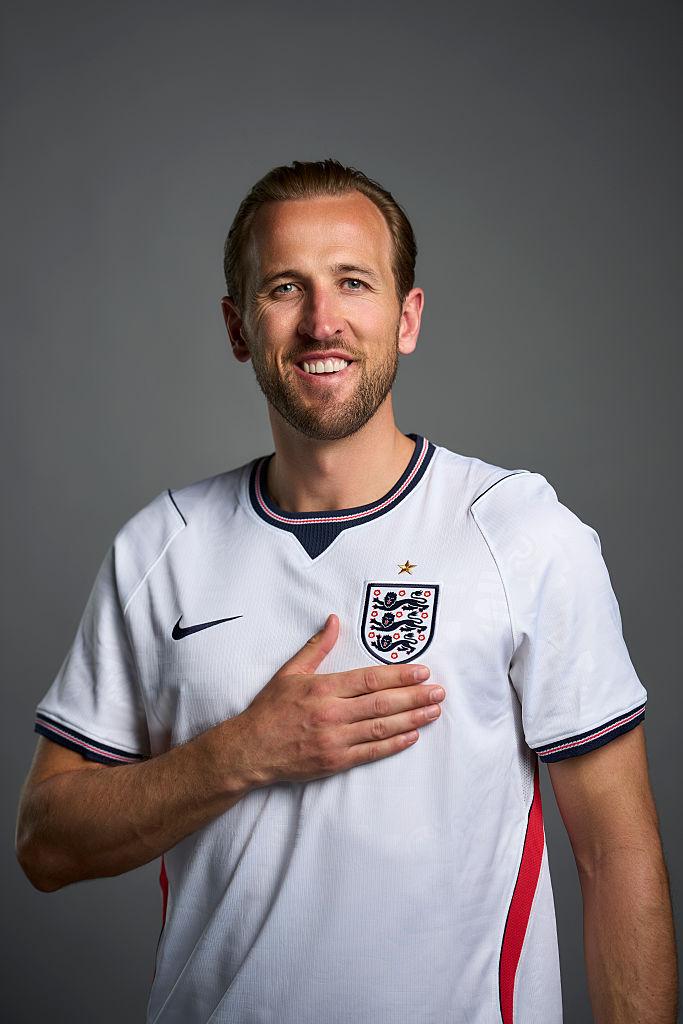
Harry Kane enters the final stretch of the race with a compelling argument. For years, the England international was celebrated for his exceptional finishing, intelligent movement and ability to contribute to the construction of attacks, but his career was frequently discussed through the lens of the major trophies that eluded him.
His move from Tottenham Hotspur to Bayern Munich was partly intended to change that narrative. Although Bayern’s reputation and domestic dominance brought their own expectations, Kane still had to prove that he could be the decisive figure in a team competing for the most demanding honours in European football.
The 2025–26 campaign has substantially strengthened his case. According to Reuters’ September report on the nominees, Kane scored 73 goals in 65 matches for Bayern Munich and England, helping Bayern win a domestic treble and contributing to England’s run to the World Cup semi-finals. His extraordinary production makes him one of the strongest candidates of the modern era. <Cite refs={[“turn570726news13”]}/>
However, the significance of Kane’s campaign extends beyond the numbers. His football combines the instincts of a traditional centre-forward with the distribution and vision of a creative midfielder. He can finish with either foot, score with his head, drop into midfield to initiate attacks and create opportunities for runners arriving from wide positions.
For a Ballon d’Or electorate seeking an individual whose performances consistently translate into goals and results, Kane presents an unusually strong case.
There is also a powerful historical dimension to his candidacy. An Englishman winning the award would return the most coveted individual honour in football to a country that has produced some of the game’s most celebrated players but has not enjoyed a men’s Ballon d’Or winner since Michael Owen in 2001.
Yet Kane must overcome an important obstacle: the distinction between being the season’s most prolific attacker and being its most influential footballer. His supporters can point to his production, Bayern’s domestic achievements and England’s international campaign. His opponents can argue that other players have delivered more decisive contributions in the competitions carrying the greatest international prestige.
Kane may be the favourite, but the final decision remains with the voters.
Lamine Yamal: The Teenage Superstar Who Could Change the Conversation
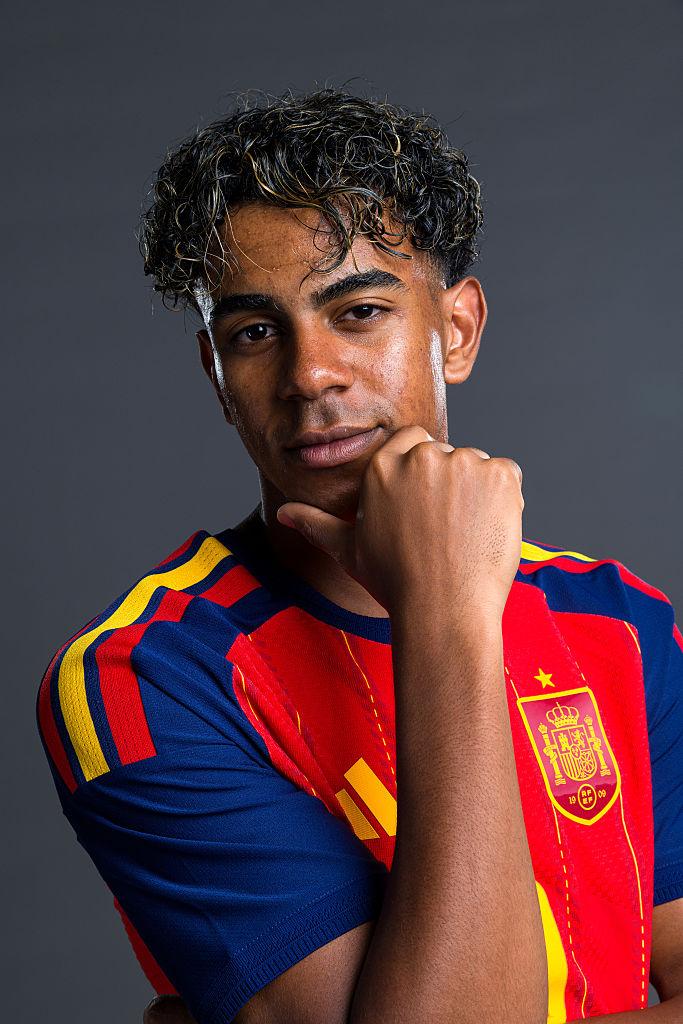
If Kane represents the established professional approaching the height of his career, Lamine Yamal represents football’s future arriving ahead of schedule.
The Barcelona winger has already transformed the expectations surrounding young footballers. His composure in possession, ability to beat defenders, passing range and willingness to assume responsibility in decisive moments have made him one of the most closely watched players in the world.
Yamal’s greatest strength is not merely that he is young. It is that he plays with the imagination and authority of a footballer who believes he belongs among the game’s leading figures.
For Barcelona, his ability to stretch defensive lines and create numerical advantages on the flank makes him particularly dangerous. He can draw two defenders towards him, release a teammate with a perfectly weighted pass or cut inside to create a shooting opportunity. Those actions do not always appear in the headline statistics, but they can fundamentally change how an opponent defends.
Yamal’s candidacy also raises a broader question about the Ballon d’Or: should the award primarily recognise the season’s accumulated achievements, or should it recognise the player who has most convincingly demonstrated the highest level of individual football?
The answer matters because Yamal’s strongest argument is not necessarily that he has outscored every rival. It is that he can influence matches through creativity, technical quality and tactical intelligence at an age when most footballers are still developing.
Nevertheless, youth and excitement cannot substitute for the complete body of work required to win the award. His case depends on the strength of his club and international performances during the eligibility period, the significance of Barcelona’s achievements and his influence in the biggest matches.
A Yamal victory would be a major statement about the next generation of football superstars. It would also demonstrate that voters are prepared to reward extraordinary individual quality even when the candidate’s career is only beginning.
Kylian Mbappé: Goals, Global Recognition and the Weight of Expectations
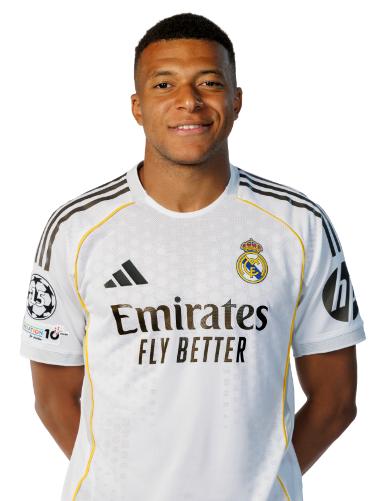
Kylian Mbappé remains one of the most formidable candidates because his individual production is difficult to dismiss.
The Real Madrid forward possesses a combination of acceleration, movement, finishing and experience that makes him a constant threat to opposition defences. He can attack space behind defenders, operate from the left, lead the line and turn a single counterattack into a decisive moment.
His 2025–26 campaign has provided another substantial statistical argument. Opta Analyst identifies Mbappé among the four principal contenders, while the pre-ceremony rankings published by Bavarian Football Works place him among the strongest candidates on the basis of his goalscoring record and individual accomplishments. <Cite refs={[“turn570726search2″,”turn570726news8”]}/>
The complication is collective success. Real Madrid’s stature creates enormous expectations, and an exceptional individual season can still be overshadowed if the club fails to achieve the most important objectives.
This is one of football’s enduring contradictions. A striker may score against almost every opponent, deliver decisive goals and consistently outperform defensive systems, yet find himself competing against a player whose team has won the Champions League or another major trophy.
The Ballon d’Or is an individual award, but its history demonstrates that individual performance and collective achievement are often inseparable in the minds of voters.
Mbappé’s supporters will argue that his contribution should be assessed independently of every weakness in the team around him. His critics will counter that the award should recognise not only how many goals a player scores but also how decisively he influences the most important contests.
If Mbappé wins, it would reinforce the argument that exceptional individual production can overcome shortcomings in a team’s overall season. If he loses despite impressive statistics, the debate about whether the Ballon d’Or rewards individual excellence or team success will intensify once again.
Lionel Messi: Could the Greatest Surprise Come From the Eight-Time Winner?
Perhaps the most fascinating name in the discussion is Lionel Messi.
At a stage when many footballers would already have retired, Messi continues to command attention because his relationship with the game is built on more than speed or physical power. His close control, passing, anticipation and understanding of space allow him to influence matches in ways that are difficult to measure through conventional statistics.
Reuters reported that Messi contributed to 75 goals in 49 appearances for Inter Miami and Argentina during the period covered by its pre-ceremony assessment, while helping Argentina reach the 2026 World Cup final. His inclusion among the leading candidates demonstrates that his individual production remains relevant despite playing club football outside Europe’s major leagues. <Cite refs={[“turn570726news13”]}/>
However, Messi’s candidacy presents one of the most difficult questions facing the voters.
Should an outstanding campaign in Major League Soccer receive the same weight as comparable production in the Premier League, La Liga, the Bundesliga or the Champions League? The question is not whether American football is improving. It is whether the level of competition, the pressure of the fixtures and the quality of the opposition should influence how voters compare achievements across different leagues.
Messi’s supporters will point to his continued productivity, his influence on Argentina and his extraordinary record of individual excellence. Those who favour European-based candidates will argue that performance in Europe’s most competitive club tournaments provides a more demanding benchmark.
There is also the emotional dimension. Messi has won the men’s Ballon d’Or eight times, an extraordinary record that has already established his place in football history. But past greatness should not become an automatic qualification for another award.
A ninth triumph would be one of the most remarkable outcomes in the award’s history. It would also provoke serious debate about the balance between current-season performance, international achievement and the legacy of a legendary player.
For now, Messi is a candidate worth discussing, not a confirmed winner. His presence nevertheless adds another layer of uncertainty to an already competitive race.
Ousmane Dembélé: Can the Defending Champion Retain His Crown?
The defending champion, Ousmane Dembélé, deserves far more than a passing mention.
His 2025 victory followed a remarkable period in which he emerged as one of Paris Saint-Germain’s most influential attacking players. His combination of dribbling, acceleration, creativity and improved finishing made him a central figure in the club’s success.
Retaining the Ballon d’Or, however, is a different challenge from winning it for the first time.
Once a player has received the award, expectations rise. Voters begin to compare the new season not only with those of his competitors but also with the standard established by his own previous campaign.
Dembélé’s defenders can argue that his contribution to PSG’s collective achievements remains substantial. His challengers can counter that a new season requires a new assessment and that the defending champion should not receive preferential treatment simply because he won previously.
The historical significance of a successful defence is considerable, but it is not enough on its own. Dembélé must convince voters that his performances during the relevant period remain superior to those of Kane, Yamal, Mbappé and the other nominees.
His presence ensures that the contest is not simply a race between a prolific English striker and two globally recognised attacking superstars. It is also a test of whether the reigning champion can demonstrate sustained excellence.
The Potential Shock: Michael Olise and the Case for Creative Excellence
One of the most interesting alternative candidates is Michael Olise of Bayern Munich.
While much of the public conversation focuses on Kane’s finishing, Olise’s contribution illustrates why attacking football cannot be reduced to the number of goals scored by a centre-forward.
Olise combines close control, intelligent movement, precise passing and the ability to create opportunities from difficult positions. His work on the right flank can stretch defensive structures, while his delivery and decision-making create opportunities for teammates.
The pre-ceremony ranking published by Bavarian Football Works places Olise among the leading candidates outside its top two, citing his substantial goal contributions and Bayern’s domestic achievements. <Cite refs={[“turn570726news8”]}/>
His challenge is visibility. Goalscorers usually enjoy an advantage because their contributions are immediately recognisable. A spectacular finish is replayed repeatedly, while the pass that creates the opening, the movement that draws a defender away and the tactical adjustment that destabilises an opponent may receive far less attention.
Olise’s chances therefore depend partly on whether voters place sufficient emphasis on creativity, overall attacking influence and the quality of his performances across the season.
A victory for Olise would be a genuine surprise relative to the leading predictions, but it would not necessarily be an irrational one. It would reflect a wider understanding of football excellence and recognise that the most influential attacking player is not always the one who scores the most goals.
Rodri, the Midfield Argument and the Problem of Measuring Greatness
Rodri represents another important dimension of the Ballon d’Or debate.
The Spanish midfielder won the award in 2024, demonstrating that the voters can recognise a player whose influence extends beyond spectacular attacking statistics. His positional discipline, ability to control possession, tactical awareness and understanding of transitions have made him a reference point for modern midfield play.
Midfielders of his type often perform the work that allows attacking stars to flourish. They maintain possession under pressure, prevent counterattacks, determine the rhythm of a match and provide the defensive stability that allows teammates to take risks.
Yet these contributions can be difficult to communicate to a general audience. Goals and assists are simple to count; the prevention of a dangerous attack through intelligent positioning is less visible.
Rodri’s case therefore raises a fundamental question about individual awards: how should football measure the player who makes the entire team function more effectively?
A return to the top of the Ballon d’Or rankings would be difficult, particularly when competing against forwards with extraordinary statistical records. Nevertheless, his inclusion among the nominees ensures that the discussion is not limited to attackers.
The same broader principle applies to defenders such as William Saliba, Achraf Hakimi and Willian Pacho, whose work can determine the outcome of major matches without generating the headline statistics associated with goalscorers.
The African Dimension: Recognition Beyond the Traditional Superstars
For African football audiences, the 2026 Ballon d’Or also presents an opportunity to examine how the award recognises players whose influence extends beyond the most heavily publicised European and South American stars.
Senegal’s Sadio Mané remains a nominee, while Morocco’s Achraf Hakimi and Senegalese goalkeeper Édouard Mendy are among the names attracting attention in the broader awards landscape. The men’s goalkeeper shortlist also includes Cape Verde’s Vozinha, whose nomination for the Yashin Trophy is particularly significant for a nation that has worked to establish itself more firmly on the international football stage. <Cite refs={[“turn570726search0″,”turn570726news13”]}/>
These nominations matter because African football has repeatedly produced players capable of influencing major competitions, yet recognition in the highest-profile individual awards remains a difficult achievement.
The Ballon d’Or is not designed to reward geographical representation. Its central purpose is to recognise excellence. Nevertheless, the visibility of African players in the final shortlists can influence how supporters, young footballers, clubs and sponsors perceive the global reach of the game.
A major award for an African player would be a landmark achievement, but the more immediate question is whether performances across different leagues, international competitions and tactical roles receive equal consideration.
The inclusion of African nominees should therefore be assessed on their footballing merits rather than presented as evidence that an African winner is inevitable. The distinction between nomination and realistic contention remains important.
The Biggest Surprise May Be Cristiano Ronaldo’s Absence
One of the most striking developments surrounding the 2026 men’s award is the absence of Cristiano Ronaldo from the 30-player shortlist.
Reuters reported that the five-time Ballon d’Or winner was omitted, despite the continued prominence of his name in discussions about football’s greatest players. <Cite refs={[“turn570726news13”]}/>
For a player whose career has been defined by extraordinary goalscoring records, sustained competitiveness and a long-running rivalry with Messi, the omission is symbolically significant.
However, it is important to distinguish recognition of a player’s overall career from assessment of a particular eligibility period. The Ballon d’Or is not a lifetime achievement award. Previous triumphs, commercial influence and historic standing do not guarantee a place among the nominees every year.
Ronaldo’s absence therefore reflects the competitive nature of the award rather than erasing his achievements. His place in football history is already secure, irrespective of whether he appears on a particular shortlist.
The omission also provides a useful reminder that the modern game continues to move forward. New generations of players are emerging, while established stars must continue to deliver performances that justify their place among the world’s best.
For supporters who have followed the Messi–Ronaldo rivalry for more than a decade, this year’s shortlist represents a symbolic shift. The central debate is increasingly about which member of the next generation can establish a sustained claim to football’s highest individual honour.
The Women’s Ballon d’Or: A Contest That Deserves Equal Attention
The men’s award will attract enormous global attention, but the women’s Ballon d’Or is equally important to the broader story of football.
The women’s shortlist features established stars and emerging talents, including Alexia Putellas, Ewa Pajor, Alessia Russo, Khadija Shaw, Caroline Graham Hansen and several other leading players. Putellas is the only former winner on the 2026 women’s shortlist, having won the award in 2021 and 2022. <Cite refs={[“turn570726search0”]}/>
The women’s game continues to expand in audience, investment, technical quality and competitive depth. The individual award is one way to recognise that development, although the quality of the competition should be assessed on its own terms rather than treated as a secondary version of the men’s contest.
Barcelona’s continued presence in the women’s awards conversation reflects the club’s importance in elite women’s football. Yet the nominees represent a much wider landscape, including players competing in England, France, Germany, the United States and other football markets.
The eventual winner should be judged on performances during the relevant period, influence in decisive matches, individual consistency and the quality of the achievements that support her candidacy.
An unexpected winner would not necessarily indicate a failure by the favourites. It could instead demonstrate the depth of the women’s game and the difficulty of comparing players whose roles, leagues and competitive circumstances differ considerably.
The same principle applies to the goalkeeper, young-player, coaching and club awards. These categories provide a broader picture of the season than the headline men’s trophy alone.
What the Ballon d’Or Actually Rewards
The controversy surrounding the award often begins with a misunderstanding of what it is supposed to measure.
A footballer can score more goals than every rival and still lose. Another player may win fewer individual statistical comparisons but contribute to a team that dominates the Champions League or achieves a landmark international victory.
Neither outcome automatically proves that the voting system is unfair.
According to UEFA’s published explanation of the award, the Ballon d’Or recognises the best players through a voting process overseen by France Football, with UEFA involved in organising the ceremony. The eligibility period for the 2026 men’s award runs from August 3, 2025, to July 19, 2026. <Cite refs={[“turn570726search0″,”turn570726search2”]}/>
The timing of that period is important because it defines which performances count. Reputation accumulated over a decade cannot simply replace achievements during the season being assessed.
Voters must consider the quality of individual performance, the player’s influence on matches, collective achievements and sporting conduct. The relative importance assigned to those considerations can produce different conclusions even when voters agree on the underlying facts.
A striker’s supporters may prioritise goals and assists. A midfielder’s advocates may emphasise tactical control. Others may give considerable weight to success in the Champions League or the World Cup.
The result is not a mathematical contest with one indisputable answer. It is a judgement made through an established voting process, informed by footballing evidence but inevitably involving interpretation.
That is why the Ballon d’Or remains capable of producing arguments long after the ceremony has ended.
Final Verdict: Kane Is the Favourite, but the Race Is Not Over
The strongest pre-ceremony argument belongs to Harry Kane. His goalscoring production, Bayern Munich’s domestic success and England’s international campaign make him an especially compelling candidate. Opta Analyst identifies Kane, Yamal, Mbappé and Messi as the four principal contenders, while other assessments highlight Olise and the defending champion Dembélé as important names in the conversation. <Cite refs={[“turn570726search2″,”turn570726news8”]}/>
My assessment is that Kane has the clearest overall case among the leading candidates, but a prediction should not be confused with a confirmed result. Yamal offers the strongest challenge built around individual creativity and the arrival of a new generation. Mbappé has the statistical firepower and global profile to remain in contention. Messi represents the possibility of another historic triumph, while Dembélé and Olise offer alternative arguments rooted in collective success and attacking influence.
The greatest surprise could come not from an unknown player suddenly appearing at the top of the rankings, but from the voters deciding that one particular dimension of football deserves more weight than the public has anticipated.
If Kane wins, the award will recognise an extraordinary campaign by a striker whose career has increasingly been defined by major achievements as well as individual production. If Yamal triumphs, it will signal that the next generation has arrived at the summit of the sport. If Mbappé prevails, it will reinforce the power of exceptional individual statistics. If Messi wins again, the football world will witness another historic chapter in one of the greatest careers the game has ever known.
And if another nominee emerges victorious, the ceremony will remind supporters that football cannot be understood through goals, trophies or popularity alone.
As London prepares to host the 70th Ballon d’Or ceremony, the real story is the continuing argument over what greatness means. The award celebrates the individual, but football remains a collective game. The best player may be the most prolific scorer, the most inventive creator, the most influential midfielder or the figure whose performances transformed an entire team’s season.
Until the envelope is opened on October 26, the favourites remain favourites, the outsiders retain their opportunity and the final verdict belongs to the voters.
For 1stAfrika.com, the central question is simple: will the 2026 Ballon d’Or reward the season’s most productive superstar, recognise the arrival of football’s next generation, or deliver another surprise that changes the debate about the world’s best player?
