

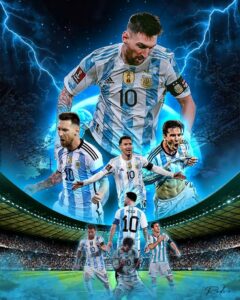
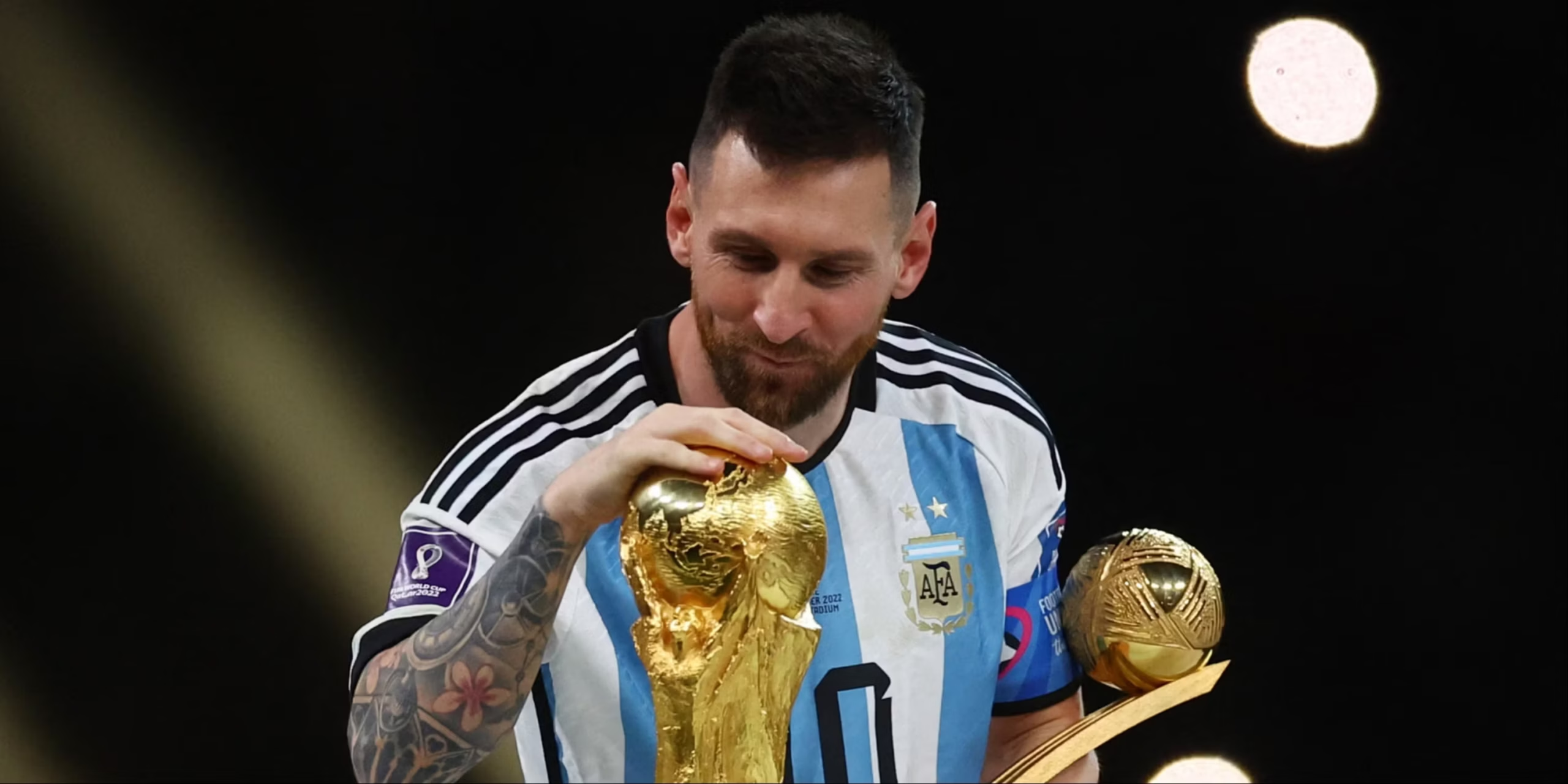
There are moments in football that transcend trophies, statistics and rivalries. They become cultural landmarks, passed from one generation to another like treasured family stories. Lionel Andrés Messi has become one of those rare landmarks. His career is no longer measured by goals, assists, Ballon d’Or awards or World Cup medals alone. It is measured by the millions of young footballers he inspired, nurtured and unknowingly helped shape long before they became stars themselves.
As Spain prepares to challenge Argentina on the grandest stage, one remarkable truth continues to fascinate football lovers around the world. A significant number of Spain’s young stars grew up inside the shadow of Messi’s greatness at FC Barcelona. Some watched him from the academy fences. Some trained on the same pitches. Some were fortunate enough to meet him as children. Others shared unforgettable photographs with him that have now become treasured pieces of football history.
The image that captured the imagination of the world is, of course, the famous photograph of a young Lamine Yamal as a baby being held and bathed by a youthful Lionel Messi during a Barcelona charity calendar photoshoot in 2007. At the time, nobody could have imagined that the infant in Messi’s arms would one day become one of the brightest talents in world football and potentially face his childhood idol on football’s biggest stage. It remains one of the most extraordinary and symbolic photographs the sport has ever produced—not because it was staged to predict the future, but because destiny quietly wrote its own script.
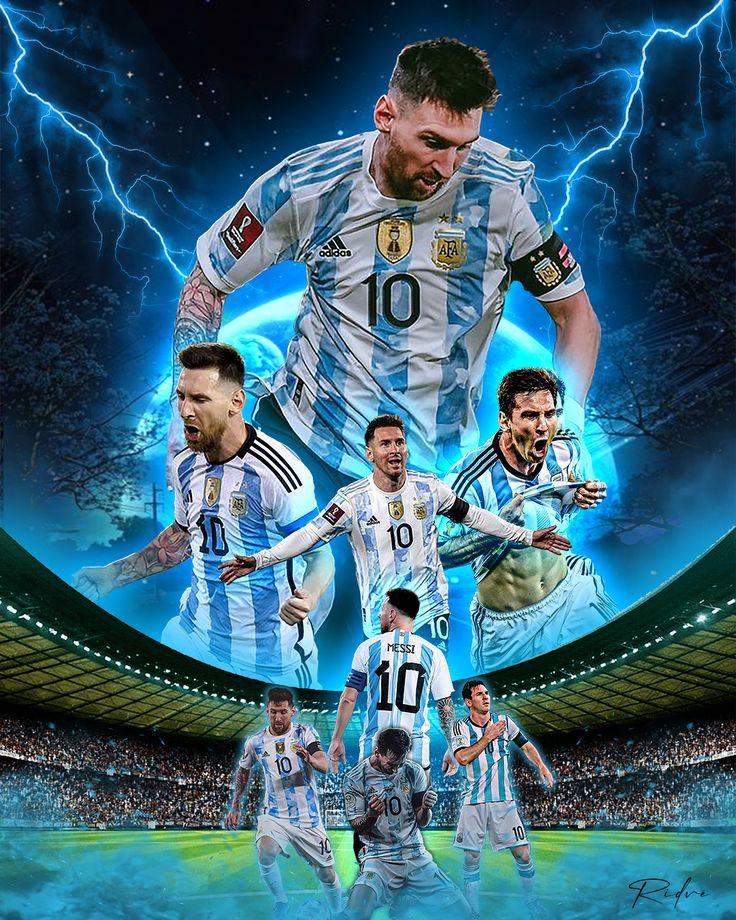
Yet Yamal is far from the only member of Spain’s new generation whose football story intersects with Messi’s.
Dani Olmo grew through Barcelona’s famed La Masia before moving to Dinamo Zagreb, spending his formative years watching Messi dominate world football from within the club’s footballing ecosystem. Gavi arrived at Barcelona dreaming of wearing the same shirt as the Argentine genius and eventually fulfilled that dream by sharing the first team dressing room with him. Alejandro Balde also trained and learned alongside Messi during the Argentine’s final season at Barcelona, absorbing lessons from simply watching the greatest player of his generation at work every single day. Fermín López and several other young Barcelona graduates have openly spoken about how Messi became the standard they chased every time they stepped onto a training pitch.
Pedri, although developed in the Canary Islands before joining Barcelona, was another fortunate youngster who played alongside Messi during the legend’s final season at Camp Nou. The admiration between the two was evident, with Messi frequently encouraging the gifted midfielder as one of Barcelona’s brightest young prospects.
Even players like Rodri, who developed through Atlético Madrid and Villarreal rather than Barcelona, belong to a generation that openly acknowledges Messi as the footballer who shaped their understanding of the game. Rodri has repeatedly praised Messi’s intelligence, vision and influence, just as countless players across Europe have done. The reality is that an entire generation of Spanish footballers grew up studying Messi more than any coaching manual.
That is perhaps Messi’s greatest legacy.
He did not simply win football matches.
He educated footballers.
He became the living textbook of modern attacking football.
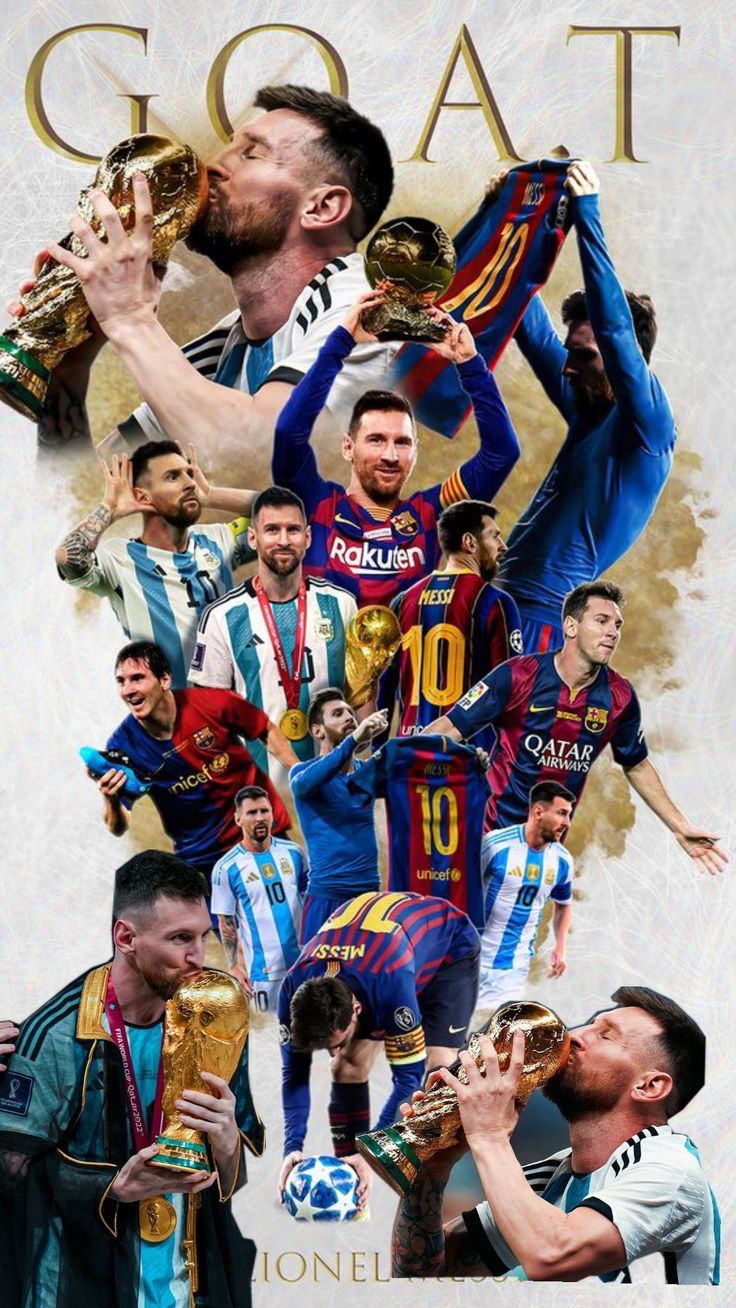
Every feint, every body movement, every impossible pass between defenders, every perfectly timed dribble became lessons copied on playgrounds from Buenos Aires to Barcelona, from Lagos to London.
The statistics only reinforce what the eyes have witnessed for nearly two decades. Messi is the most decorated footballer in history, with an unmatched collection of domestic league titles, UEFA Champions League triumphs, Copa América victories, Olympic gold, Finalissima success, Leagues Cup glory, Supporters’ Shield honours, multiple FIFA Best awards and a record eight Ballon d’Or trophies. His crowning achievement came in Qatar in 2022, where he finally lifted the FIFA World Cup, completing perhaps the most complete football résumé ever assembled.
Yet numbers alone cannot explain Lionel Messi.
Football is not played on spreadsheets.
It is played in moments.
Who can forget Diego Maradona’s astonishing solo goal against England at the 1986 World Cup? Beginning near the halfway line, Maradona danced through six English players before calmly finishing past Peter Shilton in what FIFA later christened the “Goal of the Century.” That goal became football folklore.
Messi created his own chapters of folklore.
His mesmerizing run against Getafe in 2007 echoed Maradona’s masterpiece. His countless Champions League nights against Europe’s biggest clubs became annual exhibitions of footballing artistry. Then came the World Cup campaigns. After heartbreak in 2014 and years of criticism with Argentina, Messi refused to surrender. He returned, inspired his nation to Copa América glory in 2021, then carried Argentina to the World Cup title in 2022. In doing so, he became the first captain to lead Argentina to multiple major international triumphs in the modern era.
Even beyond 2022, Messi continued to guide Argentina deep into the latter stages of global competitions, demonstrating that greatness is not a single tournament but sustained excellence over nearly twenty years.
That is why comparisons are becoming increasingly unnecessary.
Every generation produces extraordinary footballers.
Pelé revolutionized the game.
Johan Cruyff reinvented it.
Maradona electrified it.
Cristiano Ronaldo elevated athletic excellence to extraordinary levels.
Messi somehow combined artistry, intelligence, consistency and longevity into one complete footballing masterpiece.
His move to Major League Soccer was also misunderstood by many critics.
Some viewed it purely through a financial lens.
Reality has proved otherwise.
Messi’s arrival transformed football’s visibility in the United States. Stadiums sell out weeks in advance. Television audiences surged. Young American children now wear pink Inter Miami shirts bearing his name. Grassroots participation continues to rise, sponsors have invested heavily, and Major League Soccer has enjoyed unprecedented international attention. His presence has accelerated football’s growth in North America at a critical moment, especially as the United States hosts the 2026 FIFA World Cup.
That is influence.
That is legacy.
Greatness is not merely winning.
Greatness leaves the sport stronger than it found it.
Equally remarkable has been Argentina itself.
History shows that great teams do not always embrace one dominant superstar. Dressing rooms can fracture under enormous individual fame. Jealousy can quietly undermine collective ambition.
Argentina chose a different path.
From goalkeeper Emiliano Martínez to defenders Cristian Romero and Nicolás Otamendi, from midfield generals Rodrigo De Paul, Enzo Fernández and Alexis Mac Allister to forwards Julián Álvarez and Lautaro Martínez, every player embraced a common mission. They never appeared interested in competing with Messi for the spotlight. Instead, they built a team that magnified his brilliance while contributing their own immense quality. Lionel Scaloni deserves enormous credit for cultivating a culture where collective sacrifice outweighed individual ego.
The result was one of the strongest team identities modern international football has witnessed.
Whether Argentina defeats Spain or Spain produces another historic performance on Sunday, one truth remains untouched.
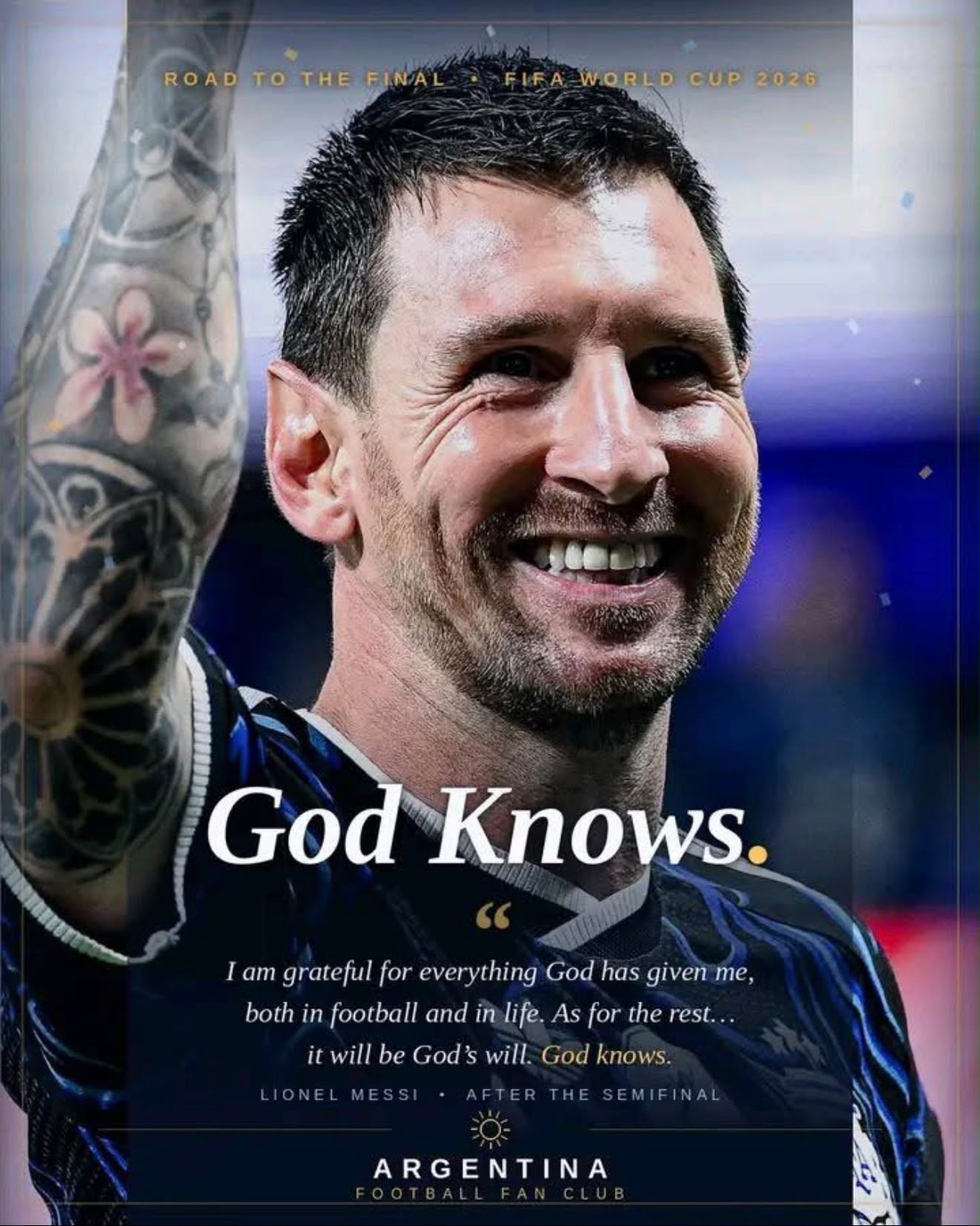
Lionel Messi no longer requires another trophy to validate his greatness.
He has already crossed into football’s highest realm.
Like Michael Jordan in basketball, Muhammad Ali in boxing and Usain Bolt in athletics, Messi has become larger than the sport itself. His name now represents excellence, imagination and possibility. His global commercial appeal continues to grow, and if managed with strategic vision, his brand could become one of the most valuable in sporting history long after his playing days are over.
Perhaps the greatest tribute to Messi is not the medals around his neck but the children who grew up watching him and are now standing on football’s biggest stages themselves.
Some were once babies in photographs with him.
Some trained beside him.
Some idolized him from the academy stands.
Today they are champions in their own right.
And they all carry, in one way or another, a little piece of Lionel Messi’s footballing DNA.
Whatever happens on Sunday, history has already rendered its verdict.
Lionel Andrés Messi is not simply one of the greatest footballers to ever play the game.
For millions across generations, he is the defining footballer of the modern era.
